

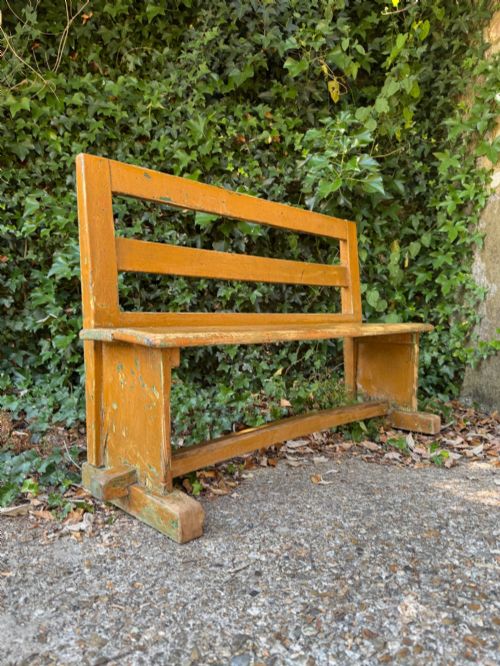


Yellow Painted Wooden Chair
These yellow painted wooden chair selections bring practical charm and historic character into a room.
Yellow Painted Wooden Chair
A yellow painted wooden chair brings distinct regional colour and functional seating together across centuries of domestic life. When you search for a yellow painted wooden chair, you encounter diverse forms ranging from rustic country seating to formal revival styles.
The selections on this page appear across multiple periods including the eighteenth century, the nineteenth century, and nineteen hundred. Forms span dining chairs, armchairs, benches, childs high chairs, and sofas.
Continental folk art, rustic country, and neoclassical influences shape the aesthetic of these pieces. You are most likely to meet nineteenth-century pine benches or decorated dining sets among these listings.
How they were made
Maker construction relies fundamentally on solid wood foundations such as pine and mahogany. Artisans shaped these timbers into stick back frameworks, open arm structures, and solid bench forms.
Surface treatments involve applied paint finishes and decorative schemes, sometimes simulating finer materials like faux birds-eye maple. Upholstery fabric and needlepoint panels occasionally provide added comfort and texture to the seating.
Yellow Painted Wooden Chair Retail Price Guide 2026
Typical asking prices for yellow painted wooden chair among the pieces listed under this phrase on Sellingantiques today, from the lower quarter to the upper quarter. They describe what is for sale here now, not the wider market.
Listings feature items spanning the eighteenth century to nineteen hundred, utilising pine, mahogany, and painted finishes.
What varies in quality
Quality depends upon the integrity of the wooden frame and the preservation of the original painted finish. Pieces displaying skilled decorative brushwork or faux graining sit at the upper end of the range.
The refinement of the stylistic carving and the retention of period textiles distinguish finer seating from utilitarian rustic examples.
The Yellow Painted Wooden Chair Glossary
- Pine
- A soft timber commonly used for vernacular furniture and painted country pieces. It provides a stable base for decorative surface finishes.
- Needlepoint
- A form of canvas work embroidery used for upholstery panels. It adds intricate tactile pattern to chair seats and backrests.
- Stick back
- A chair construction method where turned spindles are inserted directly into a solid seat. This vernacular technique is typical of Windsor seating.
- Faux finish
- A decorative painting technique used to imitate more expensive materials. Artisans applied this method to simulate woods like birds-eye maple.
Yellow Painted Wooden Chair: Frequently Asked Questions
What periods do these chairs date from?
These pieces date from the eighteenth century through to the early twentieth century. Listings include specific periods such as Victorian, Regency, and nineteen hundred.
Most examples reflect nineteenth-century craftsmanship, capturing both rustic vernacular traditions and more formal revival aesthetics.
Are these chairs suitable for daily dining?
Many of these pieces function well for daily use, particularly sturdy dining chairs and benches. Their wooden construction provides durable everyday seating.
More delicate decorative or antique armchairs require careful placement to preserve their historic painted surfaces and upholstery.
How do I identify a painted finish?
A period painted finish often shows natural craquelure, wear patterns, and layered pigments accumulated over generations. These characteristics reveal the age of the decorative surface.
Original paint differs significantly from modern synthetic coatings through its integration with the underlying wood.
Where were these painted styles made?
Origin points span various European workshops, encompassing French, Venetian, and Hungarian regional traditions. Continental folk art heavily influenced these localized designs.
Each region developed distinct chair forms and characteristic colour palettes that distinguish them from standard domestic British output.