

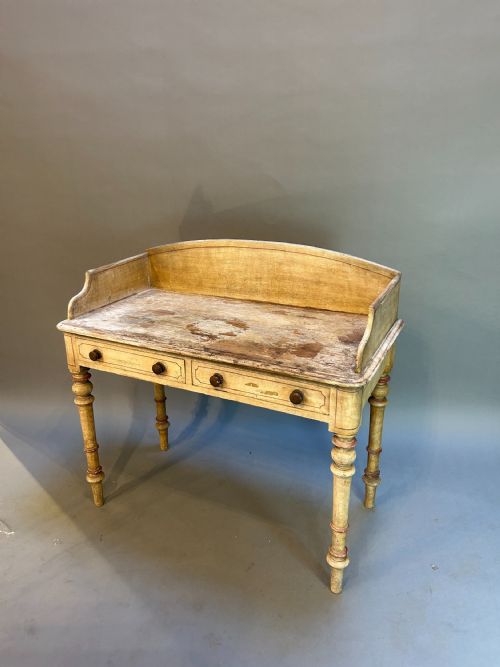


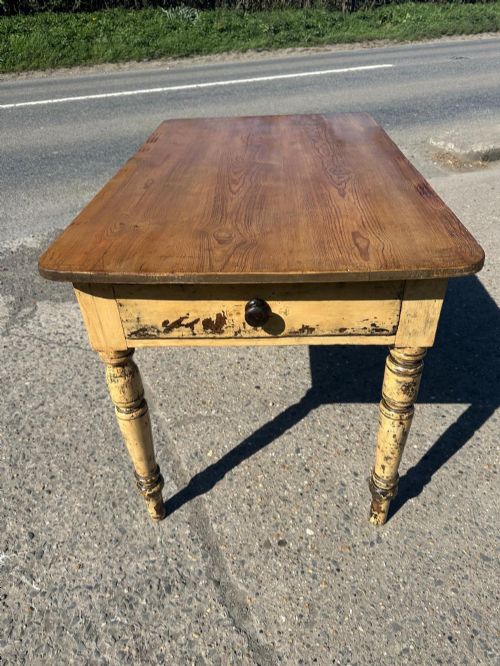


Yellow Painted Desk
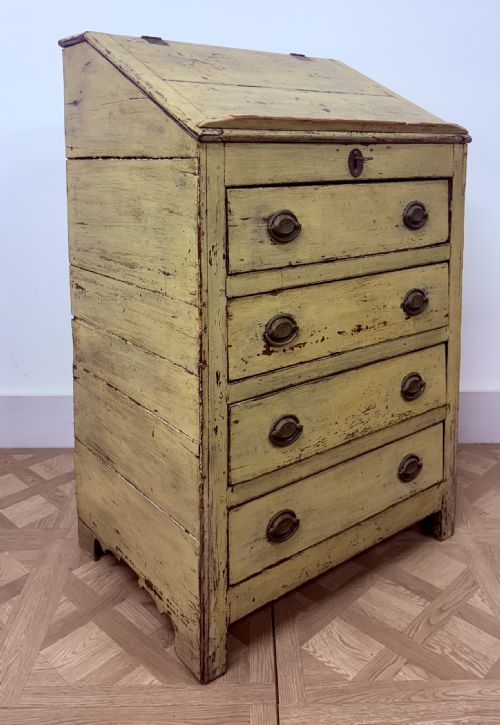
A yellow painted desk brings bright colour and period character to a room, offering practical writing space finished in vibrant painted hues.
Yellow Painted Desk
A yellow painted desk encompasses items designed for writing and storage finished in yellow or ochre paint, drawing on Georgian, Victorian, and Regency traditions. Buyers searching for a yellow painted desk will encounter pine country furniture, satinwood pieces, and chinoiserie lacquer work from various centuries.
The pieces listed on this page range from compact writing tables and faux bamboo side tables to larger pine escritoires and provincial chests of drawers fitted with writing slopes. These examples demonstrate how diverse historical cabinetmakers utilised yellow and ochre pigments on utilitarian and formal furniture alike.
Materials and construction
Construction relies heavily on solid woods such as pine and satinwood, shaped into tables, desks, and small case pieces using traditional joinery. Surfaces are prepared and finished with paint, lacquer, or simulated grain effects.
Decorative elements include hand-painted motifs, chinoiserie designs, and faux bamboo turnings that enhance the underlying wooden structure. Brass hardware frequently complements the painted and lacquered finishes across the selection.
Yellow Painted Desk Retail Price Guide 2026
Typical asking prices for yellow painted desk among the pieces listed under this phrase on Sellingantiques today, from the lower quarter to the upper quarter. They describe what is for sale here now, not the wider market.
Assessing quality and finish
Quality rests in the survival of original painted surfaces, where genuine age shows through natural wear rather than heavy restoration. Finer pieces display careful brushwork, intricate lacquer detailing, and harmonious colour retention.
The integrity of the underlying timber and the crispness of decorative motifs distinguish finer workshops from simpler provincial work. Original hardware and undisturbed construction details further elevate a piece.
The Yellow Painted Desk Glossary
- Escritoire
- A small writing cabinet with a fall-front or sloping lid enclosing compartments for papers. These compact desks date across several centuries.
- Faux bamboo
- Wood turned and painted to imitate natural bamboo stalks. This decorative technique became particularly popular during the Regency and Victorian periods.
- Satinwood
- A hard, yellowish wood with a fine grain and natural sheen used for high-status furniture. It accepts paint and polish exceptionally well.
Yellow Painted Desk: Frequently Asked Questions
How do I clean a painted desk?
Dust gently with a soft, dry cloth to protect the historic paint surface. Avoid modern chemical solvents and harsh abrasive cleaners that strip aged finishes.
Keep the piece away from direct sunlight and damp conditions to prevent paint flaking and wood movement. Regular care preserves the integrity of the original pigment.
Are these desks suitable for daily work?
Many smaller writing tables and writing slopes provide adequate space for modern laptops and paperwork. Consider the writing height and knee clearance before committing to daily use.
Protect vulnerable painted writing surfaces with a blotter or leather pad if used constantly. Antique timber construction generally offers robust support for routine tasks.
What period do these painted desks come from?
The pieces span the Georgian, Regency, and Victorian eras, alongside later pieces from the early twentieth century. Each period brought distinct interpretations of painted furniture and decorative schemes.
Design details such as leg turnings, brass pulls, and structural proportions help identify the exact era of manufacture. Regional variations also distinguish English provincial work from continental pieces.
How can I tell original paint from later decoration?
Original paint shows natural craquelure, fading, and wear patterns consistent with age and use. Examining edges and protected undersides reveals underlying layers and pigment stability.
Later overpainting often appears flat or lacks the integration with the wood grain found in period finishes. Expert assessment of surface patination confirms authenticity.