



Yellow Gold Sapphire Pendant
A yellow gold sapphire pendant brings together warm gold tones and vibrant blue stones, offering a classic piece of jewellery to wear every day.
Yellow Gold Sapphire Pendant
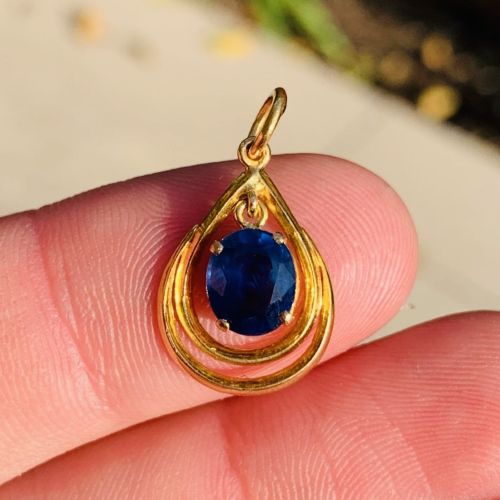
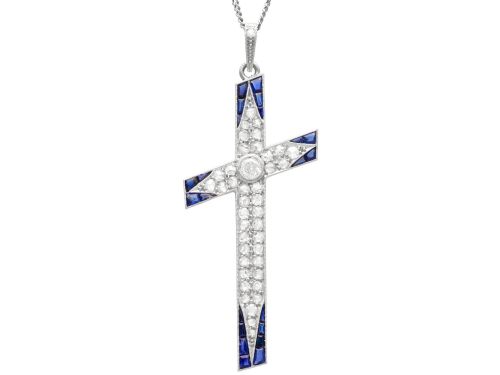
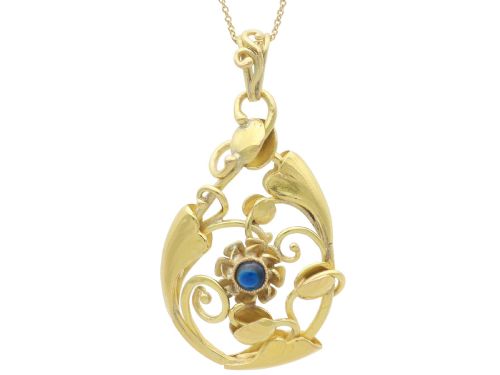
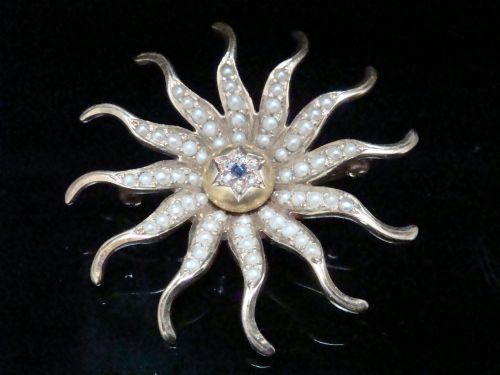
A yellow gold sapphire pendant is a neck ornament featuring a blue sapphire set within gold, spanning periods from the Victorian era through to the mid-twentieth century. The selection includes delicate drop pendants, crosses, clusters, and convertible brooch pendants.
Victorian and Edwardian examples frequently pair sapphires with seed pearls or diamonds in intricate motifs like crescents and hearts. Later vintage pieces from the 1950s and 1960s introduce distinct cluster designs and multi-stone arrangements set in various carats of yellow gold.
Buyers will encounter diverse forms ranging from simple solitaire drops to elaborate star designs and carved gemstone subjects. Each piece reflects the prevailing style of its decade, from organic Art Nouveau lines to geometric Art Deco precision.
Materials and construction methods
Goldsmiths utilised yellow gold ranging from 9ct up to 18ct to construct the mounts and chains for these pendants. Stones were secured using traditional claw settings, collets, or flush settings that varied according to the gemstone cut.
Yellow Gold Sapphire Pendant Retail Price Guide 2026
Typical asking prices for yellow gold sapphire pendant among the pieces listed under this phrase on Sellingantiques today, from the lower quarter to the upper quarter. They describe what is for sale here now, not the wider market.
Materials appearing in these pendants include 9ct, 14ct, 15ct, and 18ct yellow gold, paired with sapphires, diamonds, pearls, and emeralds.
Factors that define quality
The fineness of the gold alloy and the weight of the central sapphire establish the foundational quality of the piece. Higher carat golds and natural, untreated sapphires distinguish finer examples from standard production.
The precision of the stone setting and the delicacy of surrounding decorative elements, such as seed pearls or rose-cut diamonds, demonstrate the skill of the original maker. Well-preserved mountings with minimal wear indicate careful handling over the decades.
The Yellow Gold Sapphire Pendant Glossary
- Carat
- A unit of measurement used to express the purity of gold or the weight of gemstones. Higher carats indicate a greater proportion of pure gold in the alloy.
- Cabochon
- A gemstone cut with a smooth, rounded, convex top rather than faceted surfaces. This style is frequently utilised for displaying the deep colour of star sapphires.
- Rose-cut
- A vintage diamond cut featuring a flat base and a domed crown composed of triangular facets. It creates a subtle, glowing reflection rather than intense brilliance.
- Seed pearl
- A very small, naturally occurring pearl often used in Victorian and Edwardian clusters. These tiny pearls add a soft, luminous contrast to deep blue sapphires.
Yellow Gold Sapphire Pendant: Frequently Asked Questions
How do I care for my yellow gold sapphire pendant?
Clean your pendant gently using warm water, mild soap, and a soft brush to remove everyday oils. Avoid harsh chemical cleaners that might affect the gold or softer surrounding stones like pearls.
Store the pendant separately in a lined box to prevent the gold and gemstones from scratching against other items in your jewellery collection.
Are these pendants suitable for daily wear?
Sapphires are exceptionally hard gemstones, making them well-suited for regular wear on a pendant necklace. Ensure that the chain and settings are checked periodically by a professional to maintain security.
Pieces incorporating delicate seed pearls or softer materials require slightly more mindful wear to avoid impacts or moisture damage during daily activities.
How can I tell the period of a gold sapphire pendant?
Examine the overall design style, such as the flowing organic lines typical of Edwardian work or the geometric symmetry of Art Deco pieces. Maker marks, gold hallmarks, and the specific style of stone cutting also offer clear indicators of age.
Victorian and Edwardian examples often feature closed backs or specific clasp types that differ from mid-century twentieth-century production methods.
What is the difference between a pendant and a brooch pendant?
A standard pendant is designed solely to hang from a neck chain via an integrated loop or bail. A pendant brooch includes an additional pin mechanism on the reverse, allowing it to be worn pinned to clothing or hung from a chain.
This convertible design was particularly popular during the Victorian and Edwardian periods for maximum versatility.