

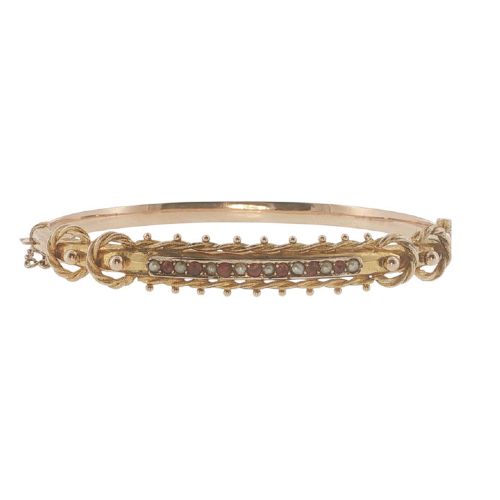
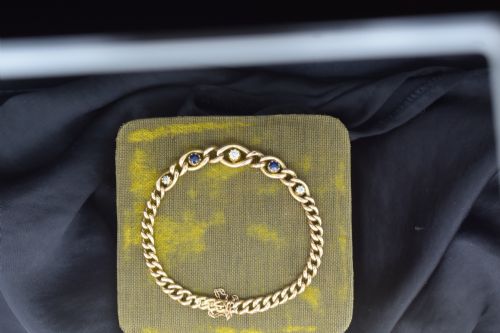
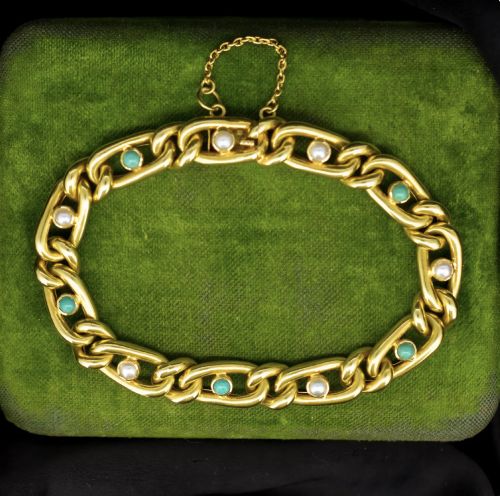
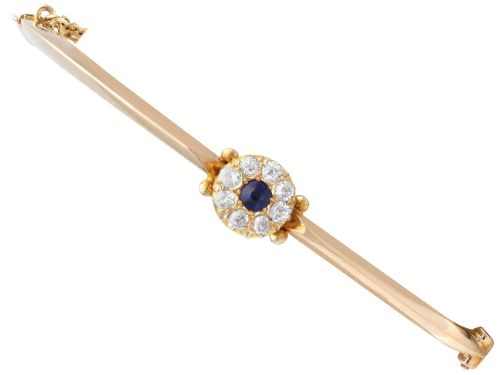
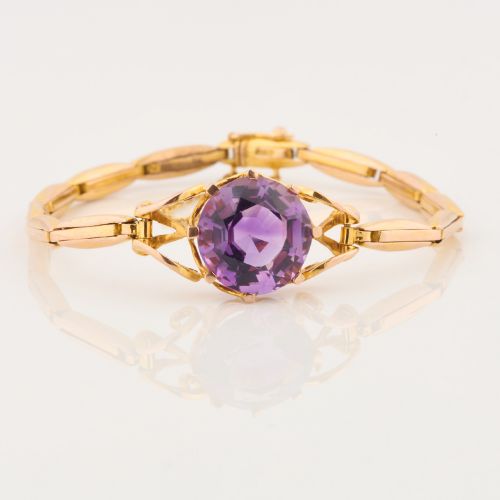


Yellow Gold Gemstone Bracelet
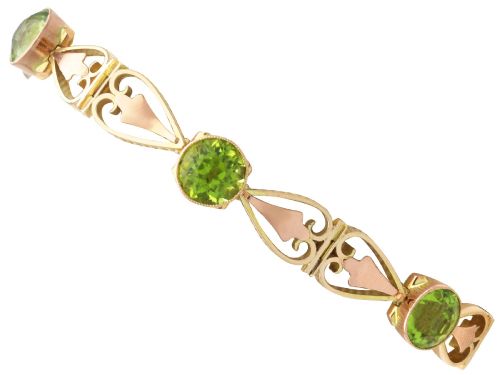
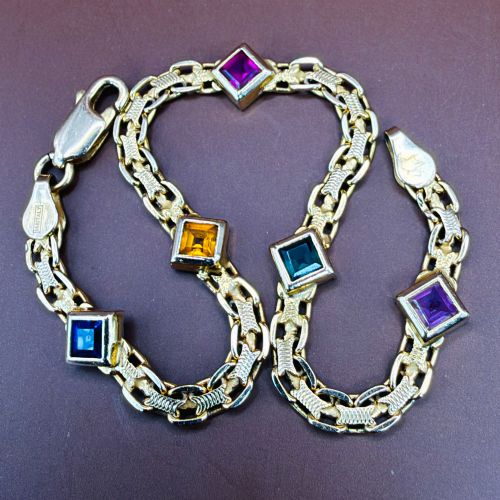
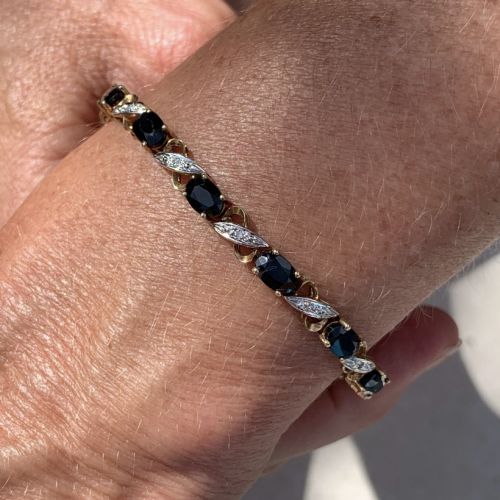
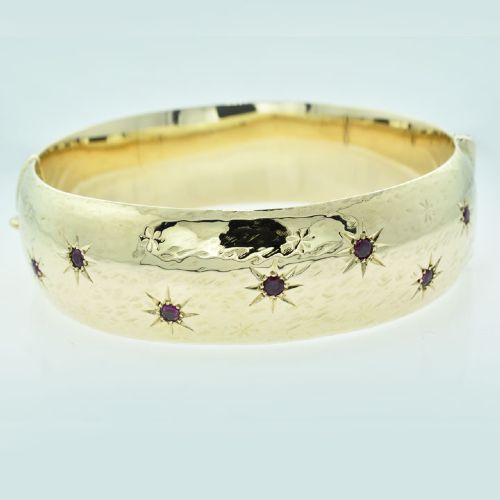
A yellow gold gemstone bracelet brings together coloured stones and warm metal, offering a wearable piece of history from periods spanning the Victorian era to the mid-twentieth century.
Yellow Gold Gemstone Bracelet
A yellow gold gemstone bracelet combines precious and semi-precious stones set within gold links, bands, or gate structures. When searching for a yellow gold gemstone bracelet, buyers encounter formats ranging from rigid bangles to flexible curb and link chains.
The selections span distinct historical periods, prominently featuring Victorian, Edwardian, and Art Deco designs alongside mid-century pieces. Common variations include multi-gemstone clusters, padlock clasps, and targeted pairings of diamonds with sapphires, rubies, or amethysts.
How they were made
Goldsmiths utilised varying purities of yellow gold, notably 9ct, 15ct, and 18ct, shaped into substantial links, solid bangles, and delicate settings. Stones such as sapphires, diamonds, amethysts, and pearls were secured using traditional claw, bezel, and flush settings.
Construction techniques often involved hand-assembling curb links, integrating safety chains, or incorporating symbolic motifs like double hearts and padlocks. Hallmarks and assay office stamps, such as those from Chester, frequently record the origin and metal standard.
Yellow Gold Gemstone Bracelet Retail Price Guide 2026
Typical asking prices for yellow gold gemstone bracelet among the pieces listed under this phrase on Sellingantiques today, from the lower quarter to the upper quarter. They describe what is for sale here now, not the wider market.
Gemstone selections span sapphire, diamond, amethyst, turquoise, pearl, ruby, aquamarine, peridot, opal, and citrine.
What varies in quality
The standard of execution depends on the weight and purity of the yellow gold used, alongside the calibre and carat weight of the set gems. Pieces featuring unheated or natural sapphires, substantial aquamarines, and well-matched diamonds demonstrate superior material selection.
Structural integrity also separates examples, seen in the sturdiness of gate links, the security of integrated box clasps, and the precision of stone placement. Superior items maintain original settings and crisp detailing across periods from the nineteenth century onward.
The Yellow Gold Gemstone Bracelet Glossary
- Curb link
- A type of jewellery chain formed by interlocking flat, slightly twisted links that lie comfortably against the wrist. This sturdy construction frequently serves as the base for antique gemstone bracelets.
- Gate link
- A distinctive style composed of parallel rectangular metal bars connected by vertical links, originating from Victorian designs. It often supports a central padlock clasp or gemstone station.
- Padlock bracelet
- A design featuring a decorative padlock acting as the clasp, popular during the Victorian era. These padlocks are frequently engraved and secure the bracelet to the wrist.
- Princess cut
- A square or rectangular gemstone cut characterised by pointed corners and numerous facets designed to maximise brilliance. This cut appears in mid-century multi-gemstone jewellery.
- Seed pearl
- Very small, naturally occurring pearls often used in cluster settings or as delicate borders around larger central gemstones. They are typical of Victorian and Edwardian jewellery.
Yellow Gold Gemstone Bracelet: Frequently Asked Questions
How do I care for a vintage gold gemstone bracelet?
Clean these pieces gently using a soft cloth and avoid harsh chemical dips, particularly when pearls or softer stones like opals and turquoises are present.
Store them individually in lined boxes to prevent metal links from scratching the softer gemstones or the polished yellow gold surfaces.
What periods do these bracelets come from?
The available pieces originate from the Victorian and Edwardian eras, through the Art Deco and Art Nouveau periods, up to the mid-century 1940s and 1950s.
Each period imparts distinct stylistic traits, from the heavy gold gate links of the nineteenth century to the geometric settings of the twentieth.
Are the gemstones natural?
Many listings feature natural gemstones including sapphires, rubies, amethysts, aquamarines, and tourmalines set into gold.
Descriptions occasionally note specific origins or treatments, such as unheated stones, distinguishing period natural gems from modern synthetics.
What gold purities are used?
Jewellery from this selection commonly utilises 9ct, 15ct, and 18ct yellow gold.
Fifteen-carat gold is particularly characteristic of older Victorian and Edwardian pieces, offering a deeper yellow hue than standard modern alloys.