





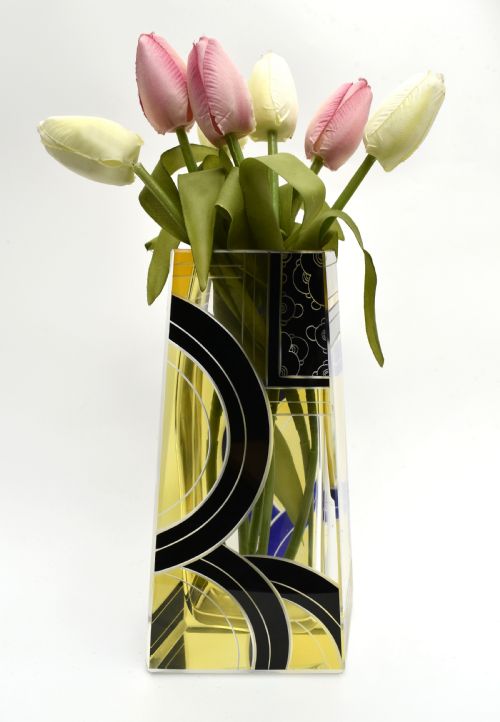
Yellow Enamel Glass
Yellow enamel glass brings together striking hues and intricate surface decoration, offering collectors a vivid focal point for any room.
Yellow Enamel Glass
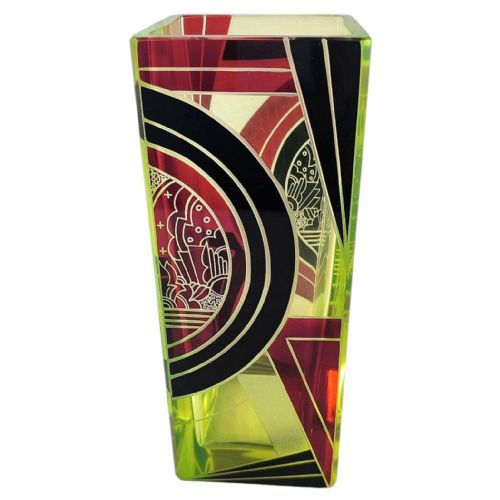
When someone searches for yellow enamel glass, they encounter an array of vessels, decorative objects, and wearable items spanning the Victorian era through the Art Deco period. The selection on this page leans heavily towards vibrant vases, pendants, and table lamps originating from French and Czech makers.
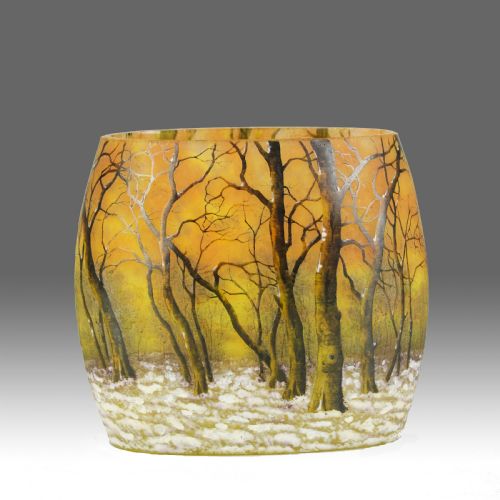
Vessels range from tall etched uranium glass cylinders to cameo glass landscapes and botanical motifs. Smaller decorative pieces, such as Guilloche enamel inkwells, opera glasses, and lidded jars, sit alongside larger Art Deco drinks sets and decanter trays.
Materials and techniques
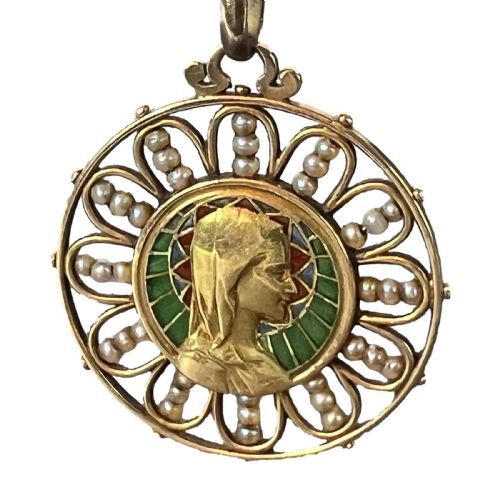
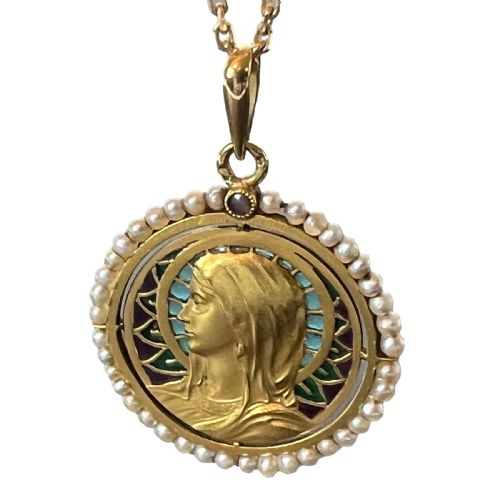
The objects combine vitreous enamel, cameo glass, and crystal bases, frequently mounted with brass or 18k yellow gold. Plique-a-jour and guilloche techniques add translucency and texture to the metallic frameworks.
Etching and enamelling are applied directly to the glass surfaces, often utilising uranium glass to achieve a distinct luminous quality under natural or ultraviolet light.
Yellow Enamel Glass Retail Price Guide 2026
Typical asking prices for yellow enamel glass among the pieces listed under this phrase on Sellingantiques today, from the lower quarter to the upper quarter. They describe what is for sale here now, not the wider market.
Some uranium glass vases glow so brightly under ultraviolet light they practically demand to be kept away from radioactive superheroes.
Distinctions in quality
Quality rests upon the precision of the glass etching and the delicacy of the enamel work, whether in the fine lines of a botanical vase or the translucent cells of a plique-a-jour pendant. Maker attribution and the complexity of the decorative scheme further separate standard production pieces from masterworks.
The integration of precious metals, such as 18k yellow gold mounts, alongside well-preserved guilloche patterns, indicates higher tiers of craftsmanship.
Karl Palda·Daum Frères·François-Eugène Rousseau·Baccarat·Legras·Goldsmith's and Silversmith's Co.
The Yellow Enamel Glass Glossary
- Enamel
- A glassy substance melted onto metal, glass, or ceramic surfaces for decoration. It provides bright, permanent colour to vases and jewellery.
- Cameo glass
- A form of art glass created by carving through layered glass of contrasting colours to produce a raised design. It is frequently seen in turn-of-the-century botanical and landscape vases.
- Uranium glass
- Glass that has uranium added to the mix before melting to give a yellow or green colour that glows brightly under ultraviolet light. It appears prominently in Czech Art Deco table lamps and vases.
- Guilloche
- An ornamental pattern produced by a mechanical engine that engraves precise, intricate geometric designs beneath a transparent layer of enamel. This technique appears on silver inkwells and opera glasses.
- Plique-a-jour
- A vitreous enamelling technique where the enamel is applied within a cellular metal framework without a backing, allowing light to shine through like stained glass. It is characteristic of fine pendants and medals.
Yellow Enamel Glass: Frequently Asked Questions
What is yellow enamel glass?
It encompasses glassware decorated with fused vitreous enamel, often featuring bright yellow hues, uranium glass bodies, or layered cameo designs. These pieces span multiple decades and include decorative vases, lighting, and jewellery.
Craftsmen across Europe utilised these materials to create intricate botanical, landscape, and geometric patterns that catch and refract light.
How do I date yellow enamel glass?
Dating relies on stylistic markers such as the flowing organic lines of Art Nouveau pieces from the 1900s versus the geometric, streamlined profiles of Art Deco designs from the 1930s. Signatures, maker marks, and the presence of specific materials like uranium glass or 18k yellow gold also help narrow the period.
Examining the manufacturing techniques, such as acid-etched cameos or plique-a-jour metalwork, provides further clues regarding the era of production.
Where were these pieces made?
The pieces originate primarily from France and the Czech Republic, produced by notable glasshouses and workshops during the late nineteenth and early twentieth centuries. French makers excelled in cameo glass and enamel landscapes, while Czech manufacturers produced distinctive Art Deco vases and decanter sets.
Specific signatures on the base or body often point directly to the individual studio or designer responsible for the work.
How should I display these items?
Placing vases and decorative bowls near natural light sources allows the translucent enamel and coloured glass to show their full depth and vibrancy. Uranium glass pieces benefit from specialised lighting that highlights their distinct fluorescent properties.
Smaller objects like opera glasses and inkwells fit well on desks or within glass-fronted cabinets where their detailed metalwork and guilloche patterns remain visible.