








X Framed Stool
These x framed stool examples offer practical seating and footrests rooted in classical design, bringing sculptural form and traditional upholstery into modern interiors.
X Framed Stool
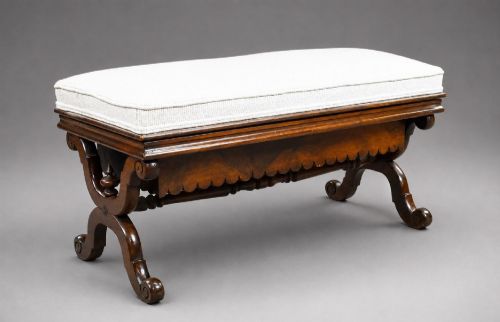
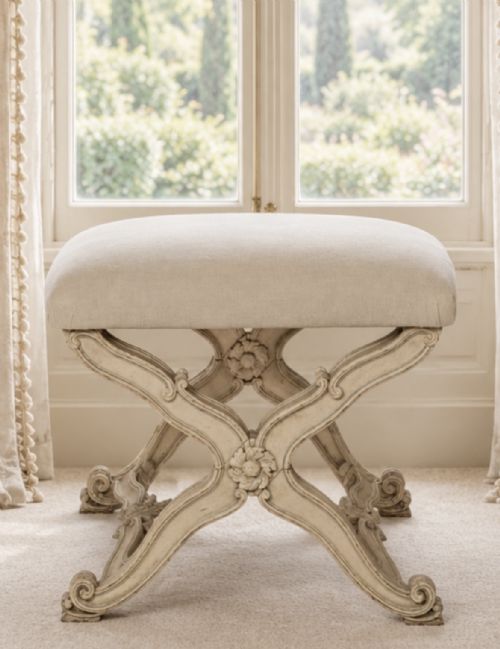
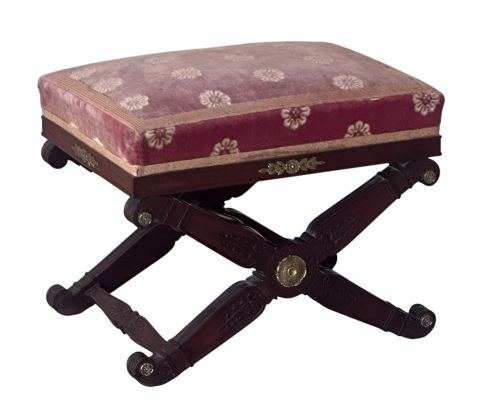
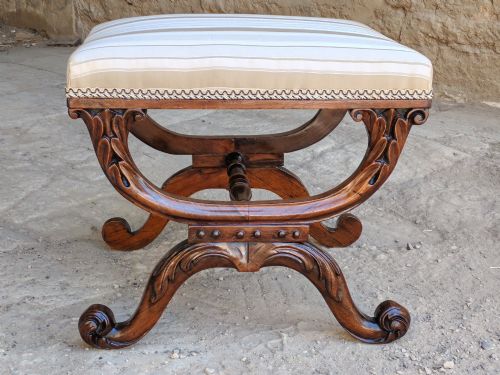
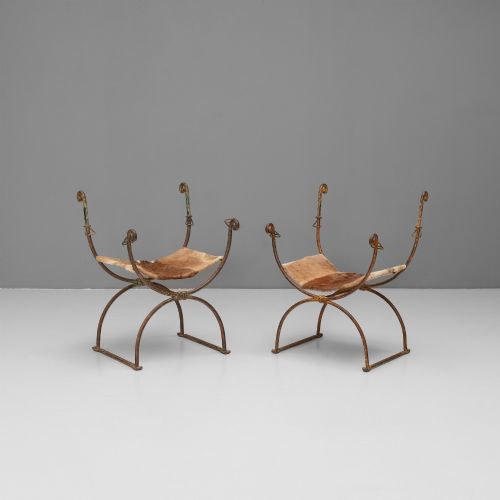
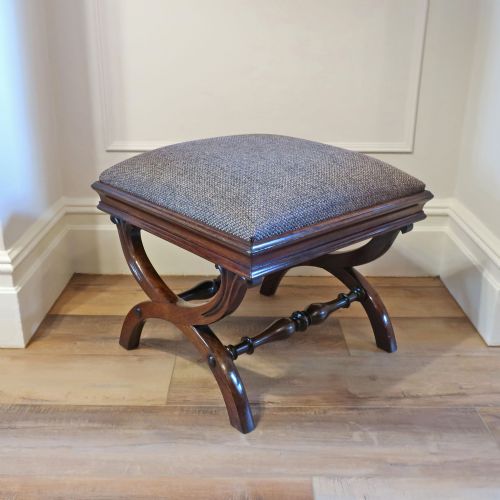
An x framed stool relies on the intersecting supports of the curule or X-shape geometry, originating in classical antiquity and enduring through the Regency and Victorian eras. These pieces function as low seats, dressing stools, and window benches, often retaining a compact footprint that suits smaller spaces.
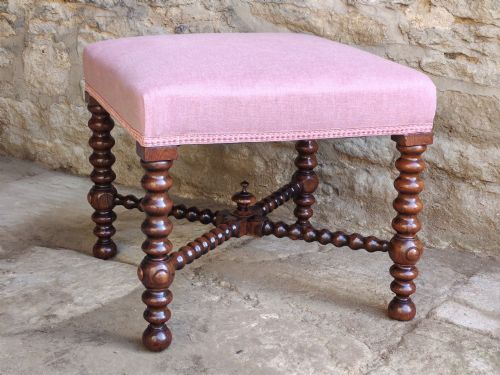
The versions met on this page span the nineteenth century, including Regency, William IV, and Victorian periods, alongside Edwardian revivals and continental interpretations. Mahogany, rosewood, and walnut frames appear frequently, paired with upholstery ranging from patterned textiles to hand-dyed leather.
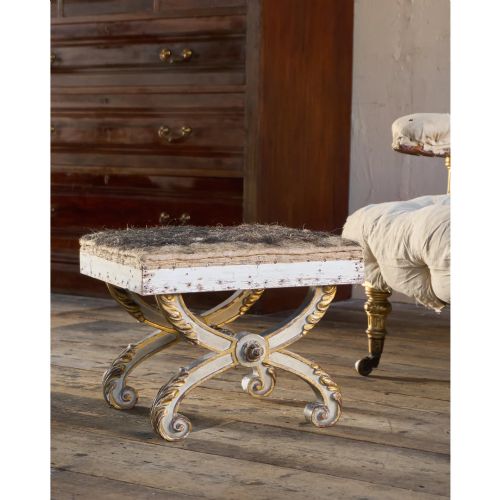
Makers and designers of the nineteenth century utilised this curule framework to echo ancient Roman and Greek seats of authority, adapting them for domestic comfort. Buyers encounter both understated wooden frames and more elaborate giltwood or carved manifestations designed for prominent rooms.
Materials and Construction
Timbers such as mahogany, rosewood, walnut, and satinwood provide the structural integrity for the intersecting legs and stretchers, selected for their grain and strength. Joinery methods of the period ensure that the dynamic stress placed on the central crossing point is adequately borne by the timber.
Upholstery techniques involve traditional stuffing materials secured over webbing or canvas foundations, finished with buttons, brass nails, or tightly fitted textile covers including wool, velvet, and hide. Giltwood and ebonised finishes apply decorative surfaces directly to the timber core.
Metal components such as brass framing or hinges appear on specific harpist seats and folding variants, blending structural metalwork with traditional woodwork.
X Framed Stool Retail Price Guide 2026
Typical asking prices for x framed stool among the pieces listed under this phrase on Sellingantiques today, from the lower quarter to the upper quarter. They describe what is for sale here now, not the wider market.
A specialised Victorian harpist seat with a brass frame ensures musicians stay securely anchored during spirited performances.
Judging Quality and Execution
The distinction between standard production and top tier pieces rests upon the precision of the timber carving and the architectural balance of the X-frame itself. Superior examples display crisp joinery at the pivot or intersection and substantial timber scantlings that resist the lateral pressures of sitting.
Upholstery execution dictates the tactile appeal, where hand-dyed leathers, precise buttoning, and traditional textile choices elevate the piece from utilitarian furniture to a refined decorative object. Secondary woods and minor structural adjustments distinguish provincial work from metropolitan cabinet-making.
Miles & Edwards
The X Framed Stool Glossary
- Curule
- An ancient form of seat featuring two curved legs that cross to form an X-shape. This classic structural archetype defines the geometry of many formal nineteenth-century stools.
- X-frame
- A furniture support structure comprising two intersecting members resembling the letter X. It provides both rigid support and a distinct silhouette.
- Giltwood
- Timber that has been coated with a thin layer of gold leaf or gesso preparation. It creates a luminous, formal surface finish seen on Neoclassical and Empire pieces.
- Kilim
- A flatwoven textile originating from the Middle East or Eastern Europe. These woollen rugs are frequently repurposed as durable, patterned upholstery covers for antique stools.
- Ebonised
- Wood finished with a dark stain or paint to imitate ebony. This technique gained popularity during the Victorian and aesthetic periods for a dramatic, dark appearance.
X Framed Stool: Frequently Asked Questions
How do I use an x framed stool at home?
These stools serve well as flexible seating in living rooms, end of bed benches, or dressing table seats where a compact footprint is required.
Their decorative X-frame design also allows them to function purely as sculptural accents or as traditional footstools paired with armchairs.
What periods do these stools come from?
The available pieces predominantly date from the nineteenth century, encompassing Regency, William IV, and Victorian eras.
Later Edwardian interpretations and continental revival styles also appear, reflecting changing interpretations of classical furniture design.
Are the upholstery fabrics original?
Many listings feature recent or updated upholstery such as Harris Tweed, leather, or kilim applied to historic frames.
Some pieces retain older textiles or are offered in a state that requires reupholstering to match contemporary interior requirements.
How do I distinguish Regency from Victorian examples?
Regency frames often display cleaner Neoclassical lines, rosewood or mahogany timbers, and restraint in ornamental carving.
Victorian pieces tend to introduce heavier proportions, more elaborate carved details, walnut or ebonised woods, and buttoned upholstery.