

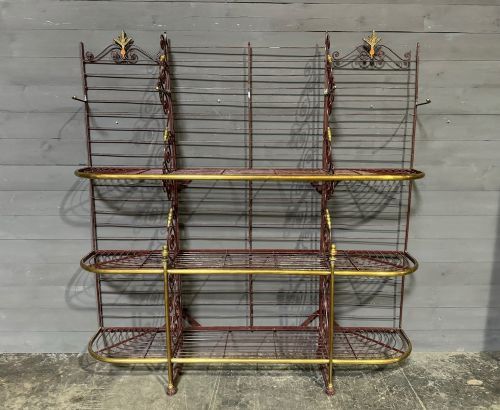
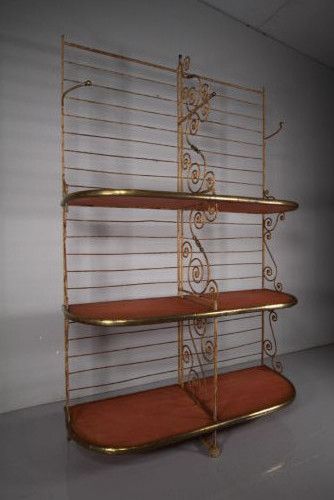


Wrought Iron Unit
A wrought iron unit provides robust utility with classic French and English styling, bringing industrial character and practical storage into modern rooms.
Wrought Iron Unit
When you search for a wrought iron unit, you encounter heavy metal shelving, bakers racks, and industrial cabinets designed for sturdy storage. These practical forms range from Parisian patisserie racks to English scroll-work bakery furniture, built to withstand daily commercial or domestic use.
You are most likely to meet French provincial and industrial examples dating from the nineteenth and early twentieth centuries on this page. These pieces often combine open metal frames with wooden elements or glass shelves, offering both display and storage capabilities.
The assortment includes specialised forms such as plant stands, wash stands, and bread racks alongside general shelving. Their origins stretch across French and English country styles, reflecting a utilitarian past adapted for contemporary interiors.
Construction and materials
Makers shaped these utilitarian frames primarily from wrought iron and steel, utilising traditional blacksmithing techniques to create durable load-bearing structures. Hand-forged scroll-work and riveted joints provide both structural integrity and decorative flourish.
Combinations of painted metal, sheet metal, and brass appear alongside secondary materials like oak and glass. Original painted finishes and surface patination bear witness to decades of working life in bakeries and workshops.
Wrought Iron Unit Retail Price Guide 2026
Typical asking prices for wrought iron unit among the pieces listed under this phrase on Sellingantiques today, from the lower quarter to the upper quarter. They describe what is for sale here now, not the wider market.
Several baker's racks retain flour dust trapped in their scroll-work since the nineteenth century.
Assessing quality and authenticity
Superior examples exhibit crisp hand-forging in the ironwork, with balanced proportions and purposeful joins that reflect genuine period craftsmanship. Stamped maker details or intact original paint remnants elevate a piece above standard utilitarian storage.
The handling of secondary materials like oak shelving and glass inserts distinguishes finer workshop pieces from basic commercial shelving. Consistency in the scroll-work and the integration of brass or sheet metal elements demonstrate higher manufacturing standards.
The Wrought Iron Unit Glossary
- Wrought iron
- A tough, malleable form of iron containing slag inclusions, traditionally shaped by hand hammering on an anvil. This material resists corrosion well and allows for intricate scroll-work.
- Bakers rack
- A tall open shelving unit originally used in commercial kitchens and patisseries for cooling bread and pastries. They feature sturdy metal frames designed to hold heavy trays.
- Scroll-work
- Ornamental spiral or curved patterns formed in metal during the forging process. This technique adds structural rigidity while softening the industrial appearance of the frame.
- Patisserie rack
- A specialised French storage unit used in pastry shops, typically constructed from iron and wire mesh. These pieces often incorporate decorative cresting and multiple tiers.
Wrought Iron Unit: Frequently Asked Questions
What is a wrought iron unit used for?
These pieces serve primarily as open storage and display furniture in kitchens, living spaces, and gardens. Their deep shelves and sturdy frames accommodate heavy items, books, or decorative plants.
Historically designed for commercial trades like baking and engineering, they now function well as versatile shelving in domestic interiors.
How do I date a metal shelving unit?
Dating relies on examining construction methods, such as hand-forged joints versus modern welding, alongside material types and surface wear. Earlier nineteenth-century examples often display irregular hand-beaten ironwork and authentic period paint layers.
Makers' stamps, specific bracket designs, and regional French or English stylistic markers also help narrow the decade of production.
Can these units be used outdoors?
Many of these pieces tolerate outdoor placement, particularly if they feature durable painted or weathered metal finishes. However, protecting them from prolonged moisture prevents excessive rust formation on exposed iron and steel.
Oak components or glass inserts require sheltered spots to maintain their condition against weathering.
How do I clean an antique iron frame?
Maintenance involves gentle dusting and occasional wiping with a soft, dry cloth to preserve existing patination and original paint remnants. Avoid harsh chemical cleaners that might strip historical finishes or accelerate corrosion.
Light application of microcrystalline wax can protect bare iron surfaces from moisture without altering their historic appearance.