





Wrought Iron Pendant Lighting
These wrought iron pendant lighting fixtures bring industrial strength and historic character to overhead spaces through forged metal and glass.
Wrought Iron Pendant Lighting
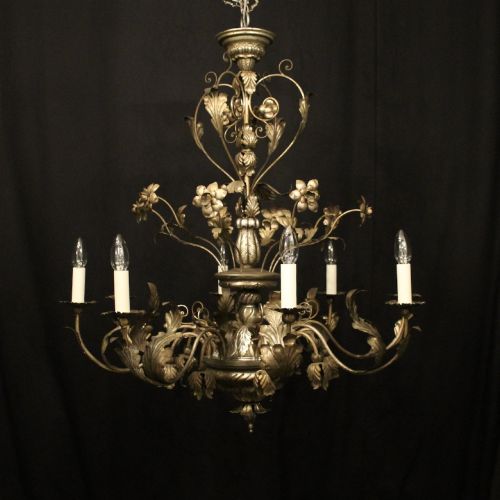
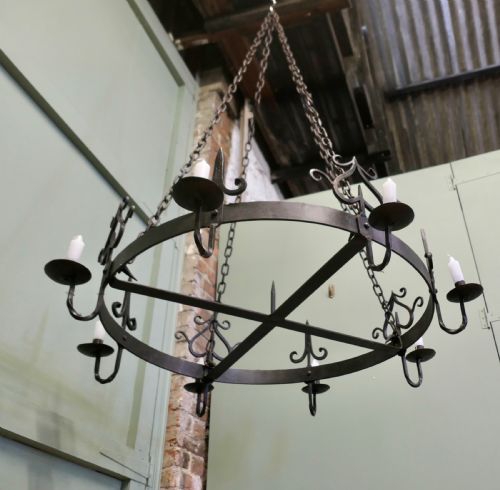
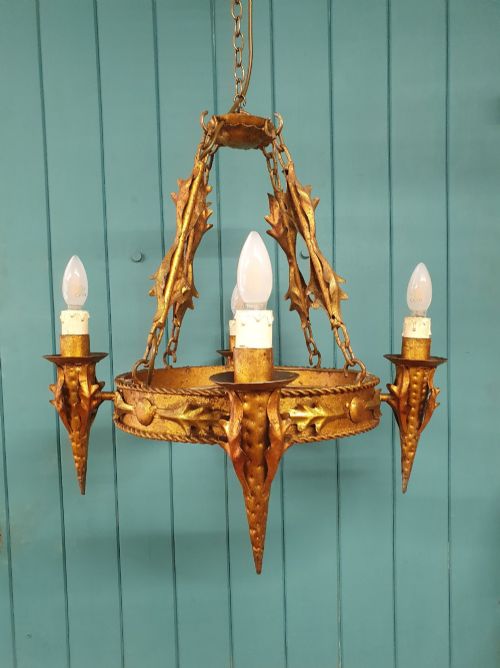
When you search for wrought iron pendant lighting, you encounter overhead fixtures designed to illuminate rooms using forged metal frameworks combined with glass, crystal, or fabric elements. These pieces span centuries from the eighteenth century through the Victorian era, the Arts and Crafts movement, Art Nouveau, and into the 1930s.
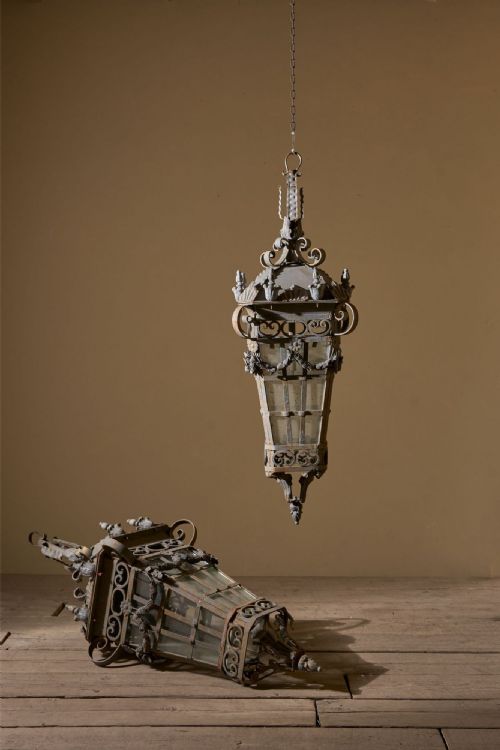
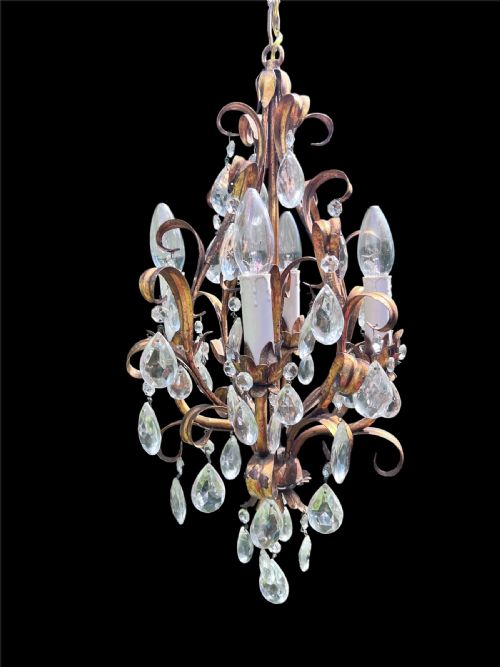
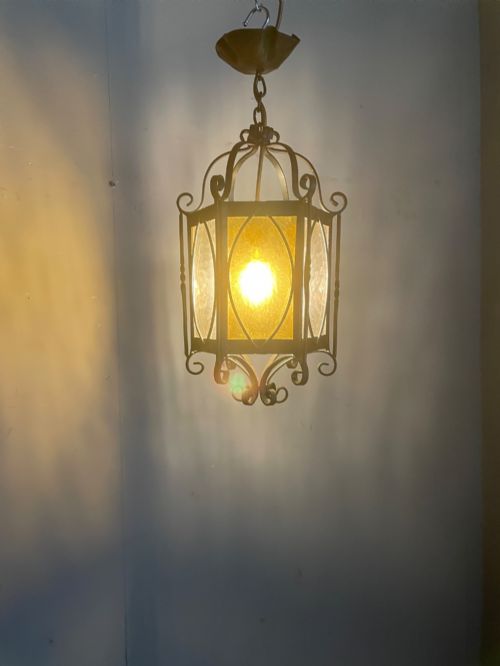
The most common examples on this page are French and Italian hall lanterns, chandeliers, and ceiling lights forged from iron and steel. Many incorporate glazed panels, coloured glass fruits, or leaded details reflecting styles such as Gothic Revival, French Chateau, and Italian Florentine.
How they were made
Blacksmiths shaped wrought iron and steel into structural arms, scrolls, and lanterns using traditional forging techniques, hammering heated metal into rigid geometric or organic forms. These iron skeletons were then fitted with glass panels, crystal drops, or patinated metal components.
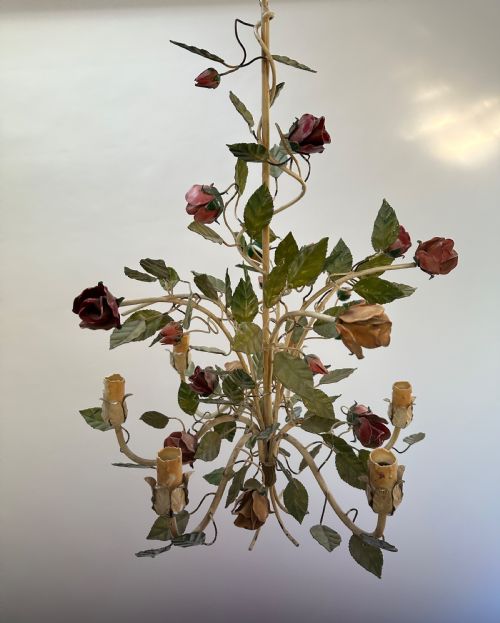
Makers integrated decorative elements including gilt finishes, polychrome paint, copper accents, and specialised glass types such as frosted glass, stained glass, and pate de verre.
Wrought Iron Pendant Lighting Retail Price Guide 2026
Typical asking prices for wrought iron pendant lighting among the pieces listed under this phrase on Sellingantiques today, from the lower quarter to the upper quarter. They describe what is for sale here now, not the wider market.
Several chandeliers come decorated with coloured crystal fruits including grapes, apples, and pears, bringing an orchard harvest directly to the ceiling.
What varies in quality
The standard of a piece depends on the fineness of the blacksmith's forgework and the integrity of the integrated glass or crystal components. Heavier gauge metalwork and detailed hand-hammered flourishes distinguish superior chandeliers and lanterns from simpler production items.
Original surface treatments, such as period gilding, polychrome paintwork, and specialised glass shades by known makers, elevate the artistic merit of the lighting fixture significantly.
Schneider·Verrerie Des Vosges·Muller Freres
The Wrought Iron Pendant Lighting Glossary
- Wrought iron
- A tough, malleable form of iron suitable for forging into decorative and structural shapes by a blacksmith. It resists corrosion better than modern carbon steels.
- Hall lantern
- An enclosed ceiling-hung light fixture designed specifically for entrance halls and corridors. These often feature glazed or leaded glass panels to protect the light source.
- Pate de verre
- A glass-making technique involving crushed glass packed into a mould and fused in a kiln. It produces richly textured, semi-translucent coloured glass elements found in Art Nouveau lighting.
- Chandelier
- A branched, decorative ceiling-mounted lighting fixture designed to hold multiple lamps or candles. They frequently incorporate crystal drops, glass fruits, or metallic foliage.
Wrought Iron Pendant Lighting: Frequently Asked Questions
What periods do these pendant lights come from?
The lighting fixtures span from the eighteenth century through the nineteenth century, including the Victorian period and Arts and Crafts era, extending into the early twentieth century up to the 1930s and 1940s.
Designs reflect historical revivals and modernist movements, ranging from Gothic Revival and Italian Florentine to Art Nouveau and Art Deco styles.
How were these lanterns originally lit?
Earlier examples, particularly those dating to the eighteenth and nineteenth centuries, were designed to be lit by candles before later being adapted for electricity.
Many surviving pieces retain their historic form while accommodating modern electrical wiring for contemporary domestic use.
Where should I hang a hall lantern?
Hall lanterns suit entranceways, corridors, porches, and stairwells where an enclosed pendant fixture provides directional and ambient illumination.
Their glazed or shielded designs protect the light source from drafts in transitional spaces between the outside and interior rooms.
How do I identify Arts and Crafts lighting?
Arts and Crafts pieces emphasise honest construction, visible hand-hammered ironwork, and simple, functional forms without excessive ornamentation.
They frequently feature copper accents, straightforward geometric framing, and straightforward materials that highlight the maker's hand.