

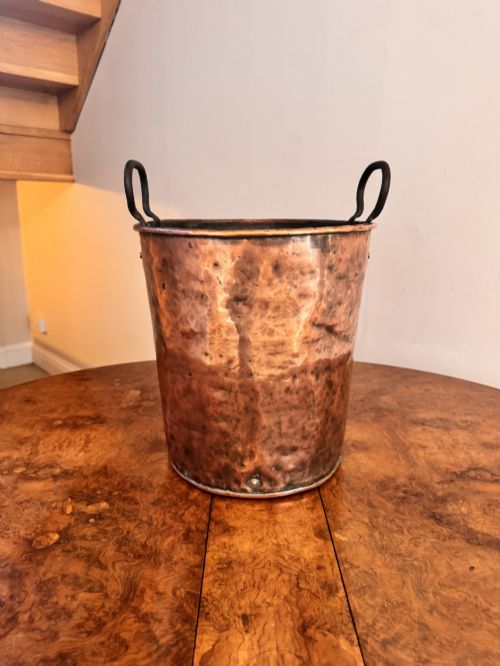
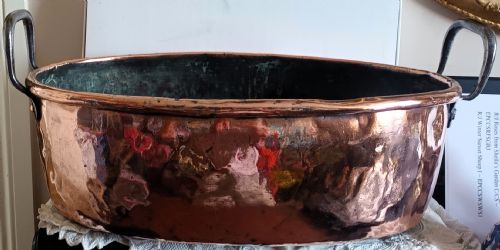
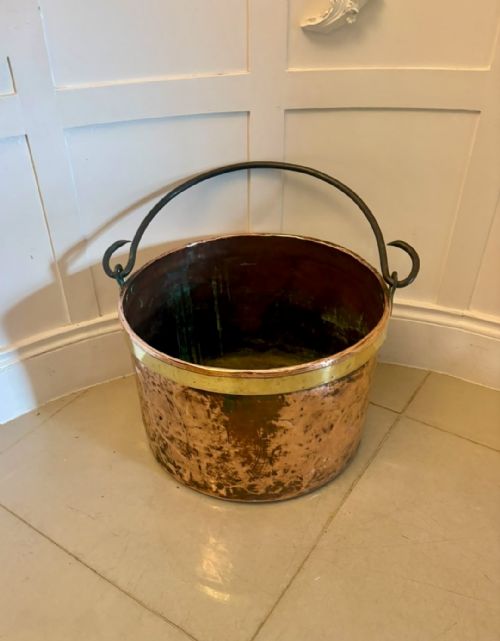
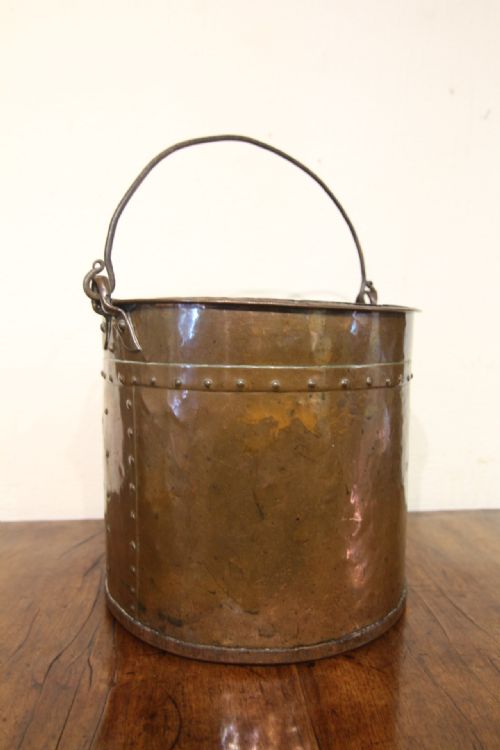


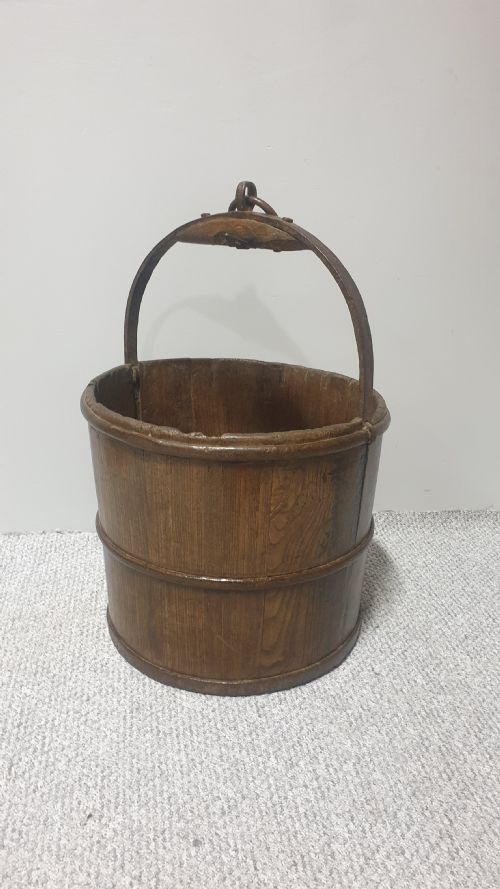
Wrought Iron Handle Planter
These wrought iron handle planter examples are robust vessels of copper and oak, grounding rustic interiors with texture and warmth.
Wrought Iron Handle Planter
A wrought iron handle planter typically takes the form of a generous copper log bin, fireside bucket, or cauldron, designed with sturdy iron bail handles for heavy lifting. These utilitarian vessels span the Georgian period, the nineteenth century, and the early twentieth century, offering practical charm for hearth and home.
You are most likely to encounter nineteenth-century copper cauldrons and log bins alongside oak and metal banded well buckets on this page. Pieces range from French country examples to English rustic farmhouse and Art Nouveau designs, each displaying the patination of age.
The objects serve multiple purposes, shifting easily from traditional fireside storage to domestic display as planters or vessels. Their robust construction bridges kitchenware, hearth accessories, and garden utility.
Materials and construction
Makers fashioned these pieces primarily from heavy sheet copper, joined with visible rivets, and paired them with forged wrought iron swing handles. The warmth of the hammered metal contrasts directly against the cold rigidity of the iron bail.
Alternative examples utilise solid oak staves bound with iron bands or brass fittings, creating coopered cylindrical forms designed to hold weight. These wooden vessels rely on traditional timber-working and metal-hooping techniques to maintain structural integrity.
Surfaces show the natural tool marks of hand-beating, hand-riveting, and forging, leaving a tactile record of the workshop process rather than smooth industrial uniformity.
Wrought Iron Handle Planter Retail Price Guide 2026
Typical asking prices for wrought iron handle planter among the pieces listed under this phrase on Sellingantiques today, from the lower quarter to the upper quarter. They describe what is for sale here now, not the wider market.
Listings feature items spanning the Georgian era, the nineteenth century, and early twentieth-century Art Nouveau design.
Judging quality and character
The distinction between ordinary utility and superior quality rests upon the gauge of the metal and the integrity of the hand-riveting. Heavier copper sheets hold their structural form better under pressure and develop a deeper, undisturbed surface patination over centuries of use.
Proportion and scale dictate the visual weight of the piece within a room, with larger cauldrons and deep log bins requiring well-balanced iron handles that swing freely. The refinement of the wrought iron work and the tightness of wooden cooperage separate standard workshop output from exceptional examples.
The Wrought Iron Handle Planter Glossary
- Cauldron
- A large, round metal pot with a swing handle, traditionally used over an open fire for boiling or heating. In a decorative context, it functions as a deep planter or log holder.
- Log bin
- A sturdy floor-standing container designed to hold firewood near a fireplace. These vessels prioritize large capacities and durable metal or wood construction.
- Swing handle
- A curved metal grip attached to pivot mounts on opposite sides of a bucket or pot. This construction allows the handle to drop flat against the vessel rim when not in use.
- Coopered
- Made by a craftsman who shapes and fits wooden staves together with metal bands. This technique is standard for watertight well buckets and cylindrical wooden bins.
- Patina
- The surface sheen and colour acquired by copper, iron, and oak through age, handling, and oxidation. It serves as a visual indicator of long-term survival and authenticity.
Wrought Iron Handle Planter: Frequently Asked Questions
What is a wrought iron handle planter?
A wrought iron handle planter is a heavy domestic vessel, often historically used as a copper log bin, coal bucket, or cauldron, adapted for modern planting. These items combine a durable metal or wooden body with a forged iron grip.
Such vessels bring industrial and rustic texture to living spaces. Their deep interiors accommodate substantial root systems.
How were these metal vessels constructed?
Craftsmen hammered sheet copper into deep cylindrical or rounded forms, securing the seams with overlapping rivets. Wrought iron swing handles were then attached via side mounts to bear the weight of the contents.
Alternative pieces utilised wooden staves bound tightly with iron bands. This combination of materials ensured longevity under daily domestic strain.
How do I style a copper log bin at home?
These large vessels sit naturally beside fireplaces, entryways, or within conservatory spaces as plant holders. Their warm metallic tones complement stone hearths and dark timber flooring.
Fill them with large houseplants or leave them empty to display their patinated surfaces. Their generous scale makes them effective focal points in rustic rooms.
How do I date a nineteenth-century piece?
Dating relies on observing manufacturing techniques, material choices, and stylistic cues such as Art Nouveau motifs or Georgian proportions. Hand-beating marks, heavy gauge copper, and forged iron details point towards earlier production.
Later Victorian and 1860s examples often introduce tighter mechanical uniformity or alternative timber banding. Comparing rivet patterns and handle mounts helps narrow down the era of manufacture.