

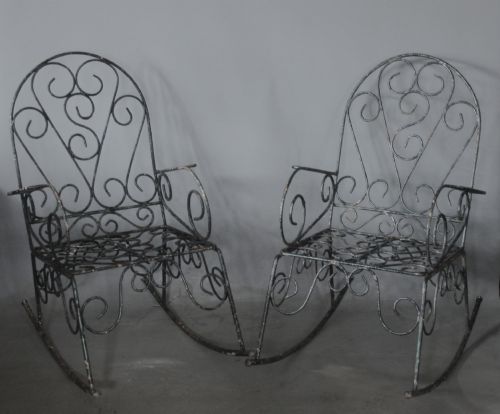
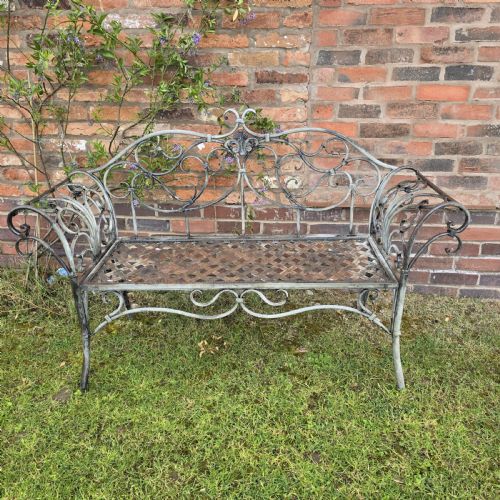

Wrought Iron Garden Seating
Wrought iron garden seating brings enduring metalwork outdoors, offering structural strength and decorative scrollwork that withstands the elements while ageing with grace.
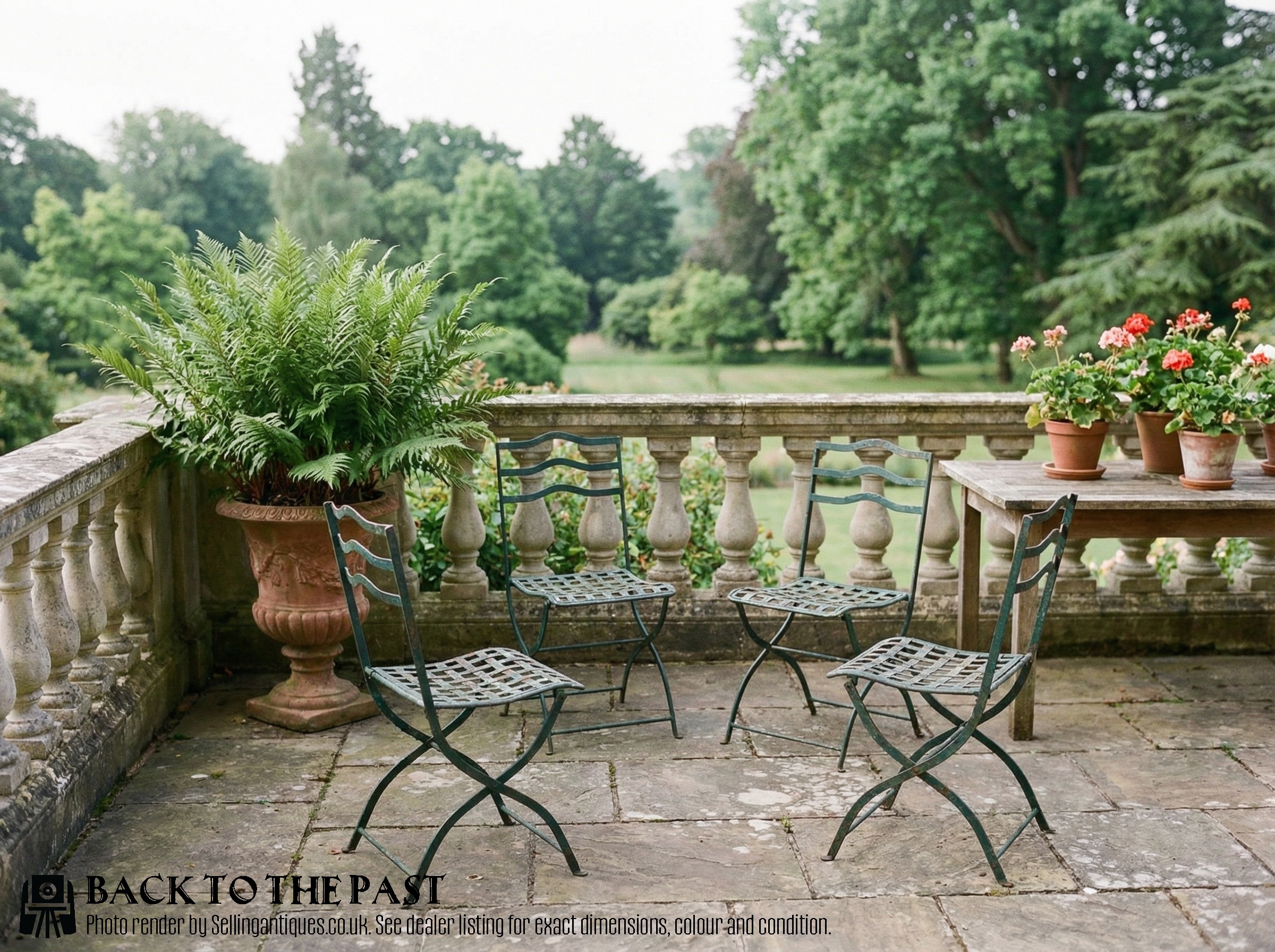
Wrought Iron Garden Seating
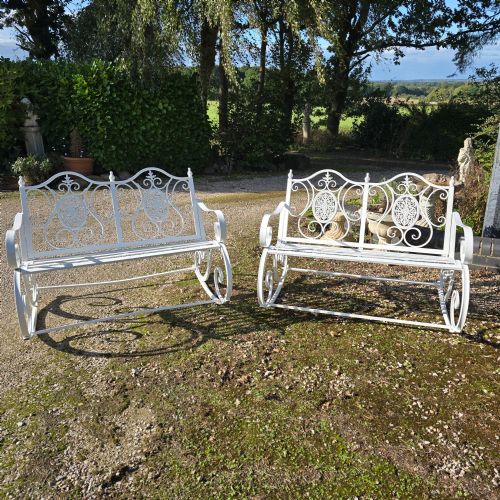
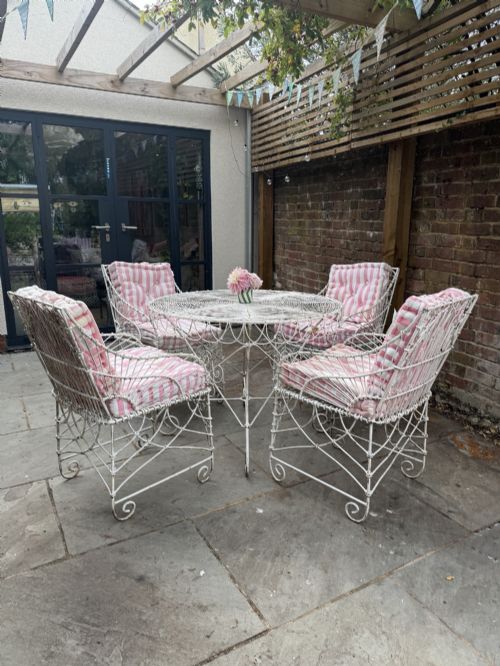
When you search for wrought iron garden seating, you encounter durable outdoor furniture designed for lawns, terraces, and conservatories. The selections here span benches, armchairs, rocking chairs, and complete dining sets intended for exterior use.
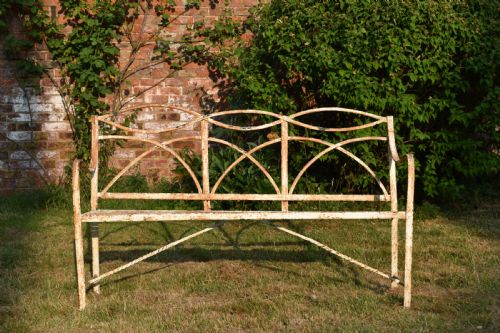
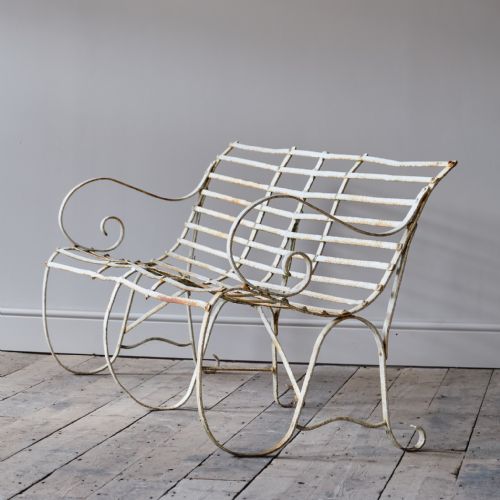
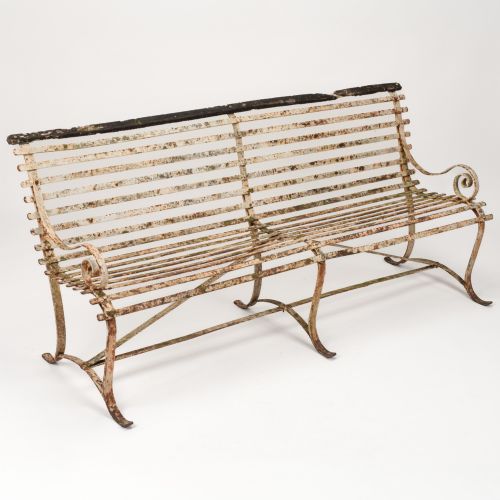
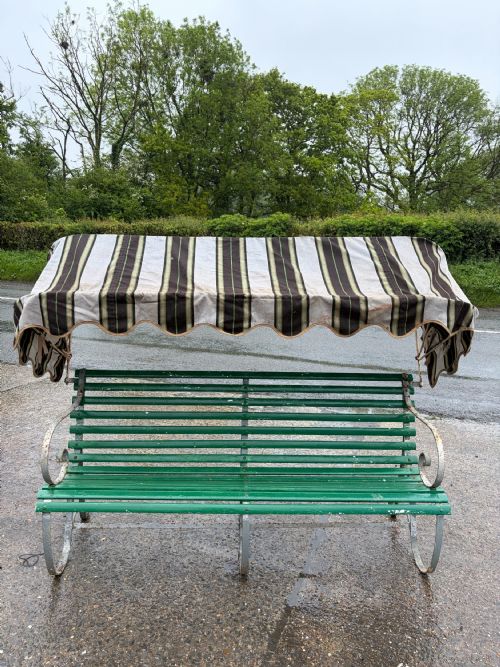
You are most likely to meet nineteenth-century and early twentieth-century examples, including Victorian strapwork benches and French folding chairs. These pieces combine utilitarian metal frames with decorative scrolls, canopies, and slatted seats.
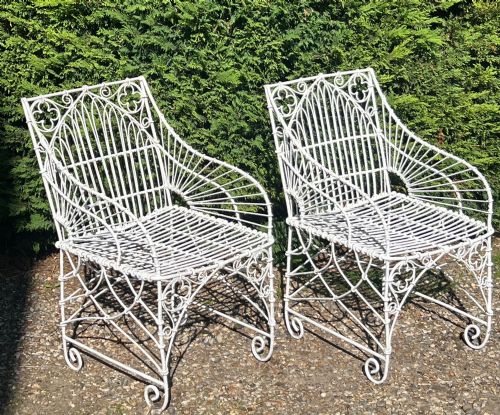
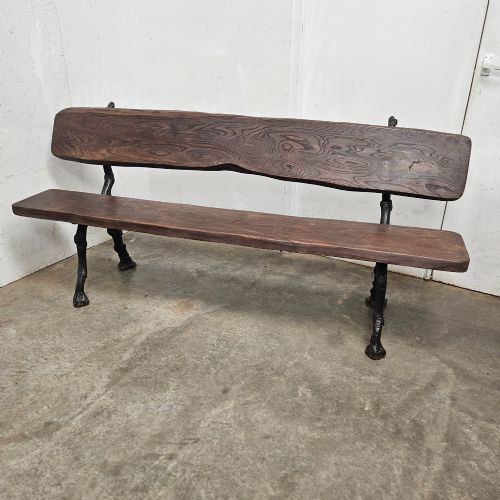
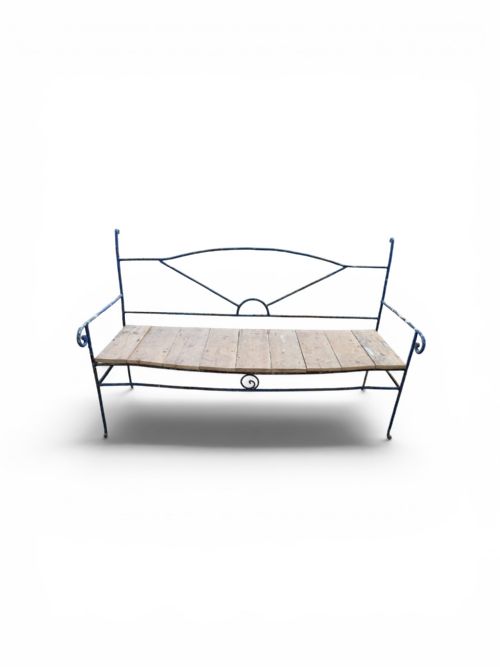
The material repertoire extends beyond pure metal to incorporate timber slats, elm seats, and painted finishes. Pieces range from simple strapwork designs to elaborate Gothic Revival and wirework arbours.
How they were made
Blacksmiths and manufacturers shaped wrought iron and steel through hot forging, bending, and riveting. Strapwork frames required careful heating and hammering to create flat, intersecting bands of metal that offered both flexibility and strength.
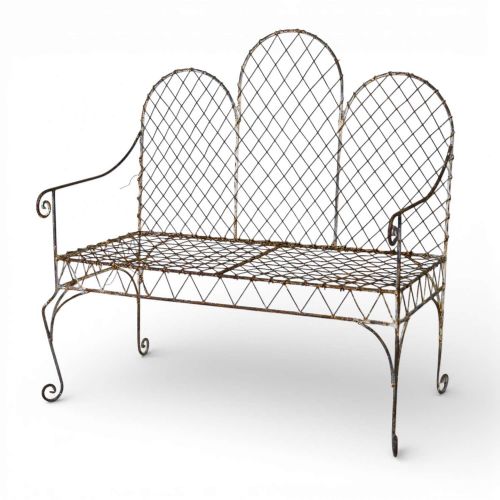
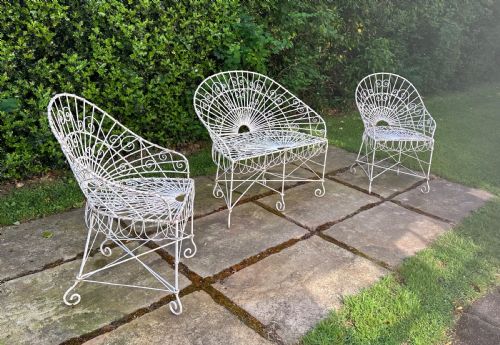
Many items incorporate protective layers of paint to prevent oxidation, while others combine metal frames with wooden elements such as elm seats or timber laths. Wirework pieces utilised woven and welded metal strands to form lightweight yet robust garden seats and tables.
Listings feature periods spanning from the early nineteenth century through the 1940s, utilising wrought iron, cast iron, wirework, and elm.
What varies in quality
The refinement of the forged scrollwork and the crispness of the strapwork joints separate utilitarian park furniture from domestic conservatory pieces. Superior examples display balanced proportions, elegant curves, and meticulous hand-riveting rather than crude welding.
The survival of original surface paint layers and the structural integrity of the metal significantly influence the character of each piece. Minimal pitting and retained patination indicate careful historical upkeep.
The Wrought Iron Garden Seating Glossary
- Strapwork
- Flat bands of metal interwoven or riveted to form geometric patterns. This technique provided structural rigidity for nineteenth-century garden benches.
- Faux bois
- Imitation wood. This decorative technique shaped metal or concrete to resemble natural timber branches and grain.
- Wirework
- Mesh or strands of metal welded into arbours, seats, and tables. It created airy, lightweight garden furniture during the Victorian era.
- Gothic Revival
- An architectural and decorative style utilising pointed arches and ecclesiastical motifs. It frequently influenced nineteenth-century metal garden seating.
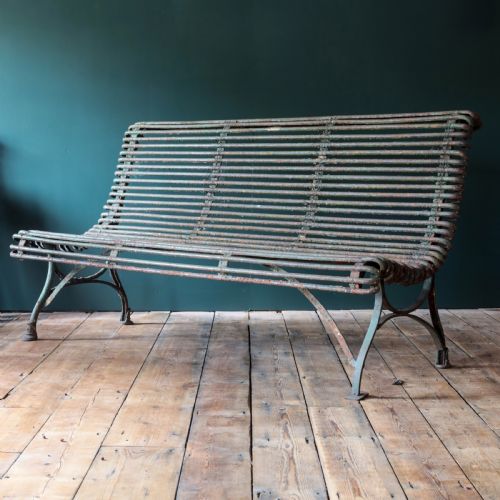
- Arras
- A specific French style of metal garden furniture associated with a northern manufacturing town. Pieces often featured distinct slat construction and robust iron frames.
Wrought Iron Garden Seating: Frequently Asked Questions
How do I date a wrought iron garden bench?
Dating relies on stylistic clues such as Regency strapwork, Victorian Gothic motifs, or early twentieth-century manufacturing marks. Construction methods, including hand-riveting versus modern welding, also indicate age.
Examining the layers of paint and the wear on the feet provides further context regarding the manufacturing period.
Can wrought iron garden seating stay outside year round?
Most antique metal seating tolerates outdoor placement, though prolonged exposure to moisture accelerates oxidation. Protecting pieces during harsh winter months preserves the remaining paint layers.
Applying appropriate protective treatments helps maintain the structural integrity of the ironwork.
What is French faux bois garden furniture?
Faux bois garden furniture mimics natural timber using materials like metal or reinforced concrete. Artisans shaped the medium to resemble gnarled branches and bark.
This whimsical style gained popularity in nineteenth-century French gardens for blending rustic aesthetics with durable construction.
How do I maintain original paint on garden seating?
Preserving original paint requires gentle cleaning with mild soap and water rather than harsh abrasives. Avoiding aggressive scraping protects the historic patinated surface.
Applying microcrystalline wax can seal existing paint layers against moisture damage.
What distinguishes wirework from strapwork?
Strapwork utilises flat, heavy bands of iron arranged in geometric patterns for robust structural support. Wirework employs thinner, interwoven strands to create lighter, transparent forms like arbours and chairs.
Both techniques appeared frequently in nineteenth-century outdoor spaces but served different aesthetic and functional roles.