


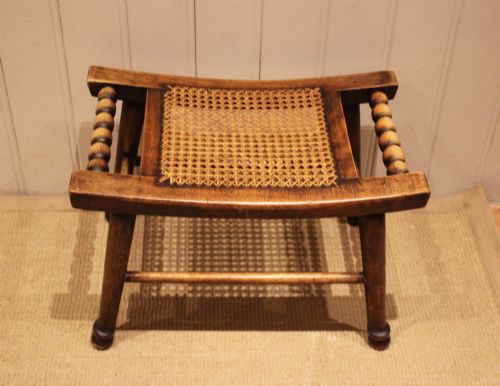


Woven Seat Stool
These woven seat stool examples combine traditional seating frames with plant fibre webbing, offering character and practical low seating for any room.
Woven Seat Stool
A woven seat stool brings together sturdy wooden frames and flexible natural plant weaves to create portable, low seating. When individuals search for a woven seat stool, they encounter forms ranging from simple country tripod designs to elegant dressing table seats.
The materials span oak, beech, elm, and ebonised wood paired with rush, cane, and rattan. Pieces appear across nineteenth century and early twentieth century periods, reflecting both rustic farmhouse traditions and formal parlour styles.
Common formats on this page include compact footstools, long daybed benches, and ladderback high chairs with woven seating panels. Each object balances structural timberwork with flexible woven surfaces designed for daily utility.
Materials and construction methods
Woodworkers shaped solid timbers like oak, beech, and satinwood into turned legs, ladderback frames, and carved rails. Joinery typically relies on traditional tenons and pegged joints to keep frames rigid under everyday loads.
Makers utilised natural materials such as dried marsh rush, split cane, and woven rattan to form resilient seating surfaces. Artisans threaded these plant fibres tightly around wooden seat rails by hand to distribute weight evenly.
Woven Seat Stool Retail Price Guide 2026
Typical asking prices for woven seat stool among the pieces listed under this phrase on Sellingantiques today, from the lower quarter to the upper quarter. They describe what is for sale here now, not the wider market.
Children's ladderback high chairs with rush seats prove that toddlers have been demanding proper country vernacular furniture for generations.
Distinctions in standard and execution
Quality rests upon the tightness and regularity of the plant fibre weave, alongside the density of the underlying timber frame. Tightly packed rush and uniform cane work demand higher skill and offer greater longevity.
Fine examples display thoughtful timber selection, such as figured satinwood or heavy oak, paired with crisp turning on the legs. Lesser pieces utilise simpler softwoods and loose, uneven weaving patterns that lack structural crispness.
The Woven Seat Stool Glossary
- Rush
- Dried marsh grass twisted into cords and hand-woven across seat frames. It provides a durable, textured surface common in country vernacular furniture.
- Cane
- Strips split from the outer bark of rattan palms and woven into open patterned grids. It creates a lightweight and flexible seating panel.
- Ebonised wood
- Timber stained or treated to resemble heavy ebony. This finish was popular during the Victorian period for formal dressing furniture.
- Ladderback
- A chair or stool frame featuring horizontal wooden slats resembling a ladder between the upright posts. This style appears frequently in country seating.
Woven Seat Stool: Frequently Asked Questions
Where do I put a woven seat stool?
These pieces fit easily beneath dressing tables, beside fireplaces as low seating, or at the foot of a bed. Their compact dimensions make them useful for occasional seating in hallways and bedrooms.
Because the frames are light, you can move them from room to room as needed. They pair well with both traditional rustic decor and simpler modern interiors.
How do I clean rush and cane seats?
Dust natural fibre seats regularly with a soft brush or a dry cloth to remove grit between the strands. Avoid soaking rush or cane in water, as excessive moisture makes plant fibres brittle.
If you need to tackle a mark, wipe the surface gently with a barely damp cloth and dry it immediately. Keeping natural fibres conditioned in dry indoor environments prevents cracking over time.
How do I date a wooden stool?
Examine the tool marks on the wood, the turning style of the legs, and the method used to assemble the joints. Machine-sawn timber and uniform screws typically point towards later nineteenth or twentieth century production.
Hand-finished surfaces, pegged tenons, and aged patination on the wood indicate earlier craftsmanship. Comparing the wood species to known period preferences helps narrow down the era.
Are these stools comfortable to sit on?
The woven plant fibres offer a degree of natural spring and give under body weight. While firmer than padded upholstery, rush and cane distribute weight well for short seating periods.
Many people add small loose cushions to hard wooden or woven seats for extra softness. The woven structure remains breathable and supportive during daily use.