




Woven Foliage Tapestry
These woven foliage tapestry pieces bring deep botanical depth to a room through centuries of textile artistry.
Woven Foliage Tapestry
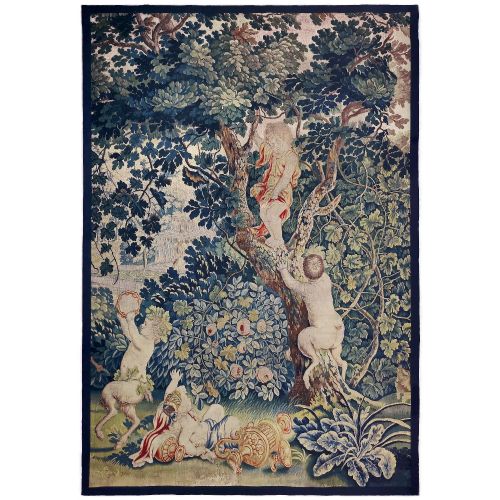
A woven foliage tapestry presents dense woodlands, leaves, and botanical scenes across expansive wall textiles. Buyers searching this phrase encounter verdure designs originating from Flemish and French workshops.
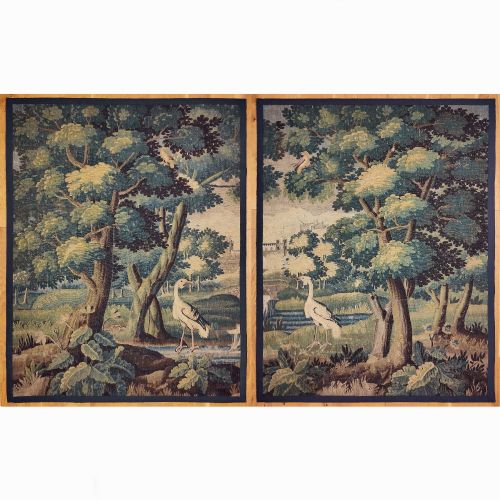
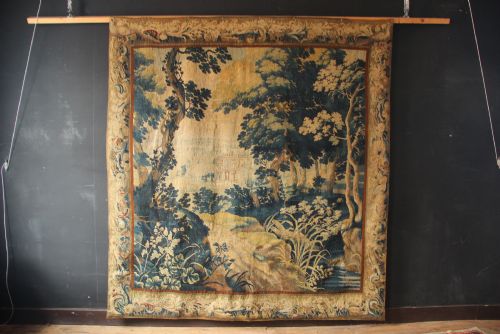
The selections span from the seventeenth century through the eighteenth century, alongside later nineteenth and twentieth century interpretations. Common formats include wall hangings and pairs of vertical panels.
Flemish Baroque and Aubusson styles dominate the available selection, often depicting stylized trees and distant chateaux. These wall tapestries function as substantial architectural textiles that warm large interior spaces.
How they were made
Workshops utilised combinations of wool, silk, linen, and cotton yarns on high warp or low warp looms. Weavers built the complex foliage motifs by interlocking different coloured threads by hand.
Needlework techniques also appear in pieces from the eighteenth century, augmenting the woven foundation with supplementary stitches. These methods created rich surface textures across the verdure landscapes.
Woven Foliage Tapestry Retail Price Guide 2026
Typical asking prices for woven foliage tapestry among the pieces listed under this phrase on Sellingantiques today, from the lower quarter to the upper quarter. They describe what is for sale here now, not the wider market.
Materials recorded across current inventory include wool, silk, linen, and cotton.
What varies in quality
The gradation of tone across the leaf canopy and the complexity of the botanical motifs determine the visual depth of a piece. Finer examples employ silk threads alongside wool to catch the light within the foliage.
The density of the weave and the structural integrity of the textile determine its longevity as a wall hanging. Superior proportions and balanced compositions distinguish exceptional panels from simpler decorative elements.
The Woven Foliage Tapestry Glossary
- Verdure
- A tapestry style dominated by plant motifs, trees, and foliage. These scenes typically feature stylized woods and distant birds.
- Aubusson
- A style of tapestry originating from the French town of Aubusson. These pieces often showcase lighter palettes and refined pastoral landscapes.
- Flemish Baroque
- A prominent seventeenth century regional style known for dramatic composition and deep chromatic ranges. Such works display dense, shadowed woodlands.
- Needlework
- Textile embellishment applied by hand with a needle rather than solely on a loom. This technique enhances specific details within historic wall hangings.
Woven Foliage Tapestry: Frequently Asked Questions
How do I hang a heavy tapestry?
Large wall hangings require a weight-distributing support system rather than a single fixing point. A fabric sleeve sewn along the top edge accommodates a concealed wooden batten or metal rod.
Securing the batten directly into wall studs ensures the textile hangs flat without putting undue strain on the historic weave.
Where should I place a verdure tapestry?
These large wall textiles suit substantial blank walls in principal reception rooms or stairwells. Their dense botanical imagery helps absorb sound and adds warmth to high-ceilinged interiors.
Direct sunlight fades the historic wool and silk yarns over time, so position panels away from unshaded windows.
How do I date an old tapestry?
Stylistic indicators such as the intricacy of the borders, the treatment of perspective, and the predominant colour palette help establish the period. Seventeenth century Flemish works often display darker, earthier tones and dense, shadowed leaf structures.
Later eighteenth century French pieces tend toward lighter greens and more open pastoral compositions.
Can I clean a vintage wall hanging?
Historic textiles demand extreme caution and professional conservation rather than domestic washing. Gentle surface dust removal with a soft brush attached to a low-suction vacuum, filtered through mesh, is generally the limit of safe home maintenance.
Water or chemical solvents can permanently distort the fibres and destabilise old dyes.