

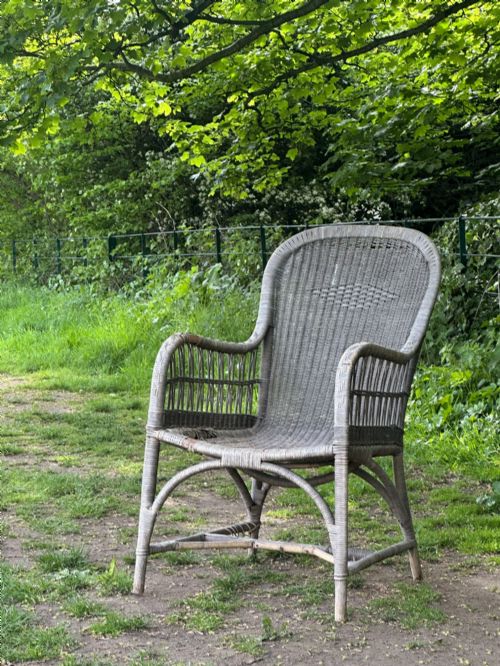
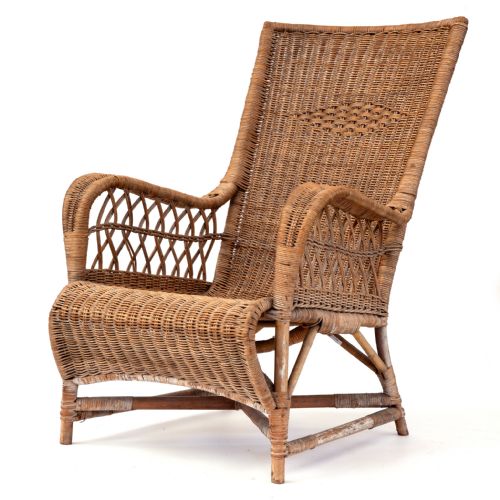


Woven Conservatory Chair
These woven conservatory chair examples bring natural texture and relaxed seating to sunrooms, drawing on early twentieth-century designs.
Woven Conservatory Chair
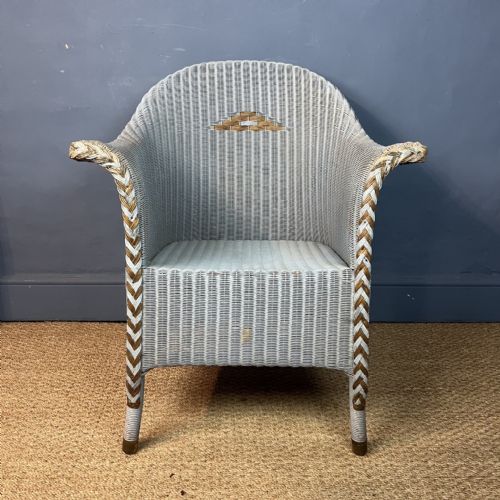
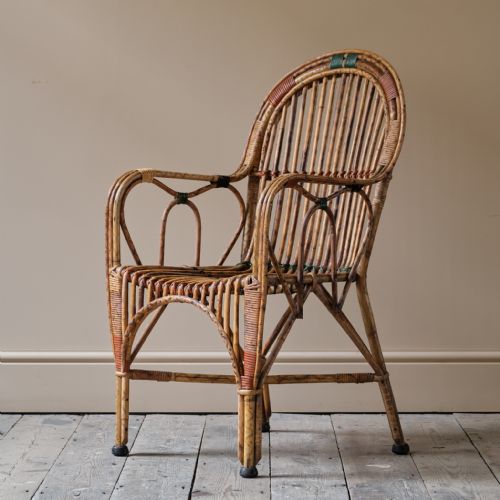
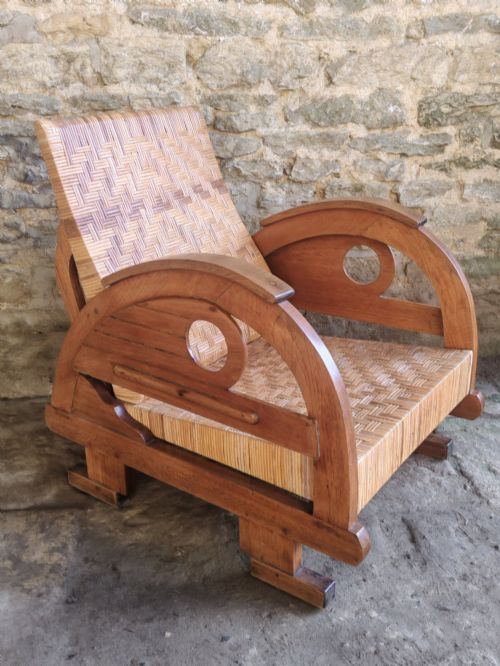
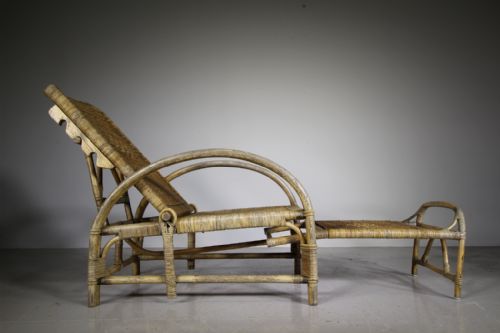
A woven conservatory chair provides practical lounging for garden rooms and sunlit spaces, taking the form of armchairs, garden armchairs, and chaise longues. These seating options emerge from periods spanning the 1920s, 1930s, and 1940s, offering comfortable proportions for interior relaxation. Buyers encounter distinct regional and maker identities within this selection, ranging from British workshops to French provincial examples.
The assortment on this page relies heavily on early twentieth-century production, notably featuring Lloyd Loom designs and pieces associated with Dryad of Leicester. These makers produced durable armchairs that combine woven elements with sturdy frames, satisfying demand for both garden rooms and interior sunspaces. The selection includes reclining garden armchairs and sun-bleached lounge chairs designed for relaxed seating.
How they were made
Skilled artisans applied handwoven techniques to create resilient seating surfaces that flex slightly with the user. Frames incorporate bent timber or metal components to support the intricate basketry and woven outer layers. Surface finishes range from sun-bleached patinas to painted or varnished treatments that protect the natural fibres.
Woven Conservatory Chair Retail Price Guide 2026
Typical asking prices for woven conservatory chair among the pieces listed under this phrase on Sellingantiques today, from the lower quarter to the upper quarter. They describe what is for sale here now, not the wider market.
Several armchairs carry the history of sunny afternoons in Leicester gardens from a century ago.
What varies in quality
Quality rests upon the tightness of the weave and the structural integrity of the underlying frame. Superior examples demonstrate uniform tension across the rattan or cane, with secure fastenings at the joints and edges. Pieces originating from documented workshops exhibit greater refinement in their proportions and finishing details.
The condition of the natural materials distinguishes higher grade items from heavily worn alternatives. Well-preserved surfaces retain their original flexibility and colour without excessive brittleness in the plant fibres. Maker attribution also elevates certain pieces, particularly those bearing the marks of established Leicester manufacturers.
Angraves of Leicester·Dryad of Leicester·Dryad and Co
The Woven Conservatory Chair Glossary
- Lloyd Loom
- A patented material made from twisted kraft paper woven over a wire-reinforced steel frame. It transformed garden and conservatory seating during the interwar period.
- Dryad
- A prominent Leicester-based workshop known for producing high-quality wicker and cane furniture during the early twentieth century. Their output aligns closely with the Arts and Crafts movement.
- Rattan
- A climbing palm used extensively for furniture frames and basketry due to its flexibility and strength. It forms the structural core of many vintage conservatory chairs.
- Chaise longue
- An elongated upholstered or woven chair designed for reclining with legs fully supported. These pieces suit relaxed sunroom environments.
Woven Conservatory Chair: Frequently Asked Questions
How do I clean a woven chair?
Dust the woven surfaces regularly with a soft brush or vacuum attachment to prevent dirt accumulation within the fibres. Avoid excessive moisture during cleaning to protect the natural cane or rattan from swelling.
Condition the material occasionally with appropriate oils if specified by the manufacturer, keeping the pieces away from direct heat sources that cause brittleness.
Are these chairs suitable for outdoors?
These seating options serve primarily as indoor, garden room, or conservatory furniture rather than permanent outdoor fixtures. Exposure to rain and frost degrades natural fibres like cane, willow, and rattan over time.
Users may place them in sheltered garden environments during dry weather, but they require indoor storage to preserve their condition.
What is Lloyd Loom furniture?
Lloyd Loom describes furniture manufactured using twisted kraft paper woven on a loom, invented in the United States and produced widely in Britain. This technique created a smooth, snag-free surface that resisted the cracking associated with traditional wicker.
These pieces often feature distinctive metal tags or stamps confirming their production method and period.
How do I identify a Dryad piece?
Dryad furniture often displays characteristic labels, stamped brass plaques, or distinctively robust Arts and Crafts styling. The craftsmanship emphasises honest construction methods and durable cane work.
Examination of the frame reveals the careful shaping and joining typical of this Leicester workshop.