





Worcester Spill Vase
A Worcester spill vase is a cylindrical ceramic holder designed to carry wooden matches, and collectors prize them for their hand-painted panels.
Worcester Spill Vase
A worcester spill vase is a small porcelain receptacle traditionally used to transfer fire from a hearth to a candle or pipe. These ceramic pieces range from early Regency examples bearing the Flight Barr and Barr mark to later Victorian and twentieth-century Royal Worcester and Locke & Co. productions.
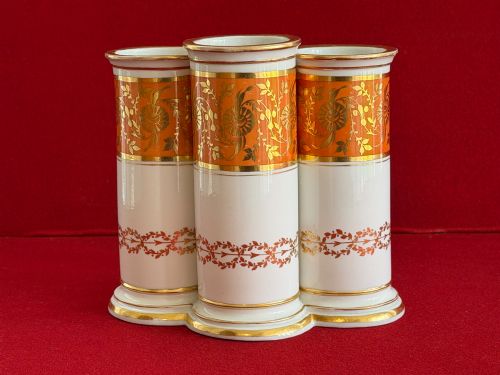
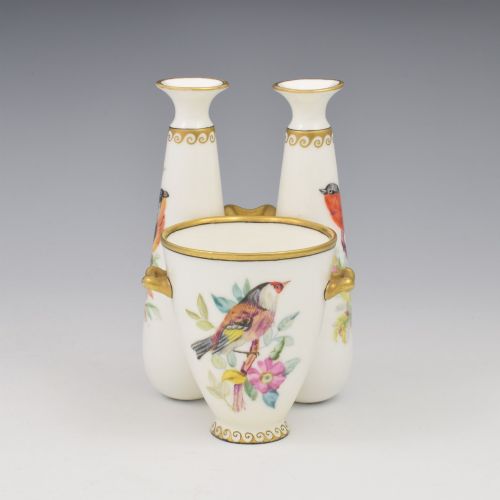
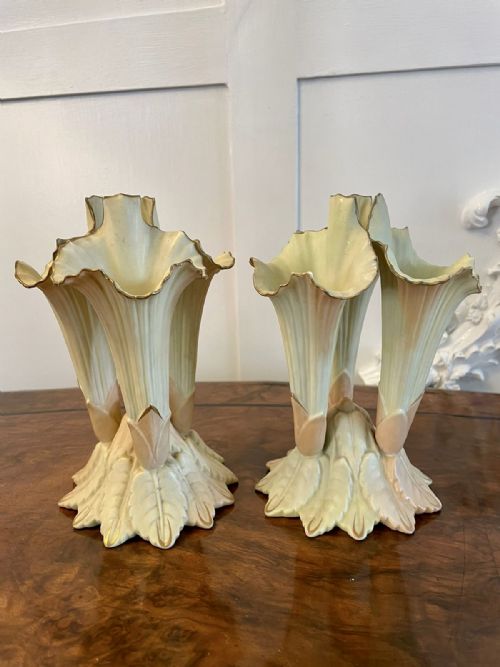
Buyers encountering this group will most frequently find twentieth-century pieces dating from the 1920s alongside earlier nineteenth-century specimens. The forms include single cylinders, pairs, and triple vase arrangements, often featuring cylindrical bodies suited for holding taper spills.
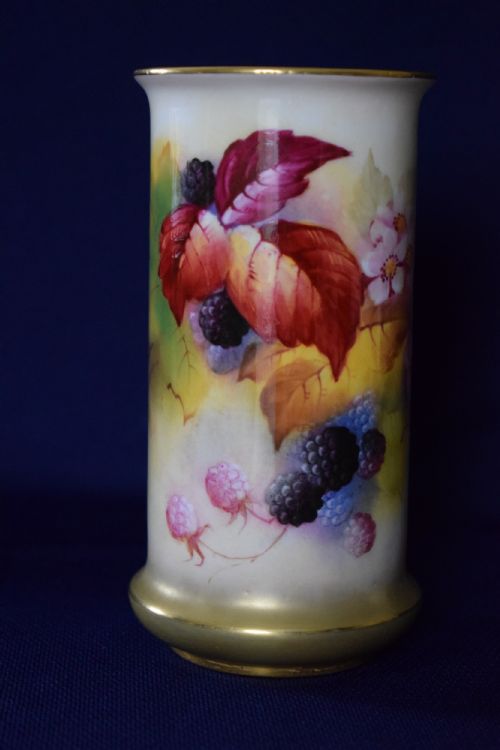
The decorative subjects recorded in these items concentrate heavily on hand-painted natural scenes, including highland cattle, painted fruit, and ornithological studies. Many bear the signatures of notable decorators such as Stinton, Ricketts, Davis, and Blake.
How they were made
The manufacture of a worcester spill vase relies on fine porcelain shaped into upright tubular forms and fired at high temperatures. Artisans then applied enamel pigments by hand to create detailed landscape, animal, and floral subjects directly onto the ceramic surface.
Gilding and gold leaf were frequently added to the rims, bases, and handles to provide contrast and frame the painted panels. Some twentieth-century pieces utilise a blush ivory ground, combining soft tinted glazes with raised gilding techniques.
Worcester Spill Vase Retail Price Guide 2026
Typical asking prices for worcester spill vase among the pieces listed under this phrase on Sellingantiques today, from the lower quarter to the upper quarter. They describe what is for sale here now, not the wider market.
Highland cattle painted by Stinton stare out from porcelain cylinders, proving that Scottish cows found their most loyal admirers sitting on English mantelpieces.
What varies in quality
The distinction between standard examples and superior specimens rests upon the skill and identity of the hand painter. Pieces bearing the signatures of established factory artists command greater attention due to the fine detail and naturalism of the painted subjects.
The complexity of the form and the richness of the application also define the tier of a piece. Pairs and triple vase configurations, combined with heavy gilding and pristine enamel preservation, represent the more ambitious output of the factories.
Royal Worcester·Flight Barr and Barr·Locke & Co.
The Worcester Spill Vase Glossary
- Spill vase
- A small upright holder designed to contain thin wood splints used for lighting fires. They typically feature a narrow cylindrical body to keep the spills upright.
- Blush ivory
- A soft cream-coloured porcelain ground developed by porcelain factories in the late nineteenth century. It provides a muted background for floral and landscape enamel painting.
- Enamel
- Vitreous pigments applied to the glazed ceramic surface and fired at a lower temperature to fuse the colours. It allows for detailed miniature painting on porcelain.
- Gilding
- The application of gold leaf or gold paint to ceramic surfaces for decorative accent. It is commonly found highlighting the rims and feet of nineteenth and twentieth-century vases.
Worcester Spill Vase: Frequently Asked Questions
What is a spill vase used for?
A spill vase held slender wood tapers known as spills, which people used to transfer a flame from the fireplace to lamps, candles, or pipes before matches became common.
Over time, these ceramic cylinders evolved into purely decorative mantelpiece ornaments while retaining their traditional narrow tubular shape.
How do I identify a Regency period piece?
Early nineteenth-century examples often carry the Flight Barr and Barr factory mark from the Regency era. They typically feature neoclassical or hand-painted botanical motifs distinct from later Victorian styles.
Examining the paste, paste texture, and specific factory script on the base helps determine whether the piece dates to the early 1800s.
Who were the notable decorators?
Factory artists such as Harry Stinton, Kitty Blake, and Ernest Ricketts painted specific subjects like highland cattle, autumn fruits, and detailed flora. Their signatures frequently appear near the base of the painted panels.
Signed pieces indicate the work of senior decorators whose individual artistic style adds significant interest to the porcelain.