

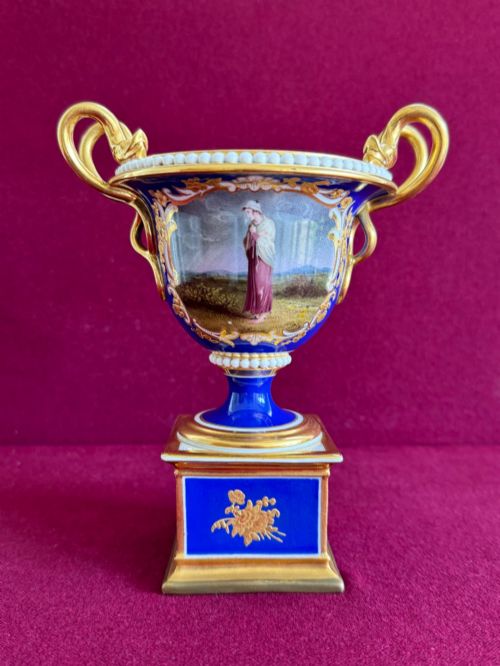


Worcester Pedestal Urn
These worcester pedestal urn examples bring hand-painted porcelain artistry and classical proportions straight into a room.
Worcester Pedestal Urn
A worcester pedestal urn combines classical vase forms with elevated footed bases, often accompanied by lids or handles. These decorative objects emerge across Georgian, Regency, Victorian, and Edwardian periods.
Visitors to this selection most frequently encounter Royal Worcester pieces from the late nineteenth and early twentieth centuries, including blush ivory finishes and naturalistic bird paintings. Earlier Regency and Georgian examples appear alongside Hadley's Worcester productions.
Many items function as covered vases, pot pourri vessels, or twin-handled ewers. The forms draw directly on ancient Greek and Roman shapes adapted for British interior display.
How they were made
Makers shaped fine porcelain bodies on the potter's wheel or in moulds before applying detailed enamel paint and rich gilding. Artisans fired the pieces multiple times to set the colours and gold leaf securely onto the glazed surface.
Specialist artists added hand-painted vignettes depicting birds, flora, and pastoral scenes directly onto the porcelain body. Guildsmen then applied gold leaf highlights to handles, rims, and pedestal bases to frame the central artwork.
Worcester Pedestal Urn Retail Price Guide 2026
Typical asking prices for worcester pedestal urn among the pieces listed under this phrase on Sellingantiques today, from the lower quarter to the upper quarter. They describe what is for sale here now, not the wider market.
Cock pheasants and storks strut across these porcelain surfaces, preserved forever in mid-flight or poised among gilded foliage.
What varies in quality
The sophistication of the hand-painted decoration determines the standing of an individual piece. Signed works by notable decorators demonstrate superior brushwork compared to standard factory output.
The crispness of the moulded relief and the richness of the gilding separate standard production items from masterworks. Preservation of the original enamel colours and gold leaf finish dictates the overall integrity of the object.
Flight Barr And Barr·Royal Worcester
The Worcester Pedestal Urn Glossary
- Pedestal vase
- A vessel elevated upon a raised foot or column base. This form lifts the main body of the urn to create a commanding display presence.
- Blush ivory
- A soft, matte cream-coloured porcelain ground developed by Royal Worcester in the late nineteenth century. It provides a subtle background for floral and avian enamel painting.
- Pot pourri
- A vase featuring a pierced or perforated cover designed to release scent from dried flower petals held within. These vessels often incorporate internal liners.
- Gilding
- The application of gold leaf or powdered gold to ceramic surfaces. Artisans use this technique to accentuate handles, collars, and borders.
- Enamel paint
- Vitreous pigments applied over the glaze and fired at lower temperatures to achieve rich, opaque colours. It allows for detailed miniature painting on porcelain.
Worcester Pedestal Urn: Frequently Asked Questions
What periods do these urns come from?
The pieces span from the late Georgian and Regency eras through the Victorian, Aesthetic Movement, and Edwardian periods up to the early twentieth century.
Each era brings distinct aesthetic choices, moving from classical neoclassical shapes to soft blush ivory finishes and naturalistic bird studies.
How were these urns used originally?
Owners placed them on mantelpieces, sideboards, and pedestals purely for decorative effect in formal reception rooms. Some variations functioned specifically to hold scented dried flower mixtures.
Their substantial presence and classical proportions made them centrepieces for interior display rather than utilitarian vessels.
How do I care for antique porcelain?
Keep these pieces away from direct sunlight to protect delicate enamel colours and gilding from fading over time. Dust gently with a soft, dry brush.
Avoid using water, chemical cleaners, or abrasive cloths on the surface, particularly around hand-painted areas and gold leaf.
How do I distinguish different periods?
Examine the base marks, the style of the painted decoration, and the colour palette of the ceramic body. Regency pieces often feature classical forms with bold gilding.
Later Victorian and Edwardian examples frequently showcase blush ivory grounds or naturalistic artist-signed wildlife scenes.