
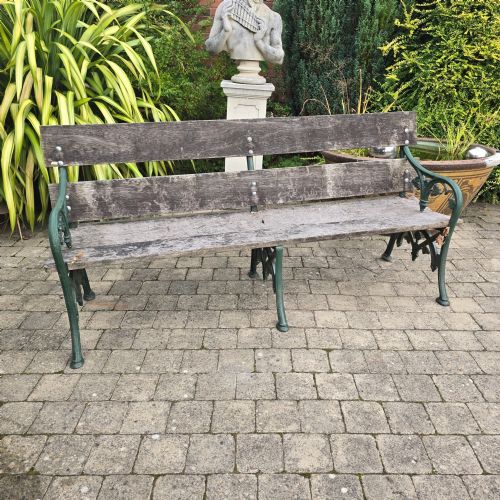
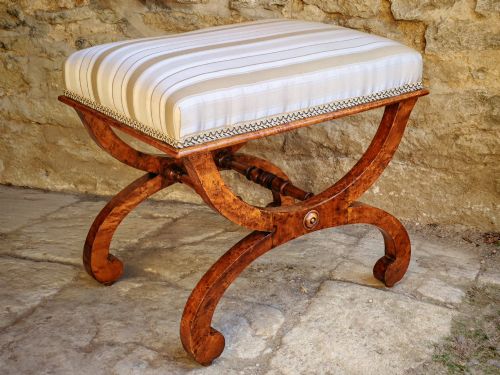
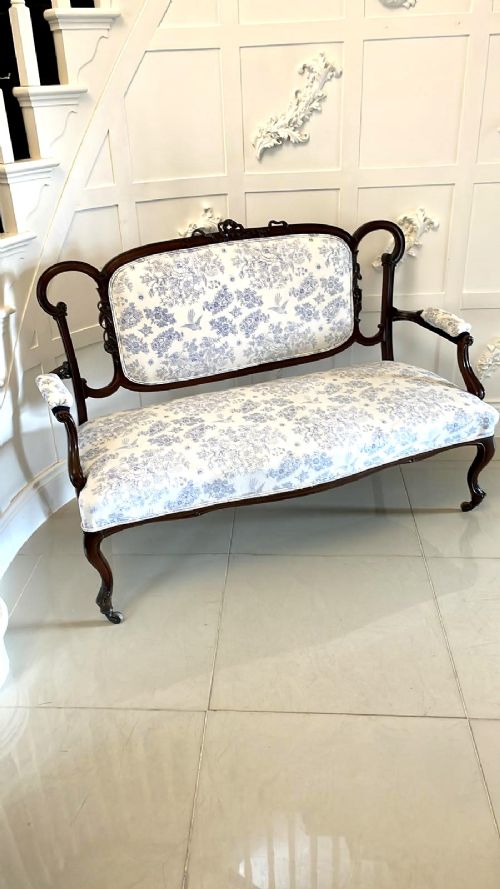
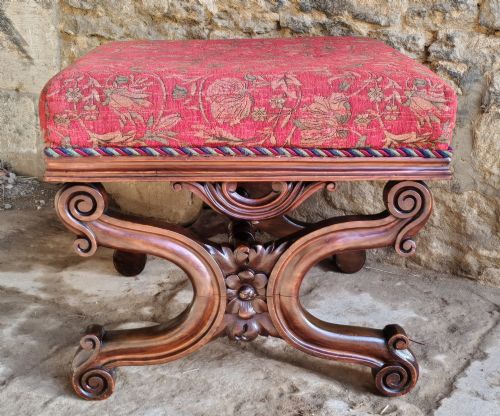
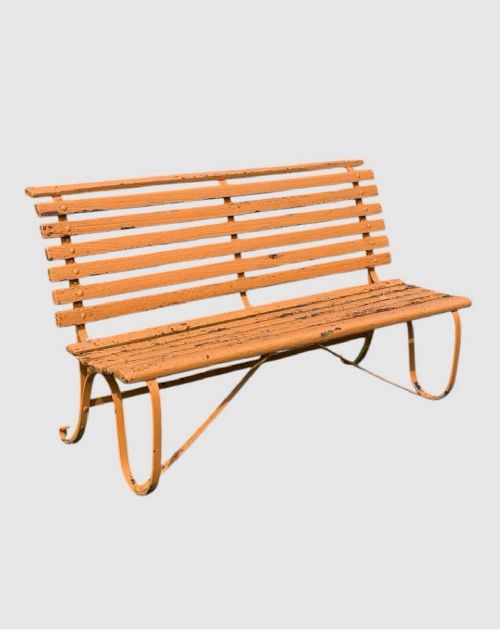


Wooden X Frame Bench
A wooden x frame bench brings architectural geometry and compact seating to a room, spanning periods from Regency elegance to Edwardian practicality.
Wooden X Frame Bench
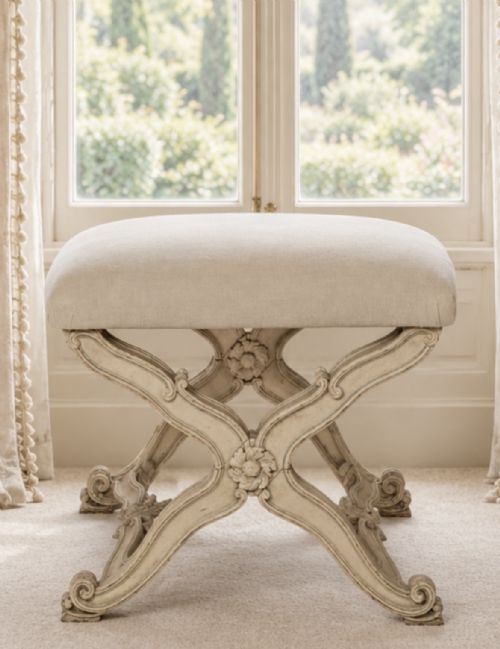
A wooden x frame bench combines structural cross-supports with a seating surface, appearing across nineteenth-century and early twentieth-century periods in forms ranging from window seats to footstools. These seating pieces draw upon Regency, Victorian, and Edwardian design traditions, often serving as versatile auxiliary furniture in hallways, bedrooms, and living spaces.
The versions most commonly met on this page include mahogany, walnut, and ebonised wood frames paired with various upholstery fabrics or cane. Buyers encounter distinctive stylistic influences, from Aesthetic Movement ebonised details to French Empire and Georgian proportions, creating a diverse selection of seating formats.
How they were made
Cabinet makers utilised dense hardwoods such as mahogany, walnut, oak, and satinwood to construct the characteristic intersecting stretcher supports and frames. These timbers were frequently carved, ebonised, or inlaid with contrasting woods to achieve the desired aesthetic finish.
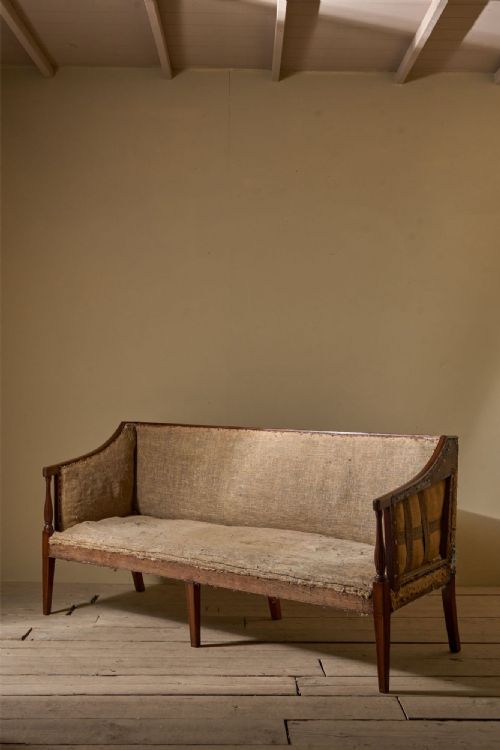
Upholstery techniques involved textile covers, Kilim, tapestry, and modern fabrics secured over padded foundations, sometimes complemented by brass fittings or gilt accents. Cane work also appears on specific footstool designs, demonstrating varied craftsmanship across the periods.
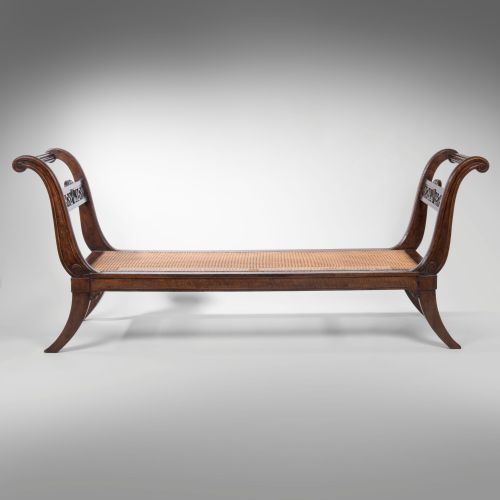
Upholstered seating varieties span window seats, footstools, daybeds, and two-seat settees utilising fabric, textile, and cane.
What varies in quality
The refinement of timber selection and the execution of carved detailing distinguish finer examples from standard production. Superior pieces display thoughtful grain matching in burr maple, mahogany, or walnut alongside crisp, deep carving rather than softened contours.
Structural integrity relies on the precision of the cross-frame joinery and the original weight of the timber frame. Higher-tier items maintain rigid alignment at the intersecting joints and retain substantial framing that supports daily use without lateral movement.
The Wooden X Frame Bench Glossary
- X-frame
- A structural furniture base formed of intersecting diagonal members that create an X shape when viewed from the side. This classical form provides inherent load-bearing strength while maintaining an open silhouette.
- Ebonised
- Timber treated with a chemical stain or black finish to imitate expensive ebony wood. This treatment was particularly popular during the Victorian and Aesthetic Movement periods.
- Window seat
- A long, narrow bench designed specifically to fit within the recess of a bay or window. These pieces frequently feature upholstered tops and short backs or scroll ends.
- Settee
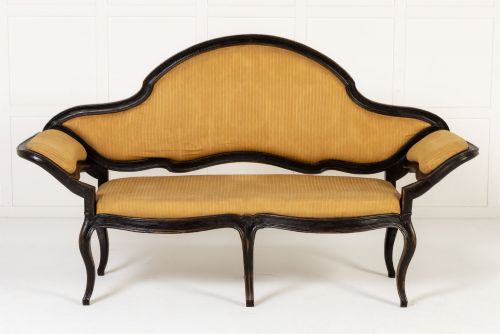
- A small upholstered sofa with a back and arms, designed to seat two or more people. They appear across Georgian, Victorian, and Edwardian styles in various wood frames.
- Satinwood
- A durable, yellowish timber often used for decorative veneers and inlay work on fine cabinet furniture. It provides a bright, reflective surface that contrasts with darker woods.
Wooden X Frame Bench: Frequently Asked Questions
Where should I place a wooden x frame bench?
These benches suit narrow circulation spaces like hallways or at the foot of a bed where their compact footprint functions effectively. Their architectural silhouette also allows them to sit beneath windows or alongside living room walls.
Because many examples include upholstered tops, they provide comfortable temporary seating without obstructing views or light paths in smaller rooms.
How do I identify a Regency period bench?
Regency pieces often display classical influences inspired by ancient Roman and Greek furniture, frequently incorporating bold curves and scroll ends. The use of mahogany and gilt details is typical of this era.
Proportions tend to be balanced and architectural, reflecting the neoclassical tastes prevalent during the early nineteenth century.
Can I use an antique bench for daily seating?
Most solid hardwood frames constructed in the nineteenth or early twentieth centuries remain robust enough for regular use. Ensuring the structural joints and cross-braces are secure is the main requirement.
Upholstered surfaces may require occasional renewal depending on the fabric condition, but the underlying wooden frames are generally built to endure.
What is the difference between a stool and a bench?
Stools generally offer compact, backless seating designed for a single person or as a footrest. Benches are typically longer formats intended to accommodate multiple sitters or span greater widths.
Both forms utilise the intersecting x-frame architecture, but their overall scale and functional purpose differ within a room scheme.