

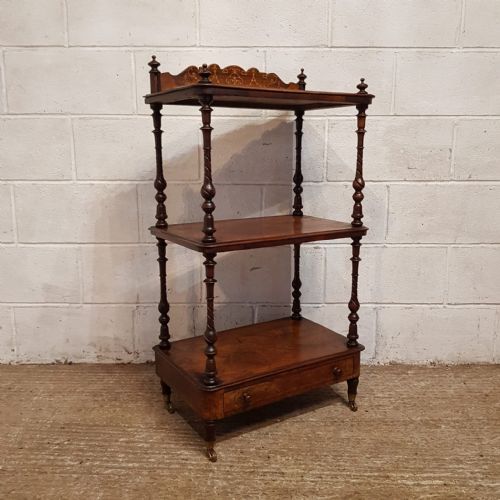


Wooden Whatnot Stand
A wooden whatnot stand provides tiered open display for books, ceramics and small objects across periods from the Georgian era to the late nineteenth century.
Wooden Whatnot Stand
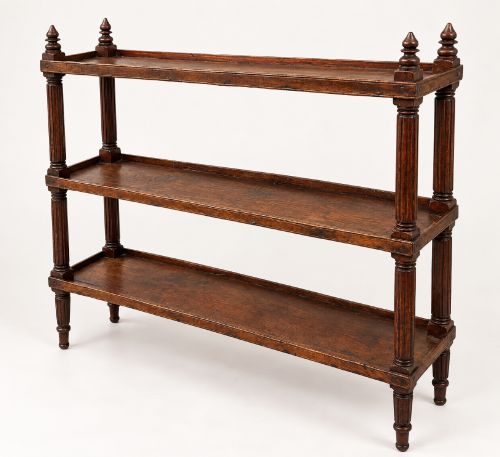
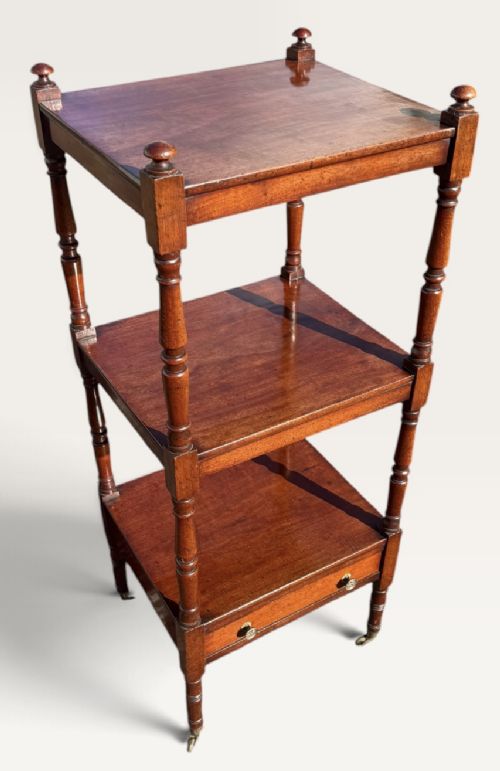
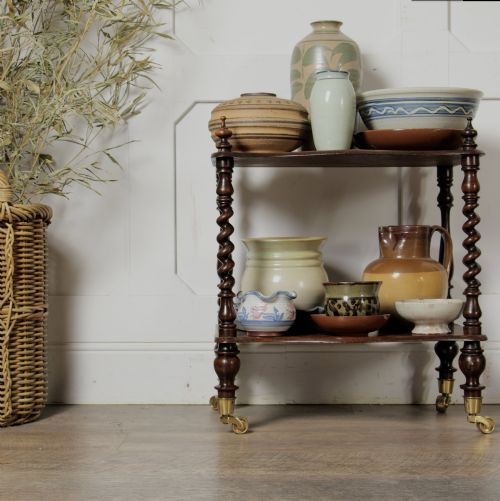
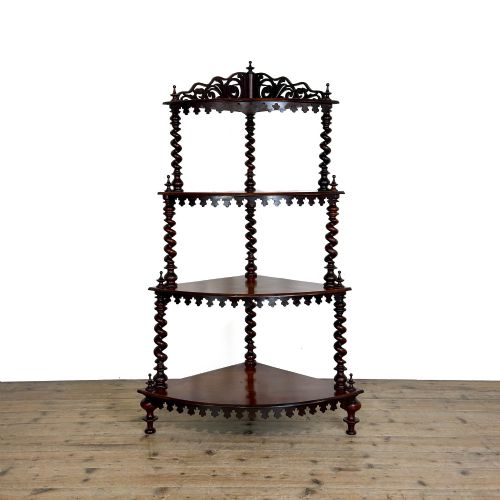
A wooden whatnot stand appears in various configurations including tiered open shelves, corner units, dumb waiters, and etageres designed to hold books, music or decorative objects. The most common form on this page is the Victorian mahogany or burr walnut multi-tiered stand, frequently fitted with turned supports or barley twists.
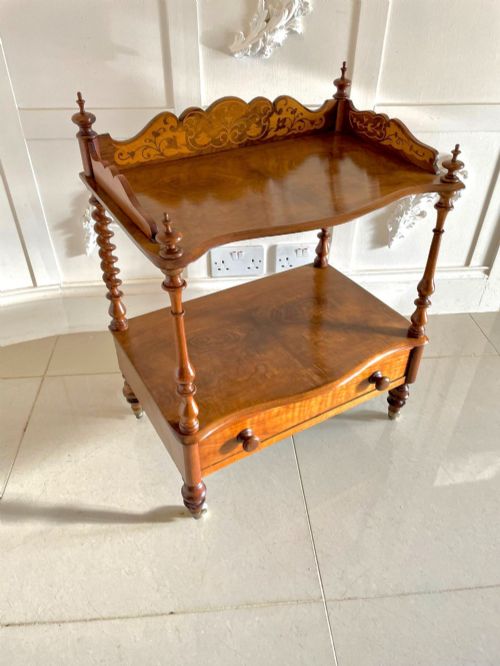
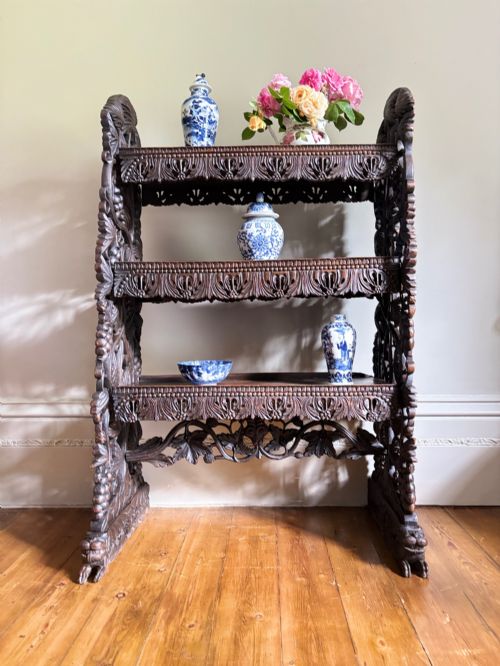
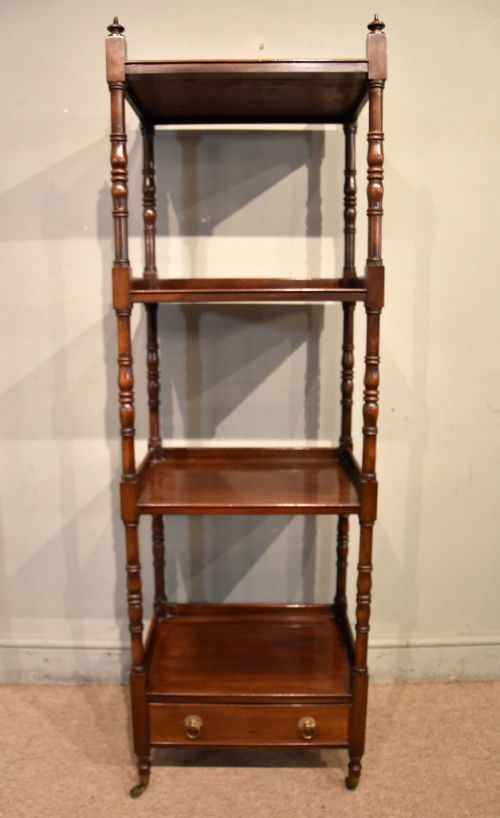
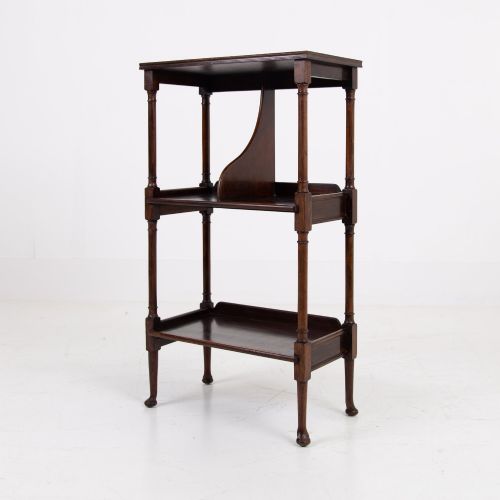
Examples range from compact three-tier breakfast or bedside models to tall four-tier display shelves, occasional tables, and pieces incorporating lower cupboards, drawers, or cellarettes. Origins span the Georgian, Regency, and Victorian periods, with specific variants such as Anglo-Indian padauk shelves and serpentine burr walnut canterburys appearing among the selection.
Materials and construction
Makers utilised dense cabinet timbers such as mahogany, walnut, and rosewood, alongside decorative veneers including burr walnut and birdseye maple, to build rigid tiered frameworks. Individual tiers are supported by turned uprights, columns, or barley twist pillars, occasionally accented with brass fittings, marquetry inlay, or glass elements.
Structural joinery relies on secure shelf fixing and sturdy corner posts to bear the weight of stacked books and porcelain. Ebonised finishes and carved mahogany details appear on select Georgian and Victorian examples, matching the domestic furniture trends of their respective decades.
Wooden Whatnot Stand Retail Price Guide 2026
Typical asking prices for wooden whatnot stand among the pieces listed under this phrase on Sellingantiques today, from the lower quarter to the upper quarter. They describe what is for sale here now, not the wider market.
Listings feature mahogany, walnut, burr walnut, rosewood, padauk, and birdseye maple across multiple periods.
Quality variations
The distinction between standard and superior pieces rests on timber selection and decorative ambition, where finely figured burr walnut, intricate marquetry, or exotic padauk elevate a standard shelf unit into a statement piece. Superior examples integrate functional additions like lockable drawers, mirrors, or cellarettes with clean architectural proportions.
Subtle differences in turning work, edge moulding, and overall timber density separate provincial work from London workshop production. The crispness of carved details and the alignment of tiered platforms determine the visual balance of the stand.
The Wooden Whatnot Stand Glossary
- Whatnot
- A piece of furniture consisting of a set of open shelves for displaying small objects, books, or ornaments. It developed in the late eighteenth century and remained popular throughout the Victorian period.
- Etagere
- A French term for a piece of furniture with a series of open shelves for displaying ornaments, closely related to the English whatnot.
- Canterbury
- A low stand with partitions for holding sheet music, books, or folios, often combined with whatnot shelves on top. These pieces frequently feature turned wooden divisions and low castor feet.
- Dumb waiter
- A tiered revolving or stationary stand placed beside a dining table to hold serving dishes or utensils. In later periods, these forms merged with standard whatnot designs.
- Barley twist
- A type of turning shaped like a spiral rope, commonly used for the vertical supports on Victorian stands and tables. This decorative form adds visual rhythm to the upright members.
Wooden Whatnot Stand: Frequently Asked Questions
What was a wooden whatnot stand used for?
These tiered stands served primarily for the display of ornaments, fine ceramics, and small curiosities in nineteenth-century drawing rooms and parlours. They provided accessible surface space for items that crowded smaller tables.
Many variants also functioned to hold books, sheet music, or writing materials close to hand. Specific hybrid forms incorporated drawers, cellarettes, or tray tops for serving tea and dining necessities.
How do I date a wooden whatnot stand?
Dating relies on timber choice, construction methods, and stylistic cues present in the turnings and edge mouldings. Georgian and Regency examples often display simpler mahogany framing and cleaner linear proportions.
Victorian pieces frequently introduce burr walnut veneers, inlaid marquetry, mirrored backs, or barley twist uprights. The presence of specific revival styles points towards the later decades of the nineteenth century.
Where should I place a whatnot in my home?
Corner whatnot stands fit neatly into unused angles of a room, providing height and display space without blocking walkways. Freestanding rectangular or serpentine units anchor well against plain walls or beside seating furniture.
Because these stands feature open shelving on multiple levels, they work effectively to display collections of small objects, books, or trailing plants where light can pass through the tiers.
What is the difference between a whatnot and an etagere?
The terms are largely interchangeable, though etagere often denotes a lighter, more decorative French-influenced piece designed specifically for display. Whatnot is the traditional English term covering both utility shelving and decorative display units.
Both forms utilise stacked open platforms supported by columns, but etageres more frequently incorporate intricate fretwork, glass panels, or gilt accents.