


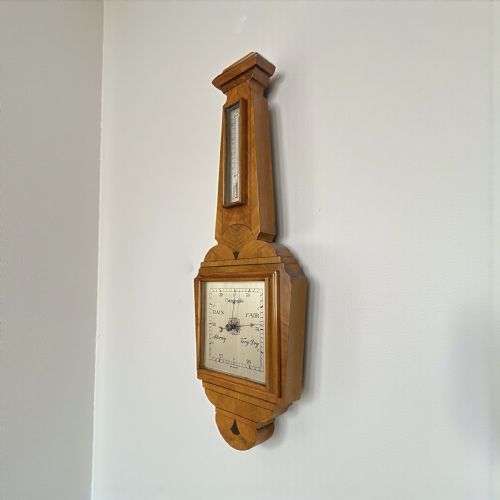


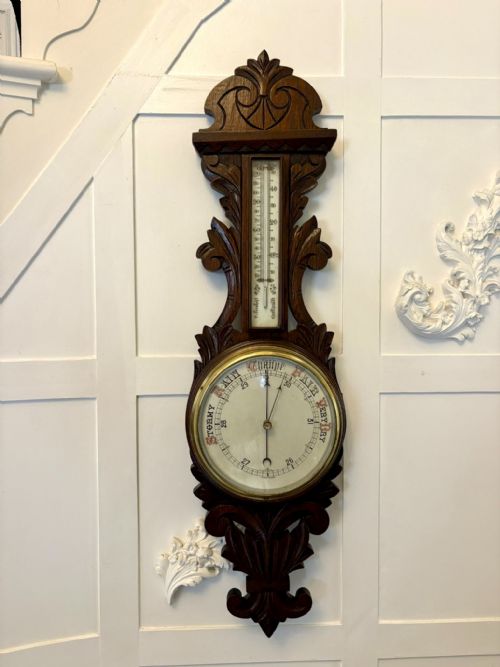


Wooden Weather Station
A wooden weather station brings the useful art of atmospheric tracking into the home through carved oak, walnut, and mahogany.
Wooden Weather Station
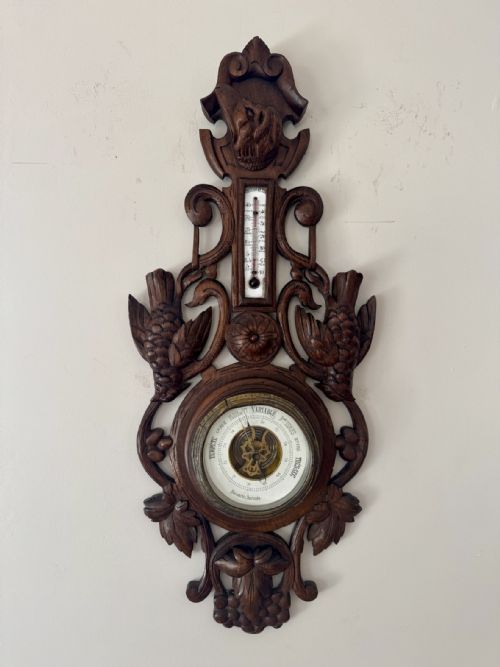
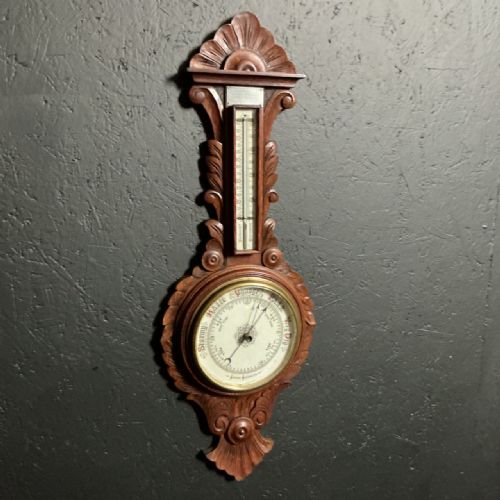
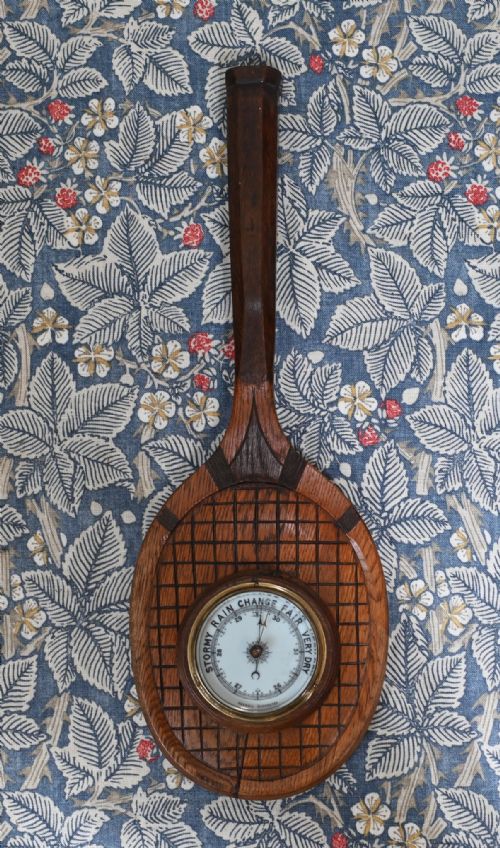
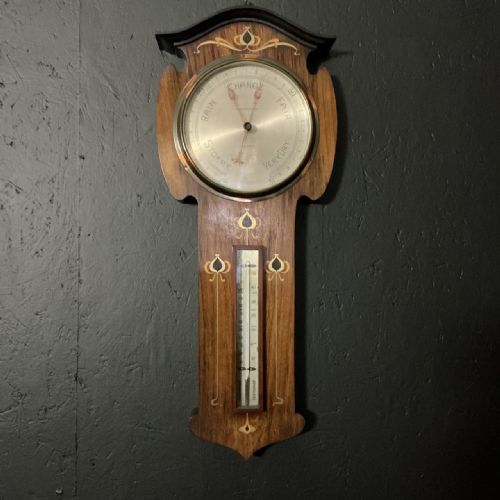
A wooden weather station combines instruments such as barometers, thermometers, and sometimes clocks within a shared timber housing, designed for wall hanging or desk placement. When you search for a wooden weather station, you encounter domestic scientific instruments dating from the Victorian, Edwardian, and Art Deco periods, alongside 19th Century examples.
The pieces on this page span several decades of domestic utility, appearing in forms ranging from simple circular beechwood frames to architectural wall panels and carved Black Forest designs. Oak, walnut, and mahogany form the predominant structures, frequently housing aneroid or mercury mechanisms paired with Fahrenheit and Celsius scales.
Makers such as Negretti & Zambra, James Pitkin London, and W Watson & Sons represent the scientific craftsmanship found in these historical instruments. Alongside dedicated weather pieces, you will also discover combined clock and barometer sets that served as central hallway fixtures in homes of the past.
How they were made
Craftsmen built these stations using solid timbers including oak, walnut, mahogany, and beechwood, often employing deep hand-carving techniques seen in Victorian Black Forest and Arts and Crafts examples. Wood inlay and marquetry occasionally decorate the panels, adding geometric or classical motifs to the timber surrounds.
Delicate brass bezels, glass dial covers, and porcelain or silvered metal indicator faces integrate directly into the carved wooden chassis. Mercury tubes or mechanical aneroid movements sit securely within the woodwork, connected to visible thermometer scales and adjustment dials.
Wooden Weather Station Retail Price Guide 2026
Typical asking prices for wooden weather station among the pieces listed under this phrase on Sellingantiques today, from the lower quarter to the upper quarter. They describe what is for sale here now, not the wider market.
Listings feature oak, walnut, mahogany, carved wood, porcelain, and glass across Victorian, Edwardian, and Art Deco periods.
What varies in quality
The depth and execution of the wood carving dictate much of the visual merit, particularly in Black Forest and architectural Victorian pieces where relief work ranges from simple bevels to intricate foliage and figural scenes. Crisp lettering on the porcelain or metal dials and substantial brass mountings separate standard production items from workshop pieces signed by makers like James Pitkin or Negretti & Zambra.
The integrity of the timber housing and the preservation of the original glass, brass bezels, and internal mercury or aneroid mechanism determine the overall standard. Pieces that maintain their combined clock, thermometer, and barometer instruments in original harmony demonstrate greater domestic completeness.
W Watson & Sons·Jenkins Of Old Swindon·Negretti & Zambra·James Pitkin London·Vecchio & Co of Shaftsbury
The Wooden Weather Station Glossary
- Aneroid barometer
- An instrument that measures atmospheric pressure without liquids, using a flexible-walled metal capsule that expands or contracts with pressure changes. This movement connects via levers to the dial pointer on the wooden face.
- Mercury barometer
- A traditional pressure gauge utilising a column of mercury balanced against atmospheric pressure in a glass tube. These often appear in stick barometer configurations mounted on mahogany or oak backboards.
- Marquetry
- The art of applying pieces of veneer to a wooden structure to form decorative patterns and pictures. Neo-classical examples utilise this technique for subtle surface ornamentation.
- Black Forest
- A style of wood carving originating from the mountainous region of Germany, known for deep relief foliage and animal motifs. These pieces utilise rich walnut and dark woods.
Wooden Weather Station: Frequently Asked Questions
What is a wooden weather station?
A wooden weather station is a combined domestic instrument housed in timber that measures atmospheric pressure, temperature, and sometimes time.
These pieces integrate barometers and thermometers into wall panels, banjo shapes, or desk clocks using oak, walnut, and mahogany.
How do you read an aneroid barometer?
You read an aneroid barometer by observing the pointer's position relative to weather descriptions like rain, change, or fair on the dial.
Many stations include a secondary set hand that you manually align with the primary pointer to track pressure movement throughout the day.
Where were these instruments placed?
These instruments typically hung in hallways, studies, or living rooms where household members checked conditions before stepping outside.
Wall-mounted banjo shapes and architectural panels suited prominent indoor spaces, while desk clocks sat on tables or mantelpieces.
How do I care for antique wood?
You care for antique wood by keeping the housing away from direct heat sources, strong sunlight, and sudden humidity shifts.
Apply traditional wax polish sparingly to maintain the finish of the oak, walnut, or mahogany without building up residue.