








Wooden Wall Trophy
A wooden wall trophy brings the lodge or the forest directly into a room, combining natural horn and antler with carved timber.
Wooden Wall Trophy
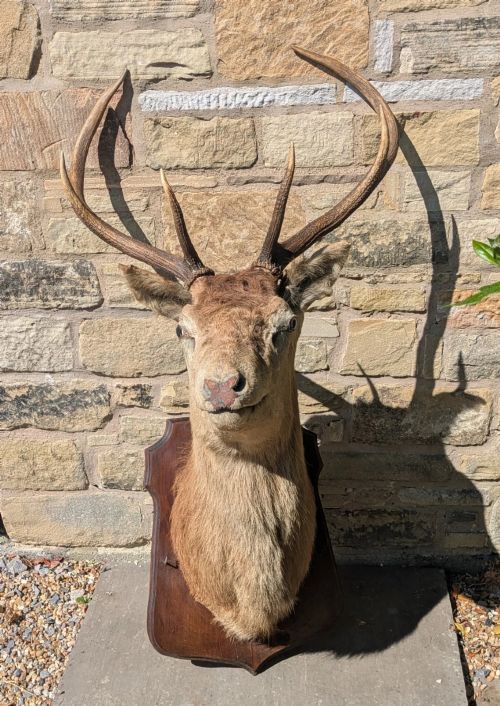
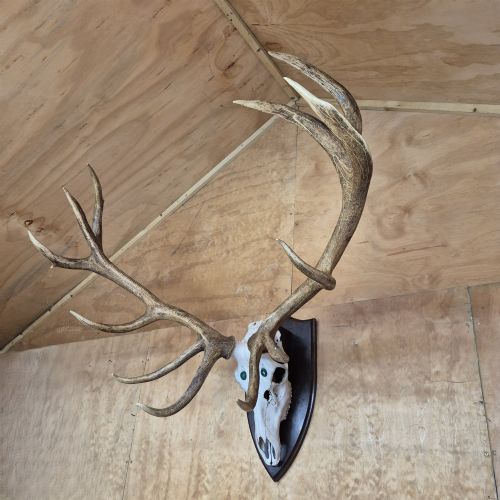
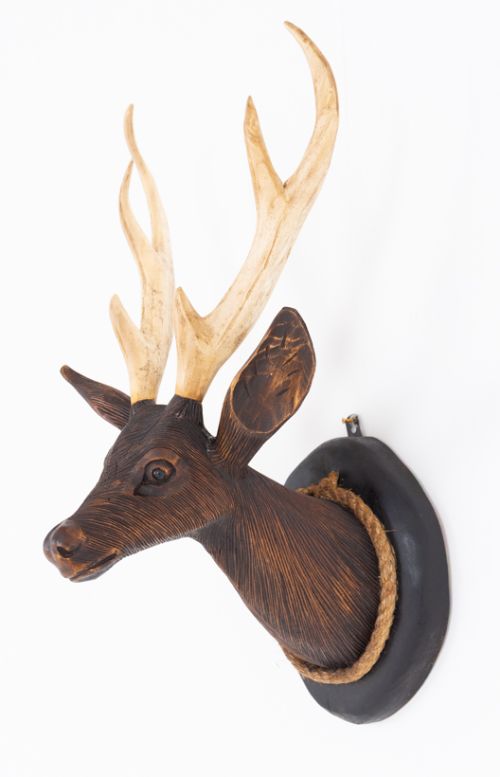
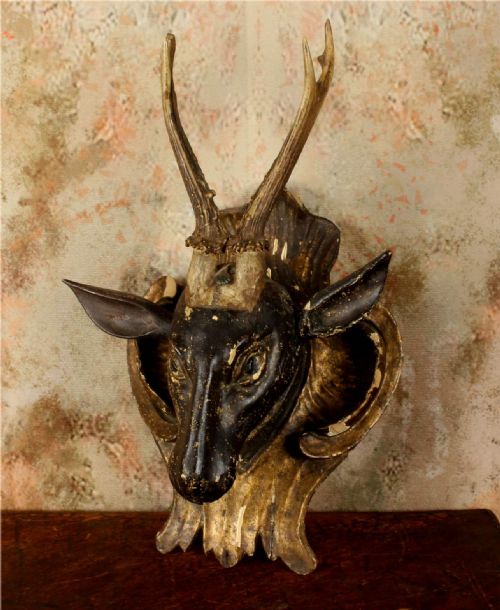
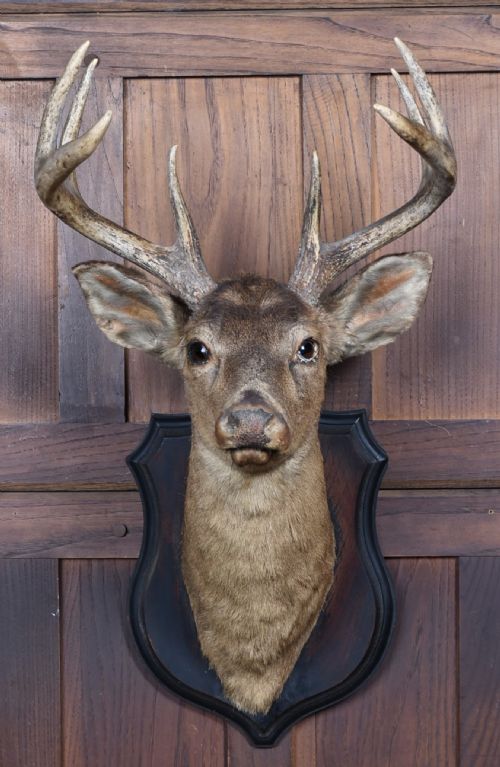
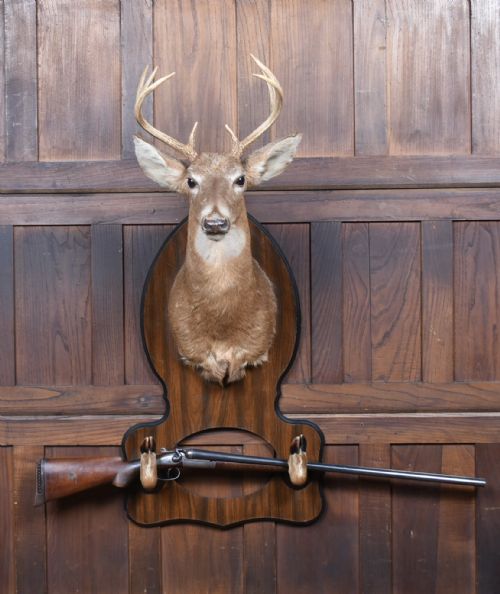
A wooden wall trophy brings together carved timber and natural horn, antler, or taxidermy hide to create striking displays for domestic interiors. When searching this phrase, a buyer meets everything from carved stags' heads and fox masks to deer antlers mounted on wooden shields.
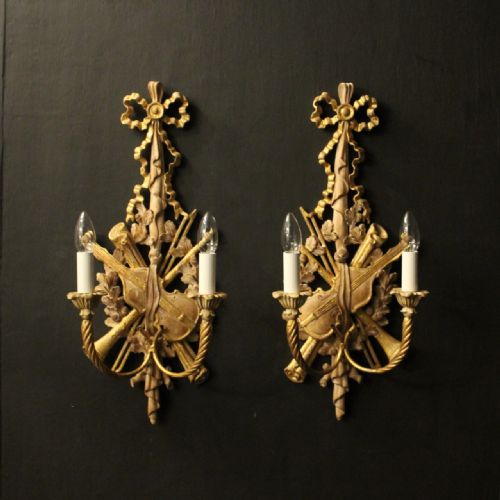
The pieces span various eras, with Victorian and Black Forest examples appearing alongside early twentieth-century Highland Lodge and folk art interpretations. Wall plaques, carved panels, and twin-arm wall lights also feature among these decorative objects.
Most examples originate from British, European, and Scandinavian traditions where hunting cultures and forestry heavily influenced interior decoration. Collectors often select these works to anchor a study, hallway, or reception room with distinct historical character.
How they were made
Artisans carved the supporting shields, plaques, and animal heads from solid woods such as oak and general timber, utilising hand chisels and gouges to achieve deep relief. These wooden mounts were shaped to emulate natural foliage, shields, or architectural flourishes designed to support significant weight.
Natural materials including bone, horn, antler, glass eyes, and taxidermy hide were combined with the carved wood to complete each trophy. Hide and taxidermy elements required careful curing and mounting over structural forms, while antlers and horns were securely bolted to the wooden backing panels.
Wooden Wall Trophy Retail Price Guide 2026
Typical asking prices for wooden wall trophy among the pieces listed under this phrase on Sellingantiques today, from the lower quarter to the upper quarter. They describe what is for sale here now, not the wider market.
Listings feature wood, glass, oak, horn, antler, bone, taxidermy hide, and timber across pieces dated from the nineteenth century into the 1950s.
What varies in quality
The depth and precision of the wood carving distinguish exceptional examples from simpler production pieces, particularly in Black Forest and folk art styles where botanical and animal details reveal the hand of a skilled artisan. Well-defined musculature in carved animal heads and crisp foliate work on shields indicate superior craftsmanship.
The natural condition and symmetry of the horns, antlers, or taxidermy hides heavily influence the overall appeal of a piece. Original mounting hardware, well-preserved taxidermy elements, and harmonious proportions between the wooden plaque and the mounted trophy mark the upper tier of the range.
Peter Spicer and Sons·Edward Gerrard and Sons
The Wooden Wall Trophy Glossary
- Black Forest style
- A nineteenth-century carving tradition originating in the Swiss and German regions, renowned for deeply carved animals and foliage in dark wood.
- Taxidermy mount
- The preserved skin and form of an animal mounted onto a structural backing, often incorporating original horns or antlers.
- Shield mount
- A wooden plaque, frequently shaped like a heraldic shield, used as the structural base for hanging animal horns or heads upon a wall.
Wooden Wall Trophy: Frequently Asked Questions
How do I hang a heavy wooden wall trophy?
These pieces require secure fixing directly into wall studs or solid masonry using heavy-duty brackets and appropriate wall anchors. The substantial weight of the timber and natural antlers demands stable support to prevent strain on the wall.
Ensuring the mounting wire or rear hanging loops match the weight distribution keeps the plaque flush and secure against the surface.
What is the difference between Black Forest and folk art pieces?
Black Forest carvings display highly naturalistic, deeply undercut foliage and anatomical details executed by trained regional specialists. Folk art pieces rely on simpler, stylized forms created by local makers with distinct regional charm.
Examining the tool marks and anatomical proportions helps distinguish the deliberate naturalism of the former from the rustic interpretation of the latter.
How should I clean taxidermy and wood elements?
Dust wooden shields gently with a soft, dry cloth while avoiding liquid cleaners that might penetrate the grain or age the finish. Taxidermy elements require very light brushing with a soft artists' brush to remove surface dust without disturbing the fur.
Keep these items away from direct sunlight and excessive humidity to protect both the animal hide and the timber from drying out or cracking.
How do I date an antique wooden wall trophy?
Dating relies on observing the wood species, carving style, fixings on the reverse, and any associated taxidermy techniques or taxidermist labels. Victorian and Edwardian examples often feature specific mounting styles and hand-written inscriptions on the back boards.
Comparing the decorative motifs, such as neoclassical flourishes or rustic Black Forest leaves, provides further context for the period of manufacture.