





Wooden Wall Thermometer
When you search for a wooden wall thermometer, you find domestic weather instruments mounted in timber frames that record temperature changes.
Wooden Wall Thermometer
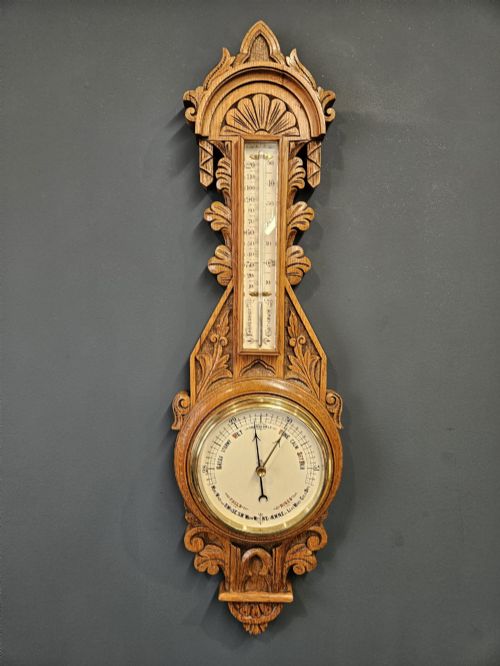
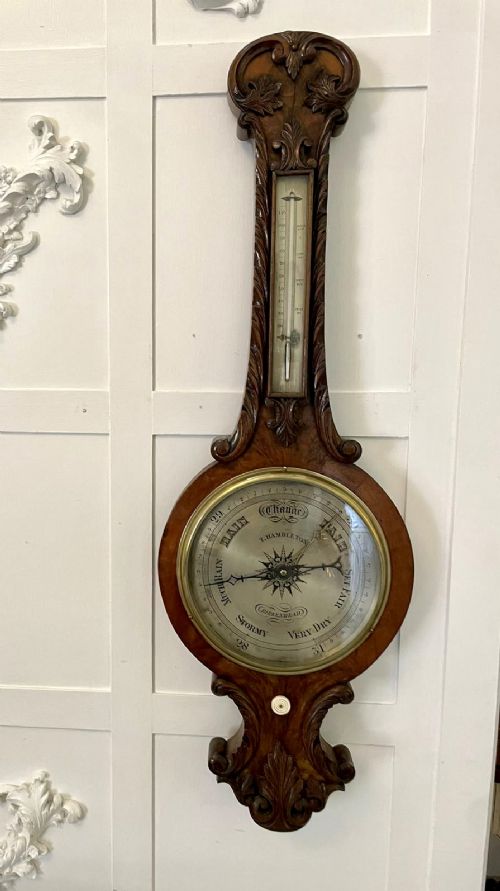
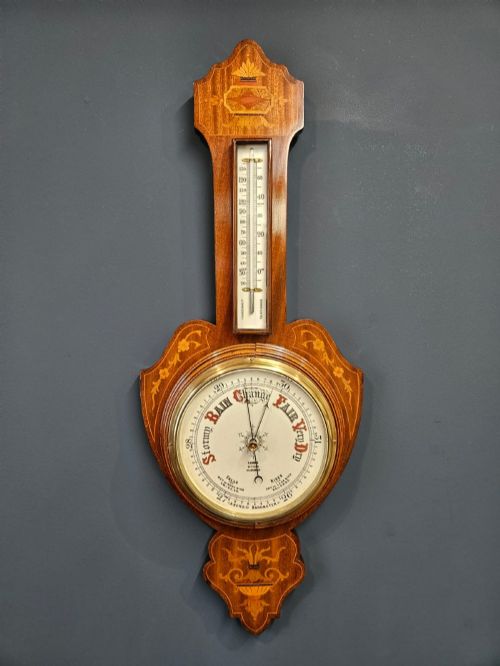
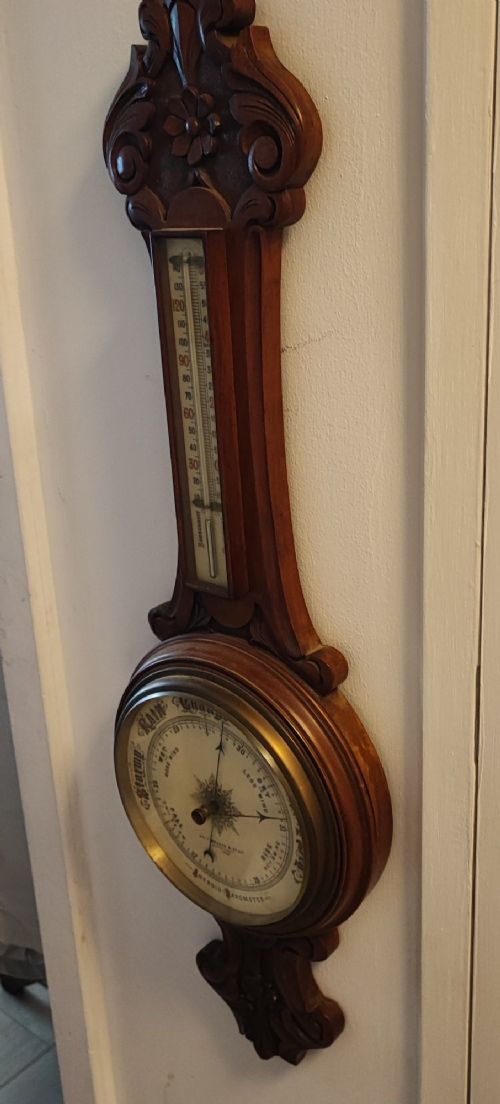
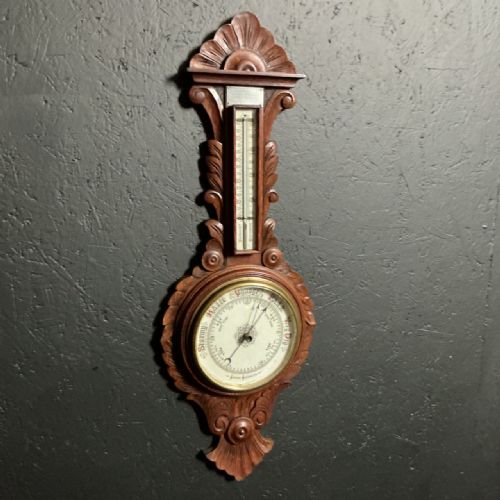
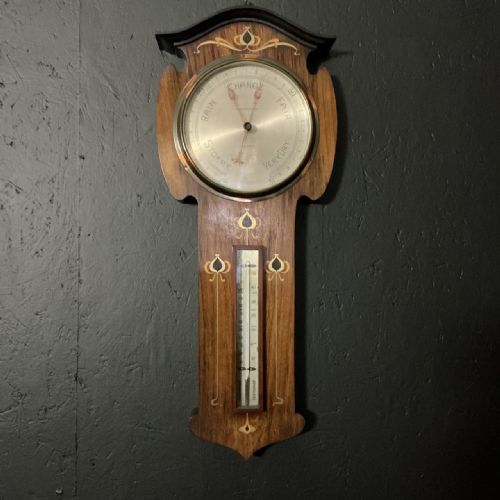
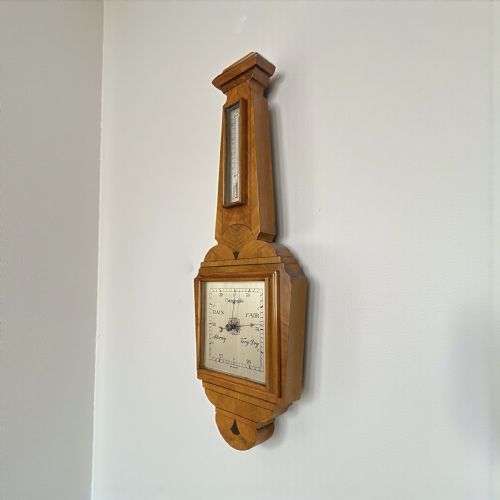
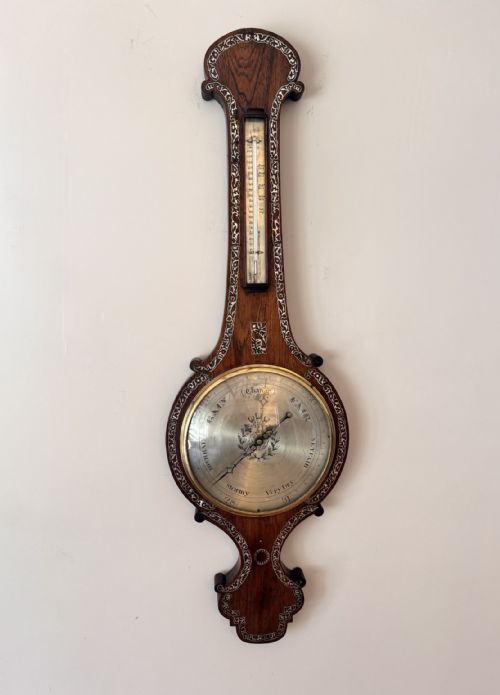
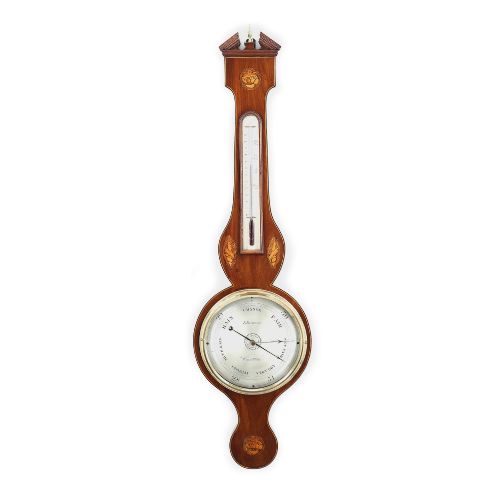
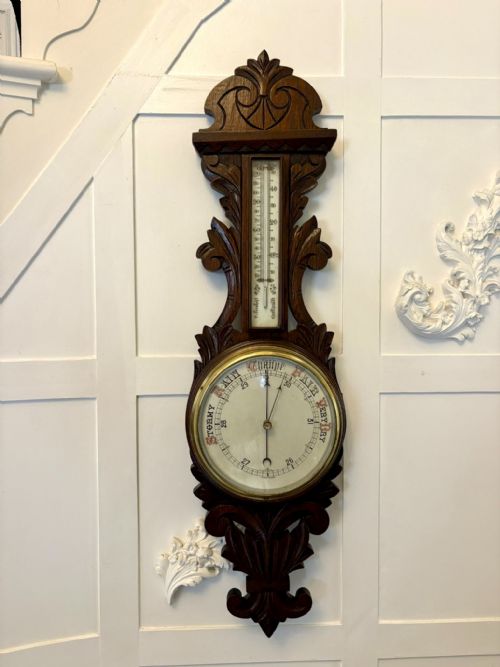
When you search for a wooden wall thermometer, you are looking at domestic weather instruments housed in timber frames designed to hang on domestic walls. The pieces on this page primarily manifest as combined instruments such as banjo barometers, wheel barometers, and wall clocks that incorporate thermometer scales alongside weather dials.
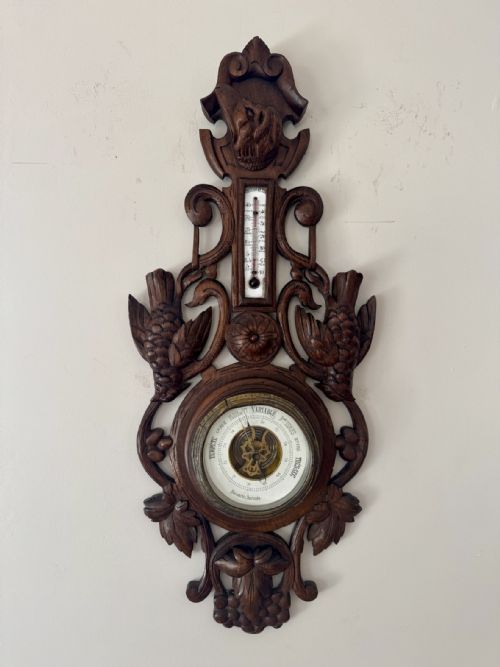
The materials and styles span the Victorian, Edwardian, and Art Deco periods, alongside Georgian Revival and Black Forest traditions. You will encounter carved oak, mahogany, walnut, and rosewood cases, often featuring brass bezels, glass dials, and porcelain components.
How they were made
Cabinets were constructed from dense hardwoods like mahogany, oak, and walnut, shaped through cabinet-making techniques and ornamented with intricate wood inlay, marquetry, and mother of pearl. Carved wood examples, particularly from the Black Forest style, display deep relief work depicting natural motifs.
The functional components combine brass mechanisms, glass tubes containing mercury or spirit, and porcelain or enamel scales. These instruments rely on precision fitting within timber cases to ensure the mechanical linkages between barometers, clocks, and thermometers remain stable.
Wooden Wall Thermometer Retail Price Guide 2026
Typical asking prices for wooden wall thermometer among the pieces listed under this phrase on Sellingantiques today, from the lower quarter to the upper quarter. They describe what is for sale here now, not the wider market.
Listings feature mahogany, oak, walnut, and rosewood cases spanning the Victorian, Edwardian, and Art Deco eras.
What varies in quality
Quality rests in the crispness of the timber carving and the sophistication of the case geometry, such as onion tops or banjo silhouettes. Plain timber housings sit at one end, while heavily carved Black Forest oak or finely inlaid mahogany and rosewood mark the upper tiers.
The integration of multiple instruments also dictates distinction. A simple single-scale wooden wall thermometer differs markedly from a combination piece housing a clock, barometer, and thermometer within a unified architectural case.
B Besozzi of Weymouth·Molton of Norwich·W Watson and Sons·Jenkins of Old Swindon·Cox of Plymouth Dock·WE Pain of Cambridge·Vecchio and Co of Shaftsbury·J Groce York
The Wooden Wall Thermometer Glossary
- Banjo barometer
- A household weather station shaped like a banjo, featuring a circular dial at the base and a long stem holding a thermometer.
- Aneroid barometer
- An instrument that measures atmospheric pressure without liquids, using a small flexible metal box that expands or contracts.
- Wheel barometer
- A round dial instrument driven by a pulley and weight system connected to a siphon tube inside the wooden case.
- Marquetry
- Decorative woodwork where thin pieces of veneer are fitted together to form pictorial patterns on the surface of the thermometer case.
Wooden Wall Thermometer: Frequently Asked Questions
What is a wooden wall thermometer?
A wooden wall thermometer is an indoor meteorological instrument mounted within a decorative timber frame for hanging. They record ambient room or household temperature variations.
Many examples found here combine this thermometer function with a barometer or clock in a single timber housing.
How do these instruments work?
These instruments typically utilise glass tubes filled with mercury or coloured spirit that expand or contract with temperature shifts. The physical movement aligns with marked scales on porcelain, card, or brass.
Combined models link this temperature display alongside aneroid dials or mercury barometer tubes within the wooden case.
Where were they placed?
They hung in principal rooms, hallways, and libraries of Victorian and Edwardian homes to monitor indoor climates and general weather trends. Their decorative timber cases doubled as statement interior furnishings.
Placing them away from direct heat sources ensured accurate readings of ambient household conditions.
How do I date a piece?
Dating relies on timber choice, case style, and mechanical signatures such as aneroid mechanisms versus older mercury tubes. Victorian and Edwardian pieces show distinct carving styles and inlay techniques.
Maker signatures inscribed on the dials or backplates provide definitive production eras.