



Wooden Twin Sconces
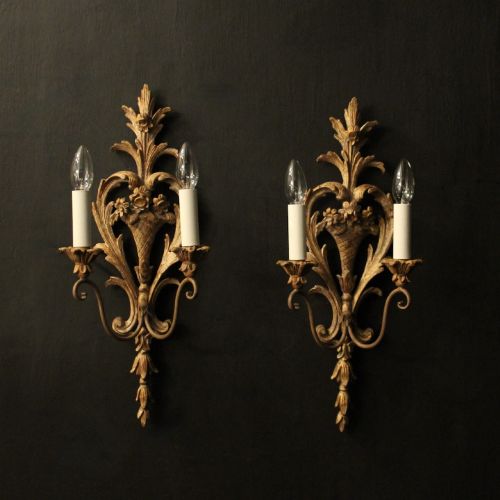
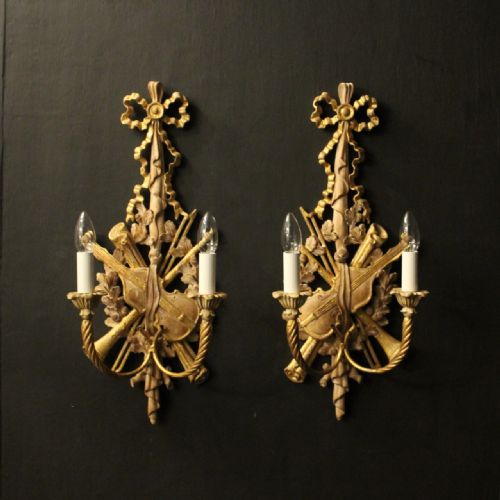
Wooden twin sconces bring warmth and layered candlelit atmosphere to a room, pairing carved timber bodies with dual lighting arms.
Wooden Twin Sconces
The most common examples on this page are French and Italian pieces from the 1920s and 1930s, alongside nineteenth-century carved wood brackets. These fixtures incorporate regional interpretations such as Florentine Rococo and French Provincial, often designed as matching pairs for symmetrical placement flanking mirrors or fireplaces.
How they were made
Makers shaped these fixtures primarily from carved wood, applying gesso layers to smooth the timber surface before gilding with gold leaf or decorating with polychrome paint. Italian and French workshops utilised traditional hand-carving techniques to shape scrolling arms, floral motifs, and figural elements like carved fruit or Blackamoor figures.
Surface decoration combined metal components with applied gesso and paint, resulting in richly textured finishes that imitated solid metal or aged stone. Artisans built these wall lights in pairs, ensuring matching proportions and balanced decorative details across both arms of each sconce.
Wooden Twin Sconces Retail Price Guide 2026
Typical asking prices for wooden twin sconces among the pieces listed under this phrase on Sellingantiques today, from the lower quarter to the upper quarter. They describe what is for sale here now, not the wider market.
Listings feature wooden twin sconces spanning the nineteenth century through the 1930s, utilising carved wood, gesso, and polychrome paint.
What varies in quality
Quality in these wall lights rests upon the depth and precision of the wood carving, distinguishing fluid hand-chiseled details from simpler, flatter surface work. Finer examples display meticulous attention to anatomical or botanical forms, such as carved fruit or intricate scrolling foliage.
The preservation of original gesso, gold leaf, and polychrome paint also determines the standing of a piece. Sconces retaining their authentic layered surfaces with natural patination show superior craftsmanship compared to those with unsympathetic later repainting.
The Wooden Twin Sconces Glossary
- Giltwood
- Wood that has been coated with a thin layer of gold leaf over a prepared gesso ground. This finish provides a luminous, reflective surface that catches candle or daylight.
- Polychrome
- Decoration executed in multiple colours of paint upon a wooden or gesso surface. It allows for realistic depictions of natural motifs like fruit or draped garments.
- Gesso
- A plaster-like mixture applied to wood to create a smooth surface for gilding and painting. It holds fine carved detail before metal leaf is laid down.
- Candelabra
- A branched branch-holder designed to support multiple candles or lights from a single wall-mounted bracket. These paired versions carry two distinct illumination arms.
- Baroque
- An ornate design style characterised by dramatic curves, rich ornamentation, and dynamic movement. Italian interpretations appear frequently among these wall fixtures.
Wooden Twin Sconces: Frequently Asked Questions
How were wooden twin sconces used historically?
These fixtures served to illuminate rooms by reflecting candle flame off gilded surfaces and polished walls. Placed in pairs, they framed architectural focal points like fireplaces, doorways, and large mirrors.
In period interiors, they provided ambient lighting rather than direct task illumination, creating a warm, layered atmosphere in salons and dining spaces.
How do I install antique wooden sconces?
Most antique wall lights require professional mounting to securely anchor the timber weight to the wall surface. Electric adaptations need careful wiring through the original backplates to meet current safety standards.
Consult a qualified electrician to assess whether the existing internal channels can accommodate modern wiring without altering the historic wood structure.
How should I clean polychrome wooden sconces?
Dust these surfaces gently using a soft, dry brush to prevent accumulation in the carved crevices. Avoid liquid cleaners, water, or chemical solvents that can damage fragile gesso and historic paint layers.
Preserving the dry, aged surface patina ensures the original polychrome and gilt details remain intact for years to come.
How do I tell French and Italian styles apart?
French pieces often reflect Provincial or Rococo aesthetics with restrained curves and lighter painted finishes. Italian examples frequently draw on Baroque and Florentine traditions, displaying deeper carving and bolder polychrome gilding.
Examining the specific motifs, such as floral arrangements or scrolling foliage, helps identify the regional workshop traditions of the maker.