
Wooden Trinket Casket
When you search for wooden trinket casket, you find desktop containers in rosewood, walnut and mahogany designed to hold valuables and keepsakes.
Wooden Trinket Casket
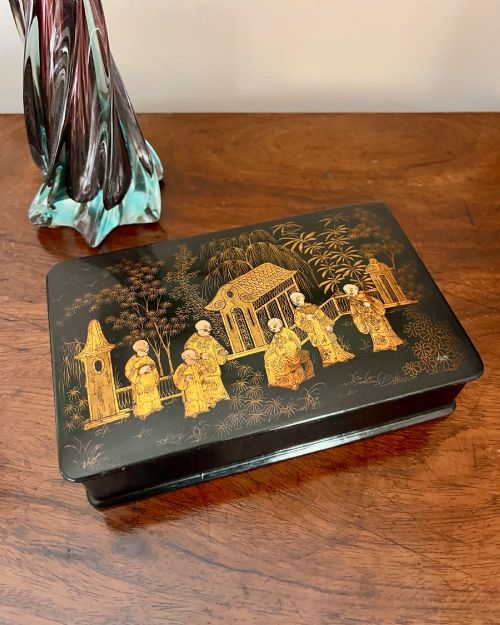
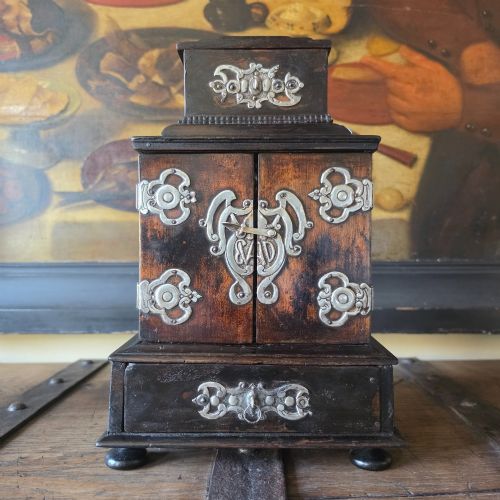
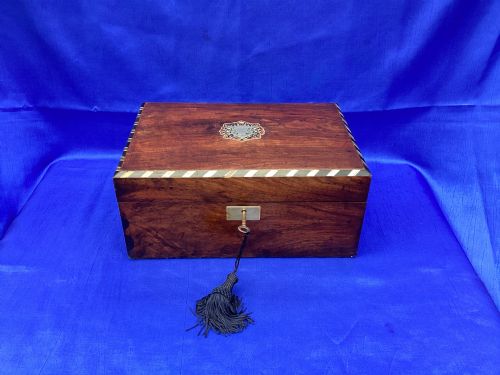
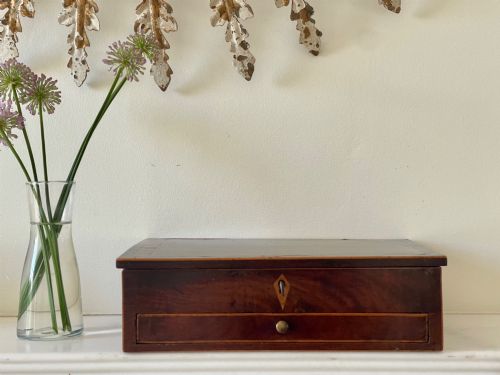
A wooden trinket casket is a portable container designed for storing jewellery, letters, sewing tools or keepsakes on a dressing table or desk. These boxes range from small tabletop receptacles to large, fully fitted cabinets with internal trays and mirrors.
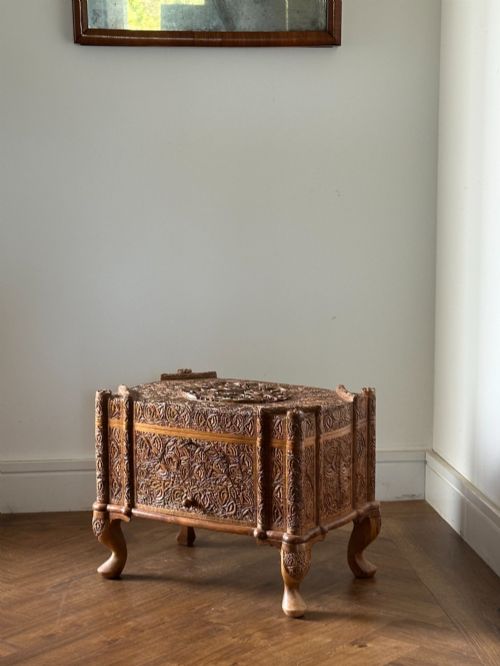
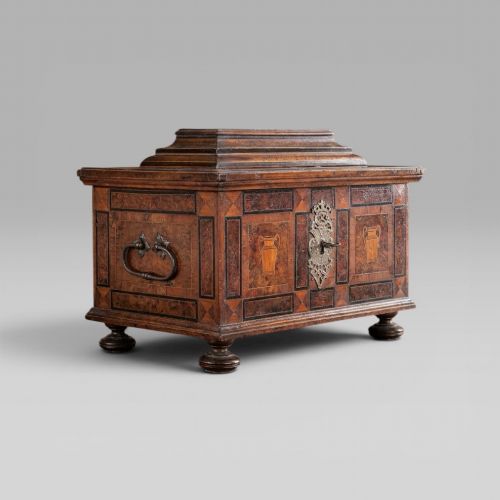
The pieces on this page span several centuries, with a strong representation of nineteenth-century Victorian and Regency examples. You also encounter earlier seventeenth and eighteenth-century work, alongside regional styles such as Black Forest carvings, Scandinavian folk art and Anglo-Indian pieces.
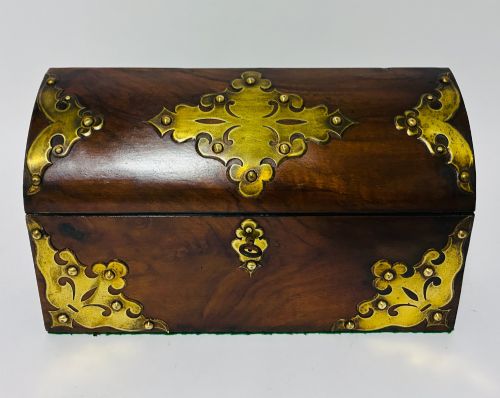
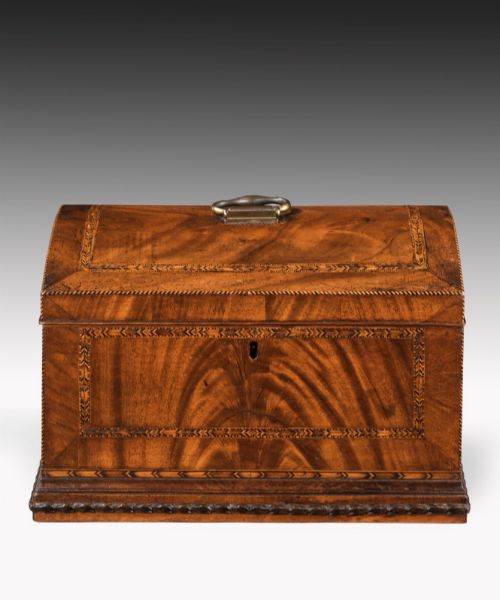
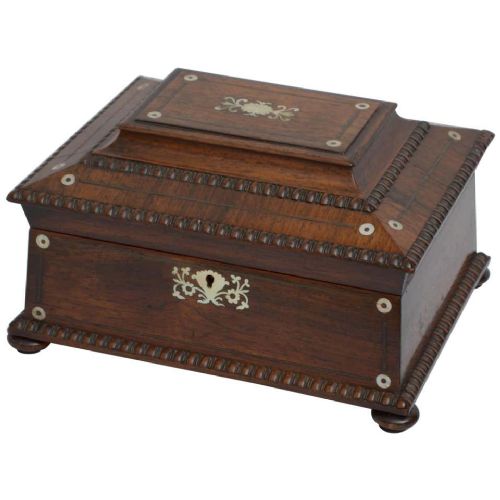
Makers utilised various functional forms, including sarcophagus shapes, domed boxes, slant-front cabinets and plain rectangular work boxes. Many incorporate compartments, lift-out trays or secret drawers intended for securing small personal items.
How they were made
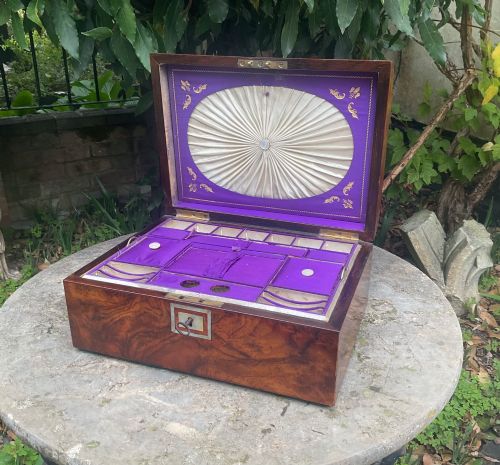
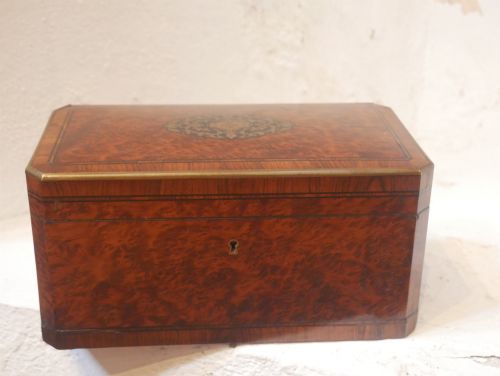
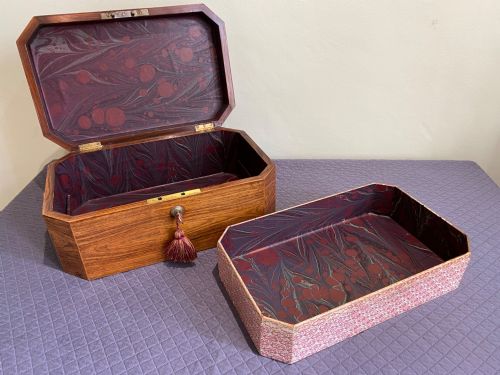
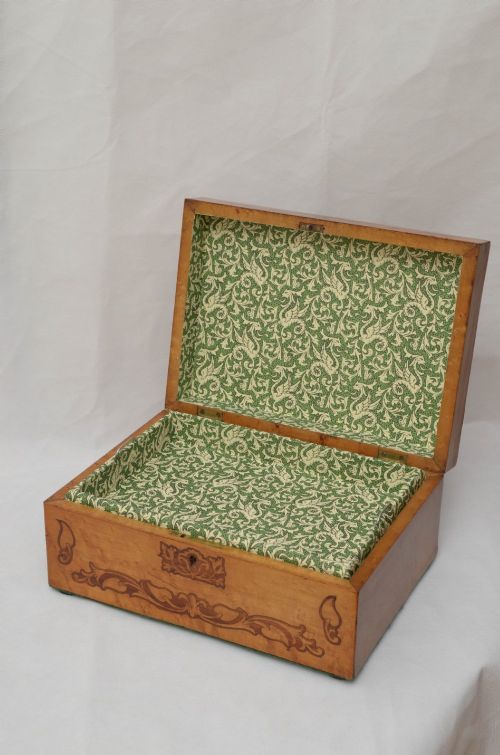
Cabinet makers built these boxes from dense hardwoods like rosewood, walnut, mahogany and coromandel, often applying decorative veneers such as burr walnut, burr yew or amboyna over a stable secondary timber. Frames frequently receive internal linings of velvet, satin or leather to protect delicate contents.
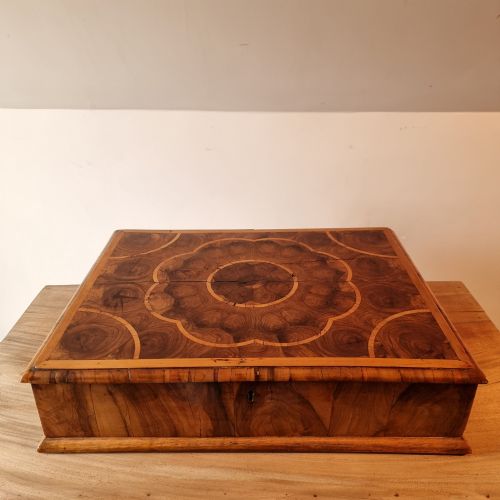
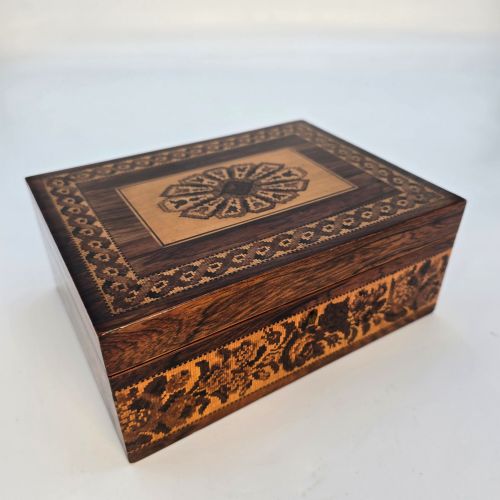
Decoration relied on precision woodworking techniques including marquetry, parquetry, Tunbridge Ware micro-mosaic panels and surface carving. Metal mounts in brass, alongside inlay materials like mother-of-pearl, boxwood and tulipwood, accentuate the structural corners and lid centres.
Secret drawers often require pressing hidden spring loaded wooden catches to reveal tiny compartments.
What varies in quality
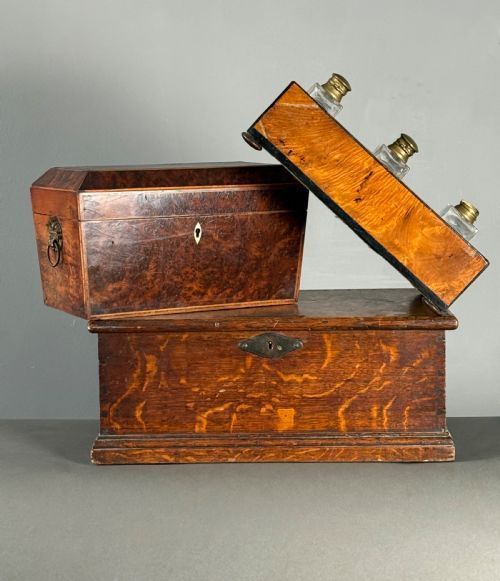
The grade of a wooden trinket casket depends upon the selection of timber veneers and the precision of the joinery. Figured grains like burr walnut or amboyna command attention when matched symmetrically across a lid.
Internal complexity sets finer examples apart from simpler containers. Fully fitted interiors featuring secret compartments, lifting trays, original silk linings and operational brass locks indicate workshop production of higher ambition.
Tahan Paris·Edmund Nye·Erhard and Sohne
The Wooden Trinket Casket Glossary
- Tunbridge Ware
- A form of British woodwork characterised by tiny coloured wood blocks assembled to create mosaic pictures. These geometric or floral patterns decorate the lids of nineteenth-century boxes.
- Marquetry
- The art of applying decorative veneer pieces to a structure to form picture designs. Craftsmen cut different wood varieties together to create seamless floral or architectural motifs.
- Parquetry
- Geometric wood inlay forming repeating patterns across a surface. Makers use contrasting timbers like boxwood and walnut to build up chessboard or cube designs.
- Sarcophagus
- A coffin-shaped box style with sloping sides popular during the Regency and Victorian periods. This architectural form gives small containers a monumental presence on a table.
- Burr wood
- A growth deformity on a tree trunk that produces swirling, highly figured grain patterns. Cabinet makers sliced this wood into veneers for decorative box lids.
Wooden Trinket Casket: Frequently Asked Questions
What were wooden trinket caskets used for?
These containers held precious personal belongings including rings, necklaces, sewing implements, documents and letters. People kept them on dressing tables, desks or withdrawing room surfaces.
Interior trays and compartments kept small items organised while locks secured valuables away from servants or visitors.
How do I identify a Regency box?
Regency boxes date roughly from the early nineteenth century and frequently feature sarcophagus silhouettes, brass lion paw feet or ring handles. Timber choices leaned toward rosewood and mahogany with restrained brass stringing.
Construction details include hand-cut dovetails on internal partitions and straightforward rectangular or curved geometries without excessive carving.
What is Black Forest carving?
Black Forest wooden pieces originate from nineteenth-century woodworking communities in Switzerland and Germany. They display deep, naturalistic carvings of animals, foliage and woodland scenes.
Bears and ivy leaves feature prominently on the lids and corners of these tactile humidors and jewellery boxes.
How should I care for antique wood?
Keep wooden caskets away from direct sunlight and heat sources to prevent the wood and delicate veneers from drying and cracking. Maintain a stable room temperature and humidity level.
Apply a light application of appropriate beeswax periodically to nourish the timber surface without building up sticky residue.