





Wooden Trestle Table Bench
These wooden trestle table bench examples combine honest utilitarian forms with enduring character, offering adaptable seating and surface space for any interior.
Wooden Trestle Table Bench
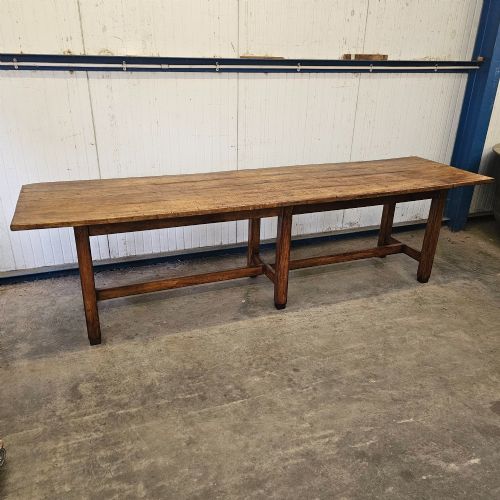
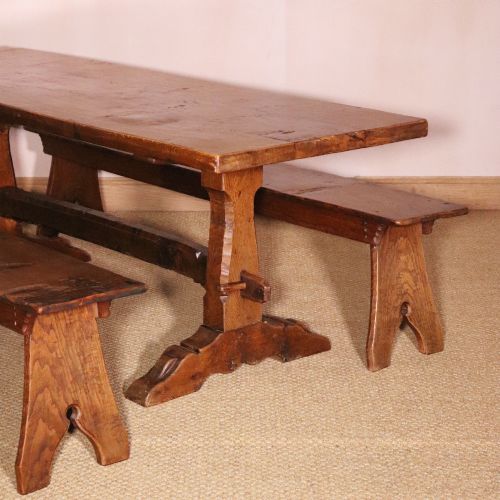
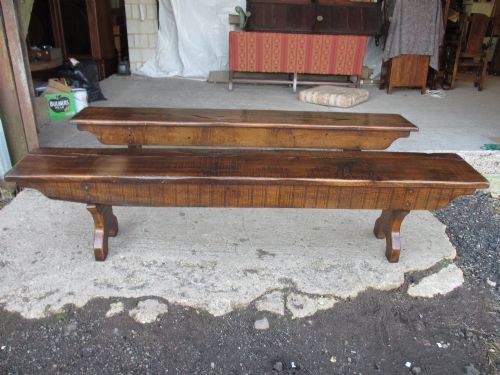
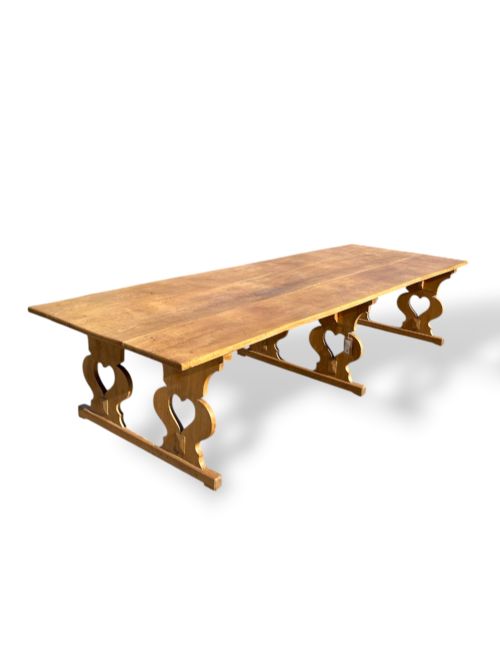
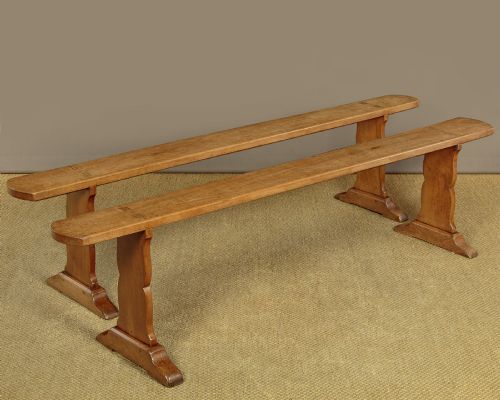
When you search for a wooden trestle table bench, you encounter a selection of solid timber seating and tables rooted in utilitarian country traditions. The listings encompass substantial refectory tables, matching bench forms, and individual long benches designed for communal use.
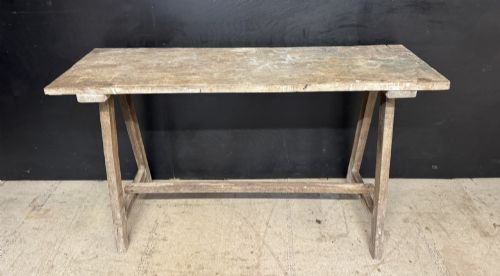
You are most likely to meet French scrubbed sycamore and elm examples alongside heavy English oak refectory pieces and cherrywood benches. These items range in date from the eighteenth century through the Victorian period and into the Edwardian era.
Materials and construction
Carpenters utilised native hardwoods such as oak, elm, sycamore, pine, and cherrywood to build these items for durability and daily service. Timber selection dictated the strength of the trestle supports and the longevity of the top surfaces.
Joinery relied on pegged joints and shaped trestle ends rather than complex hardware, allowing benches and tables to withstand heavy loads. Surfaces often received a scrubbed finish or developed a rich natural patina through decades of use.
Wooden Trestle Table Bench Retail Price Guide 2026
Typical asking prices for wooden trestle table bench among the pieces listed under this phrase on Sellingantiques today, from the lower quarter to the upper quarter. They describe what is for sale here now, not the wider market.
Listings feature oak, elm, sycamore, and cherrywood timbers across forms dating from the eighteenth century to the mid-twentieth century.
Distinctions in quality
Quality depends upon the integrity of the original timber and the harmony between the table and its associated bench forms. Pieces fashioned from dense native hardwoods like oak and elm retain greater structural stability than softer alternatives.
The refinement of the shaped trestle ends and the depth of the accumulated surface patina distinguish exceptional country workshop production from standard utility items. Proportion and balance in longer formats indicate the skill of the original maker.
Jack Grimble
The Wooden Trestle Table Bench Glossary
- Trestle
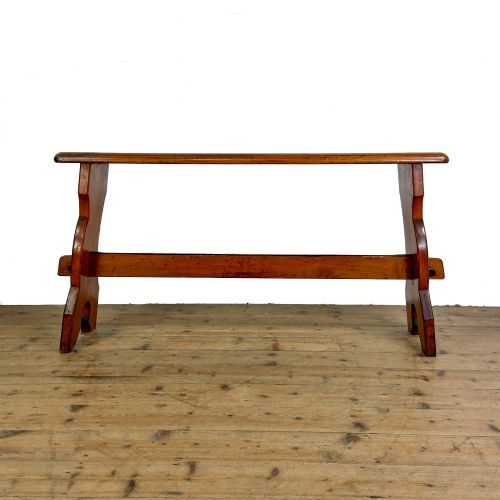
- A structural support consisting of a horizontal beam fixed to two splayed legs. This design provides sturdy support for long tabletops while maximising legroom.
- Refectory table
- A long dining table traditionally used in communal dining halls. These pieces often feature heavy timber tops and robust trestle or pedestal bases.
- Patina
- The glossy sheen and mellow colour developed on timber surfaces over years of handling and polishing. It serves as an indicator of age and careful use.
- Scrubbed finish
- A surface treatment achieved by repeatedly washing the timber with water and scrubbing along the grain. This process lightens the wood and highlights its natural texture.
Wooden Trestle Table Bench: Frequently Asked Questions
How do I use a wooden trestle table bench?
These benches provide long, versatile seating arrangements that tuck neatly beneath matching trestle or refectory tables when not in use. They suit dining spaces, kitchens, and hallways where flexible seating is required.
Beyond dining, individual benches function effectively as low display surfaces or window seats. Their narrow profiles make them practical for smaller rooms.
How do I date an antique wooden bench?
Dating relies on examining the tool marks, timber species, and construction methods visible on the underside and joints. Eighteenth and nineteenth-century pieces often display hand-sawn boards and pegged joinery.
Style indicators such as shaped Edwardian trestle ends or French provincial scrubbed finishes also help place pieces within specific decades. Comparing the wear patterns to the known history of country workshops confirms the era.
Are these benches sturdy enough for daily use?
Constructed from dense hardwoods like oak, elm, and cherrywood, these pieces were built originally for heavy service in country homes and taverns. Their solid timber frames and robust trestle supports handle regular weight with ease.
Routine care involves gentle cleaning and avoiding excessive moisture to protect the historic timber. The original pegged joinery continues to provide reliable structural integrity.
What is a scrubbed finish on wood?
A scrubbed finish results from traditional cleaning methods where soft or hardwood surfaces are scoured with water and brushes along the grain. This removes dirt and dark finishes while preserving the pale tone of the timber.
Sycamore and elm tables frequently display this characteristic appearance from historical kitchen and dairy preparation use. It creates a clean, matte surface that showcases the natural grain.