
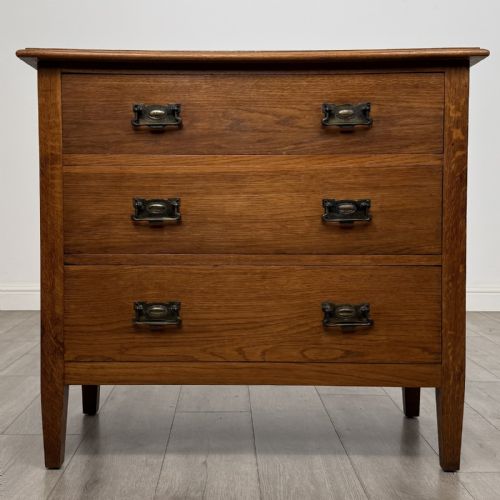
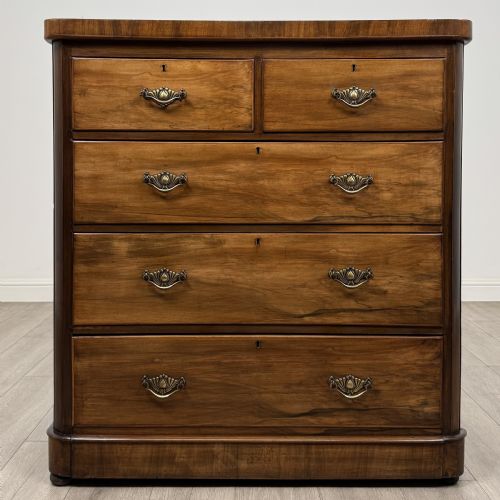
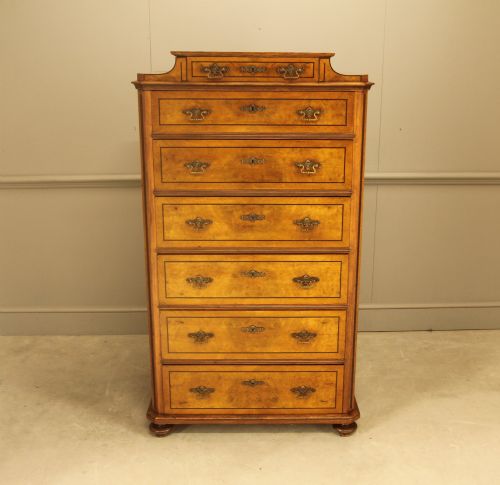
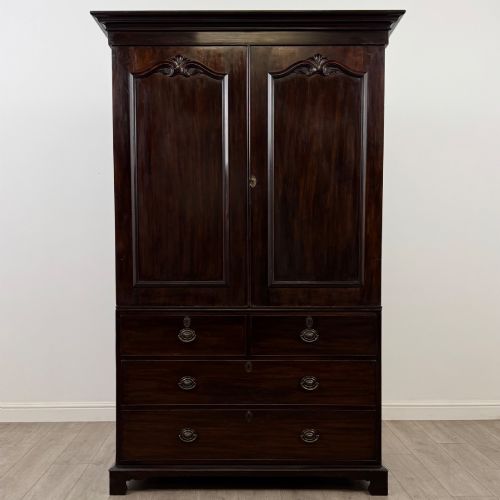
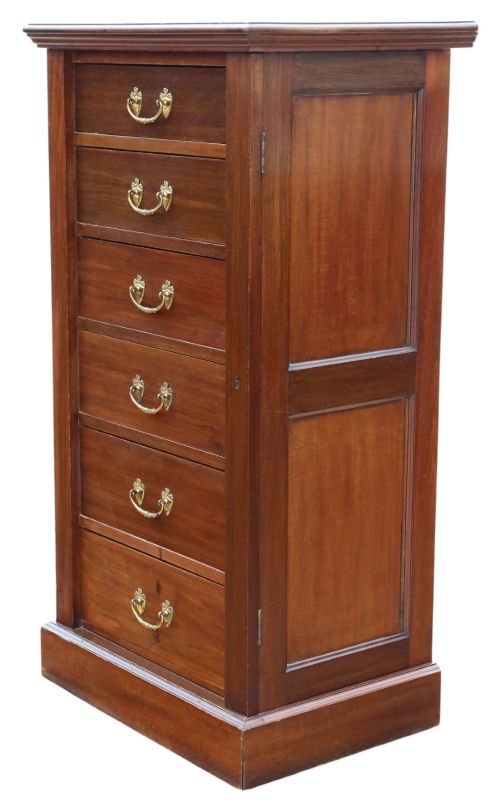
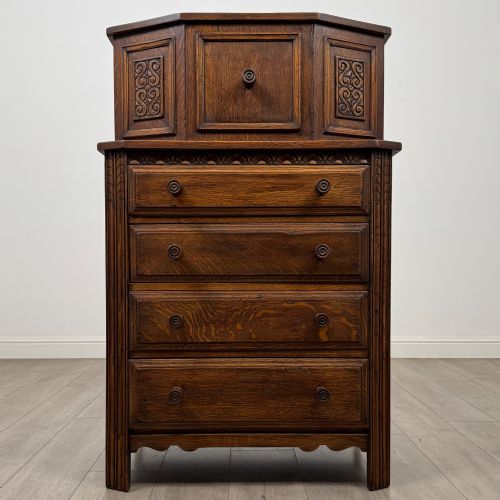
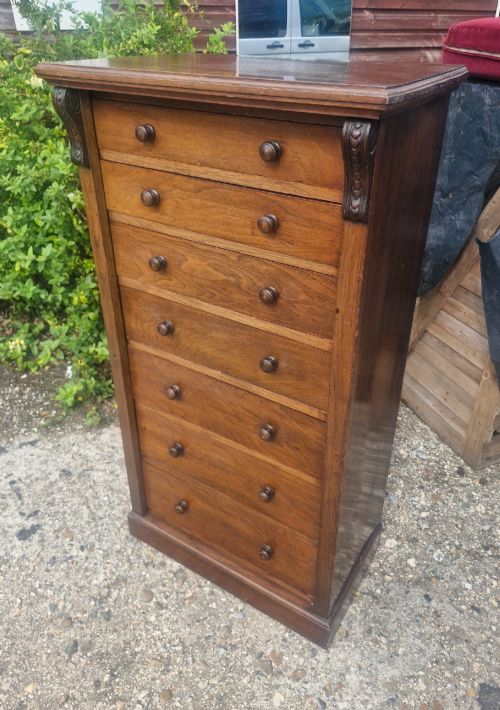

Wooden Tallboy Cabinet
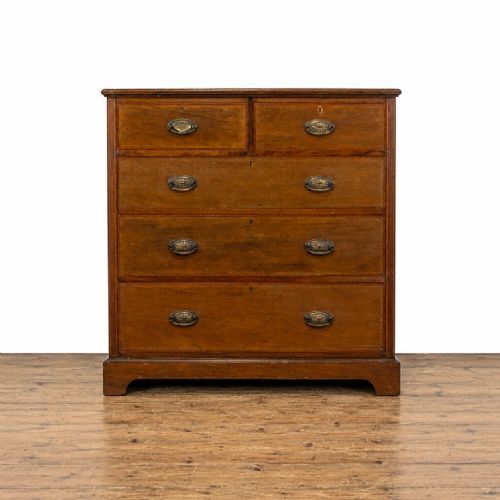
A wooden tallboy cabinet provides vertical storage through stacked drawers, offering generous capacity whilst keeping a modest footprint in the room.
Wooden Tallboy Cabinet
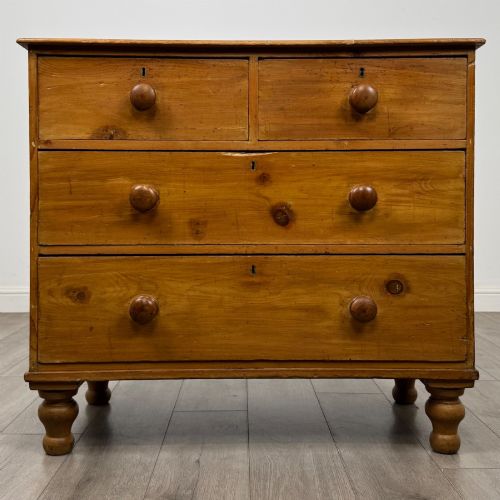
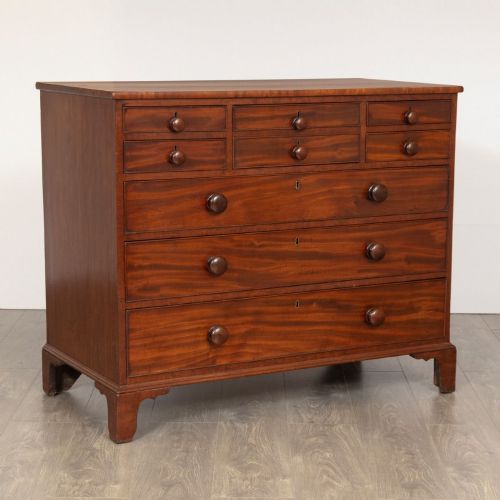
A wooden tallboy cabinet brings together vertical chest formats, tall chests of drawers, and linen presses originating across several centuries. These pieces emerge from the Georgian, Victorian, and Edwardian eras, alongside pieces dated from the nineteenth and twentieth centuries.
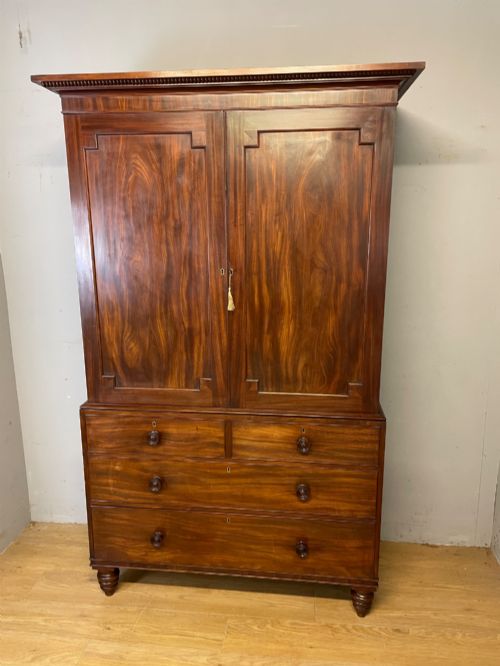
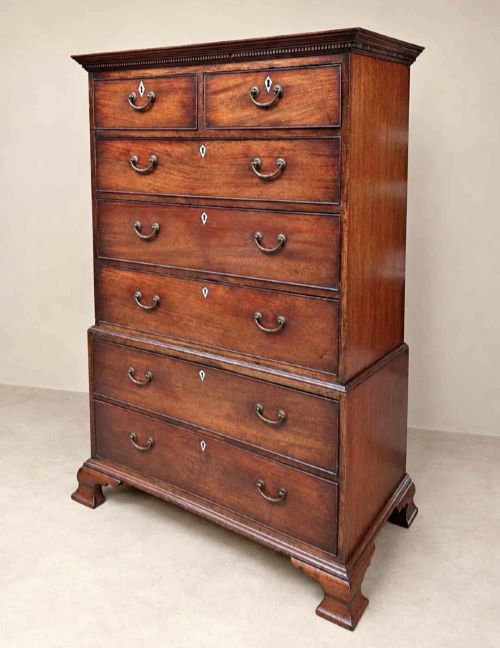
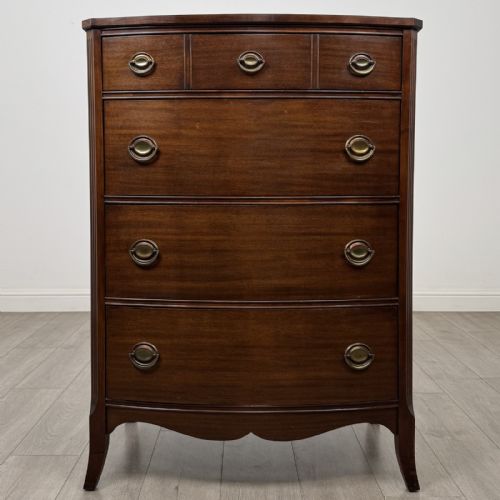
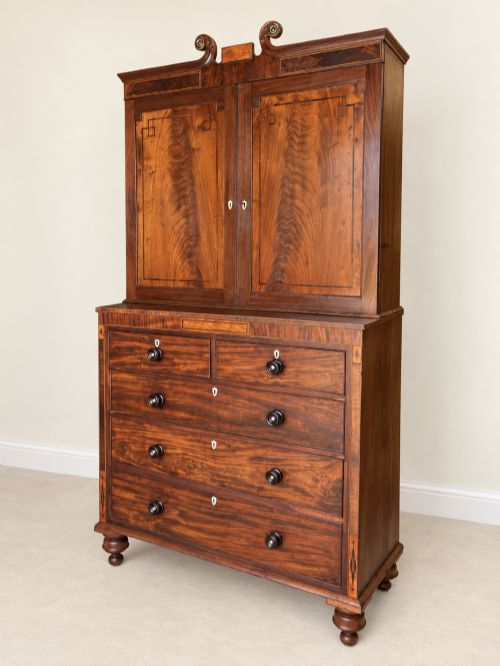
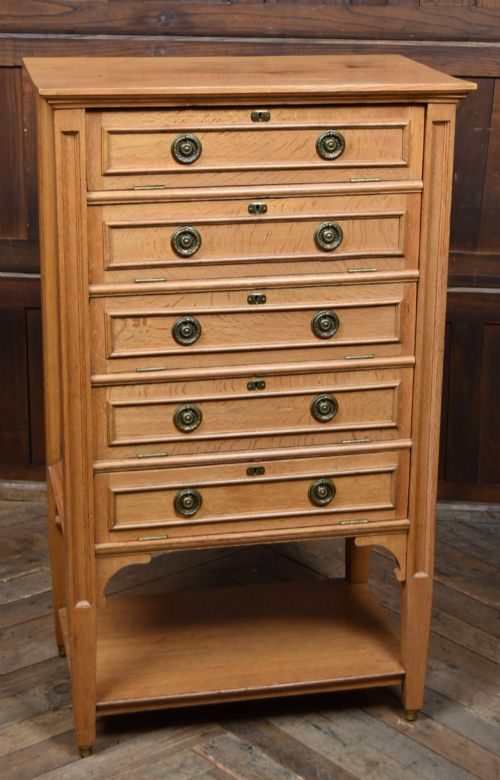
Buyers encounter forms ranging from George III period bowfront chests on chests and Queen Anne walnut examples to nineteenth-century Wellington chests and Edwardian oak pieces. The selection also includes tall oak chests, nineteenth-century linen presses, and compact bedside or filing configurations.
The layout typically stacks multiple drawers vertically or combines cupboard sections with lower drawer banks, solving storage needs in rooms where floor space remains at a premium. Each piece reflects the domestic requirements of its original period, whether built for gentlemen's wardrobes or linen storage.
Materials and construction
Cabinet makers relied primarily on mahogany, oak, and walnut, frequently selecting flame mahogany veneer, burr walnut, maple, and pine for carcases and drawer fronts. Timber selection dictated the visual weight of the furniture, with dense hardwoods providing durability for daily use.
Brass hardware such as drop handles, escutcheons, and locking mechanisms appear across Georgian, Victorian, and Edwardian examples, often original to the piece. Metal components secure the vertical drawer stacks, particularly on Wellington chests featuring locking side stiles.
Surface treatments range from ebonised finishes and limed oak textures to original paint on pine linen presses and polished veneers. Cabinet makers employed crossbanding and marquetry to enhance primary timber surfaces on eighteenth and nineteenth-century examples.
Listings feature eighteenth-century walnut, Georgian mahogany, Victorian pine, and Edwardian oak pieces alongside twentieth-century Art Deco walnut.
Craftsmanship and distinction
The distinction between standard utility items and finer cabinet work rests on timber selection and decorative execution. Pieces featuring figured walnut, flame mahogany veneer, or intricate marquetry demonstrate higher ambition from the maker.
Construction methods define the integrity of surviving tall cabinets, particularly in the smoothness of drawer operation and the retention of original brass fittings and locking mechanisms. Cohesion between upper and lower sections on two-part chest on chest forms indicates superior workshop provenance.
Gillows
The Wooden Tallboy Cabinet Glossary
- Tallboy
- A tall chest of drawers, often constructed as one chest stacked upon another, designed to maximise vertical storage.
- Wellington chest
- A vertical locking chest of drawers secured by a hinged side stile held in place with a key.
- Linen press
- A tall cupboard enclosing sliding shelves or trays for storing textiles, usually positioned above a base of drawers.
- Bowfront
- A curved cabinet front where the central section projects outward in a convex sweep.
- Crossbanding
- A narrow strip of veneer laid around the border of a drawer front or top with the grain running at right angles to the surrounding wood.
Wooden Tallboy Cabinet: Frequently Asked Questions
What is a wooden tallboy cabinet?
A wooden tallboy cabinet is a tall vertical storage piece designed with multiple stacked drawers to maximise capacity while occupying minimal floor space.
These cabinets span periods from the eighteenth to the early twentieth century, appearing in woods such as mahogany, oak, and walnut.
Where were tall cabinets used?
Tall cabinets were placed in bedrooms, dressing rooms, and hallways to store clothing, linens, and personal items.
Their vertical orientation made them practical for rooms with limited horizontal wall space.
How do I care for antique wood?
Antique wood cabinets require stable indoor humidity away from direct heat sources and sunlight to prevent timber movement.
Regular dusting with a dry cloth and occasional application of appropriate furniture wax preserves the polished finish.