




Wooden Storage Chair
A wooden storage chair offers practical seating with hidden compartments, combining daily utility with period craftsmanship.
Wooden Storage Chair
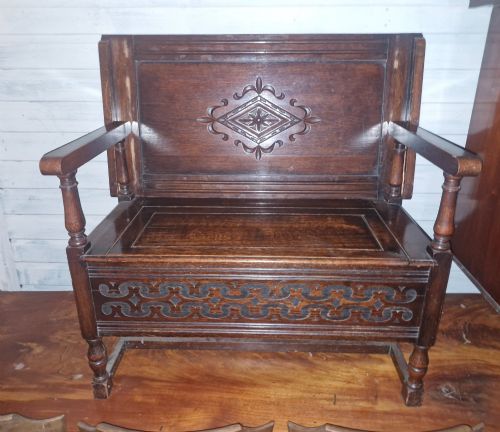
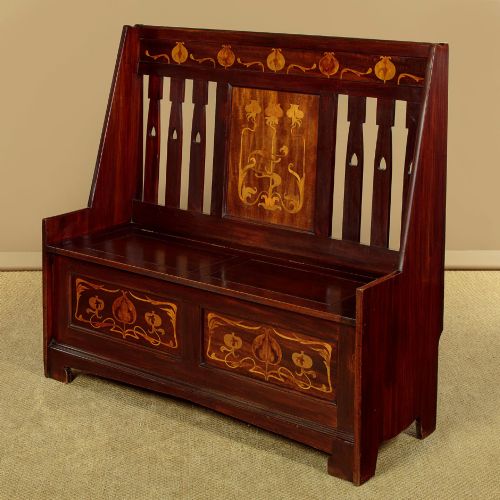
A wooden storage chair combines a seat with a concealed compartment, taking forms such as monks benches, hall seats, settles, and dug out chairs. These dual-purpose seats serve narrow hallways and living spaces where hidden storage is needed.
The pieces on this page span several centuries and styles, including Victorian pine settles, early twentieth century oak monks benches, and eighteenth century Italian hall benches. Oak and pine are the most common timbers found among these listings.
Buyers will encounter regional variations ranging from Hungarian painted country furniture to Scandinavian pine dug out chairs and Jacobean revival oak benches. Each style reflects the domestic requirements and material availability of its origin.
How they were made
Makers utilised solid timbers like oak, pine, walnut, fruitwood, and mahogany, often joining panels with traditional woodworking methods suited to heavy daily use. Boxwood inlay appears on select pieces to add surface decoration.
Some country pieces retain their original paint finish, while others show carved hardwood details or panelled construction designed to provide structural strength for seating and lid mechanisms.
Wooden Storage Chair Retail Price Guide 2026
Typical asking prices for wooden storage chair among the pieces listed under this phrase on Sellingantiques today, from the lower quarter to the upper quarter. They describe what is for sale here now, not the wider market.
Regional styles represented include Hungarian country, Scandinavian country, and Italian Renaissance revival.
What varies in quality
Quality rests in the integrity of the timber, the retention of original surface finishes such as early paint, and the precision of the joinery around lids and fold-over tops. Pieces with intact period hardware and uncompromised structural frames stand apart.
Regional execution also dictates distinction, where restrained country vernacular differs from detailed revival carving or specialised cabinet work from established makers.
James Shoolbred & Co
The Wooden Storage Chair Glossary
- Monks bench
- A convertible form featuring a hinged top that folds down to create a table and lifts up to reveal a seat box.
- Settle
- A high-backed wooden bench with solid sides designed to block draughts, often incorporating a compartment beneath the seat.
- Hall seat
- A compact piece placed in an entryway for seating and the storage of footwear or accessories.
- Dug out chair
- A primitive form carved directly from a single block or log of timber rather than assembled from separate joined panels.
Wooden Storage Chair: Frequently Asked Questions
What is a monks bench?
A monks bench is a dual-purpose wooden storage chair featuring a top that folds forward to form a table surface. Lifting the top reveals a box compartment underneath the seat.
This clever design made efficient use of space in smaller historical homes where separate tables and chairs were impractical.
How do I use a hall seat?
Hall seats are traditionally placed in entryways and hallways to provide a convenient place to sit while putting on shoes. The built-in storage compartment holds items like gloves, scarves, and hallway clutter.
Today, they serve the exact same practical function in modern boot rooms and corridors.
Are painted finishes original?
Some country pieces retain their early or original painted surfaces, which add significant character and historical value. Examination of the paint layers and wear patterns helps determine its age.
Unpainted oak and pine pieces show the natural grain and colour of the timber instead.
How do I date a wooden storage chair?
Dating relies on identifying the timber species, construction methods, tool marks, and stylistic indicators such as Arts and Crafts details or Jacobean revival carving. Comparing the hardware and panel construction to known period examples narrows down the age.
Evidence from nineteenth-century pine pieces differs visibly from eighteenth-century hardwood construction.