

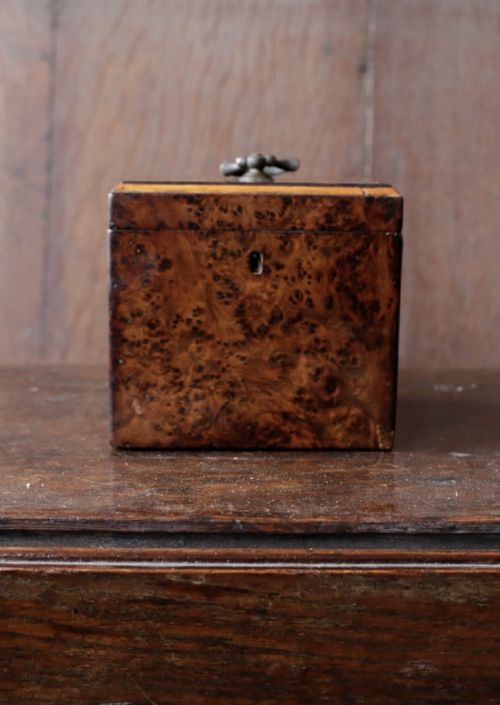


Wooden Storage Canister
A wooden storage canister keeps precious loose leaves and dry goods dry and secure, bringing tactile warmth and period utility to any countertop.
Wooden Storage Canister
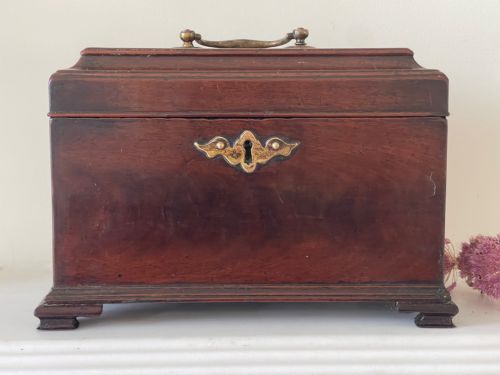
A wooden storage canister primarily takes the form of a tea caddy, apothecary jar, or vessel designed for dry goods. These items originate from periods spanning the eighteenth, nineteenth, and twentieth centuries, including Georgian, Regency, and Victorian eras.
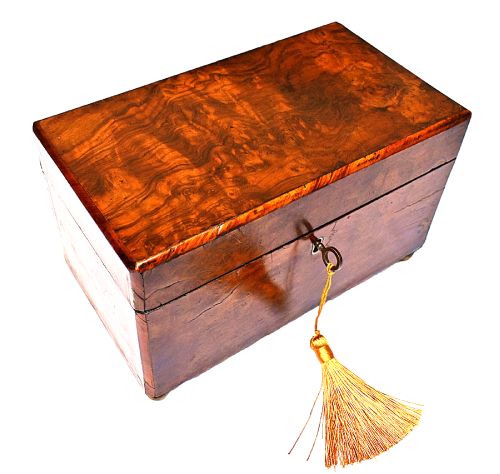
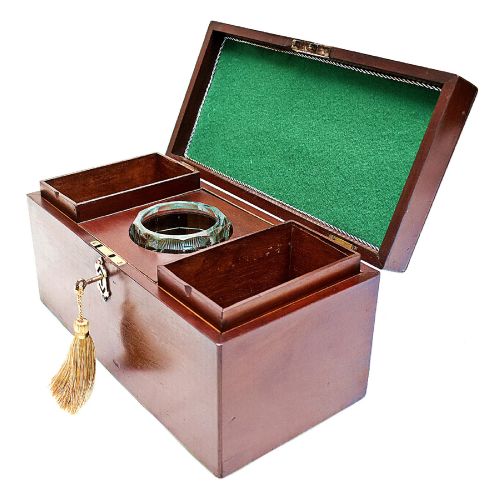
Buyers will most frequently encounter tea caddies fashioned from timbers such as mahogany, rosewood, and satinwood. Many feature fitted interiors, dual compartments, or original glass bowls suited for domestic hospitality.
How they were made
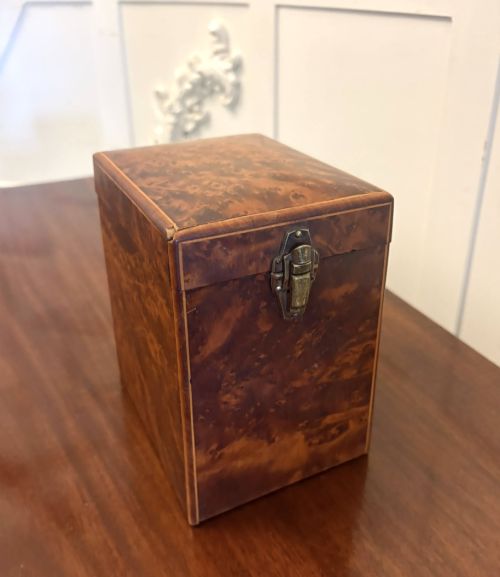
Cabinetmakers utilised dense decorative hardwoods including burr yew, burr walnut, amboyna, and coromandel, often shaped into cube, sarcophagus, or domed forms. Construction frequently incorporated intricate parquetry, shell inlays, and ebony banding to enhance the exterior grain.
Metal mounts in brass alongside bone details were applied to corners, escutcheons, and hinges for structural reinforcement and visual contrast. Interiors sometimes housed metal canisters or glass mixing vessels secured within custom wooden dividers.
Wooden Storage Canister Retail Price Guide 2026
Typical asking prices for wooden storage canister among the pieces listed under this phrase on Sellingantiques today, from the lower quarter to the upper quarter. They describe what is for sale here now, not the wider market.
Materials recorded across the selection include brass, bone, tortoiseshell, and exotic woods like satinwood and burr yew.
What varies in quality
The degree of refinement in the timber selection and veneer matching defines the upper tier of pieces. Natural burrs and complex grain patterns indicate superior cabinetmaking compared to plain, unadorned surfaces.
The survival of original internal fittings, such as mixing bowls, glass jars, and complete compartment lids, elevates the integrity of an example. Subtle details like precision parquetry and fine string inlay separate standard utilitarian items from elite commissions.
The Wooden Storage Canister Glossary
- Tea Caddy
- A small box or chest designed to store loose tea leaves securely. Early versions often included locking mechanisms and internal compartments to separate different tea varieties.
- Parquetry
- A geometric mosaic of wood pieces used for decorative veneer on furniture and boxes. Craftsmen arranged contrasting timbers to create intricate patterns across the lid and sides.
- Sarcophagus Form
- A style of box featuring a stepped or sloping lid resembling a miniature stone sarcophagus. This silhouette gained popularity during the Regency period for tea chests and caddies.
- Escutcheon
- A flat plate of brass or bone surrounding a keyhole. It protects the surrounding wood from wear and adds a decorative metallic accent.
- Burr Timber
- Wood taken from a tree growth where the grain has grown in a deformed, swirling manner. This produces highly figured, mottled patterns prized by cabinetmakers.
Wooden Storage Canister: Frequently Asked Questions
What were tea caddies used for?
Tea caddies served as secure containers for storing valuable loose tea leaves in domestic settings. Because tea was an expensive commodity, these boxes were routinely fitted with locks and keys to restrict access.
Inside, divided compartments allowed households to keep multiple varieties of tea separated. Many examples also included glass bowls for blending leaves before brewing.
How do I date a wooden tea caddy?
Dating relies on observing the timber species, construction techniques, and stylistic motifs associated with particular eras. Georgian and Regency pieces frequently employ mahogany, satinwood, and rosewood with precise shell inlays or sarcophagus silhouettes.
Later Victorian examples introduce exotic veneers like amboyna and coromandel alongside brass binding. Hardware construction and the presence of original internal components also provide clues to the production period.
Are apothecary jars made of wood?
Apothecary jars and chemist vessels appear in timber forms alongside traditional glass versions, often grouped in matching sets. These pieces were utilised in medical and domestic dispensaries for holding dry ingredients and powders.
They reflect the functional craftsmanship of their respective eras, utilising turned woods or painted surfaces to identify contents. Surviving sets demonstrate how utilitarian storage vessels integrated into period interiors.
How should I care for antique wood?
Maintaining antique wooden vessels involves keeping them away from direct sunlight and sudden temperature fluctuations. Excessive heat causes timber to dry out and veneers to lift from their bases.
Applying occasional suitable wax preserves the lustre of the polished surface without damaging the historic finish. Gentle dusting with a soft cloth prevents accumulation in carved details and inlay crevices.