






Wooden Spirit Tantalus
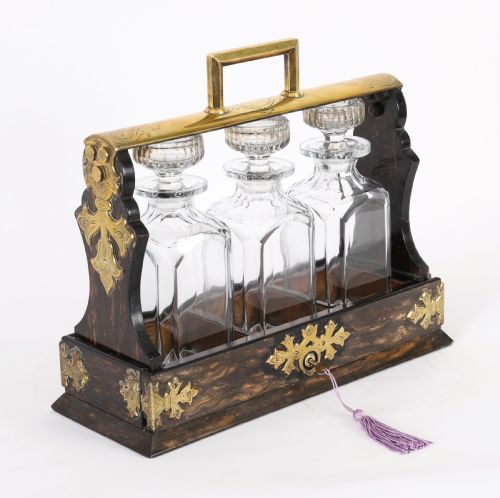
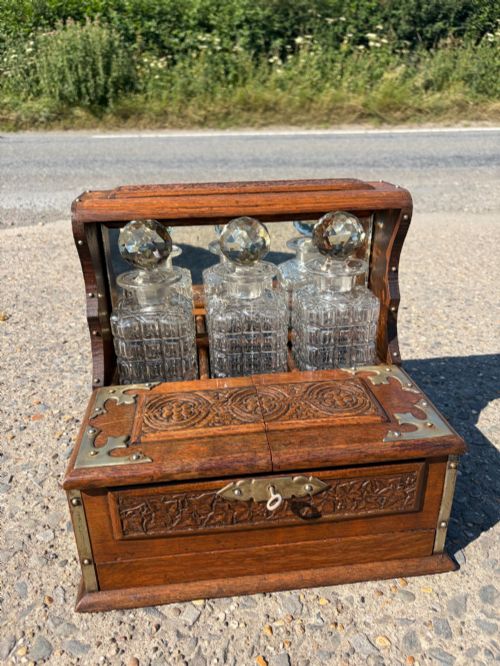
These wooden spirit tantalus pieces are clever locking barware cabinets designed to secure fine liquor bottles while showing off their cut crystal.
Wooden Spirit Tantalus
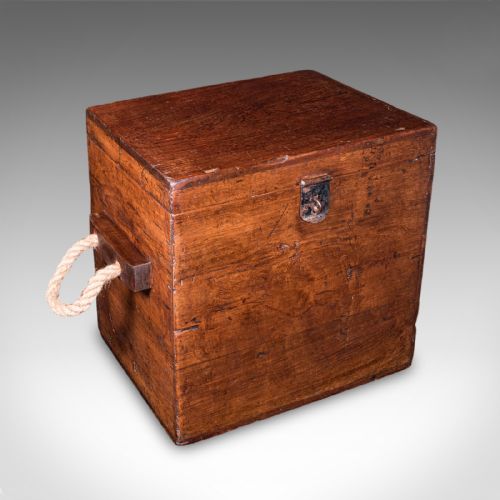
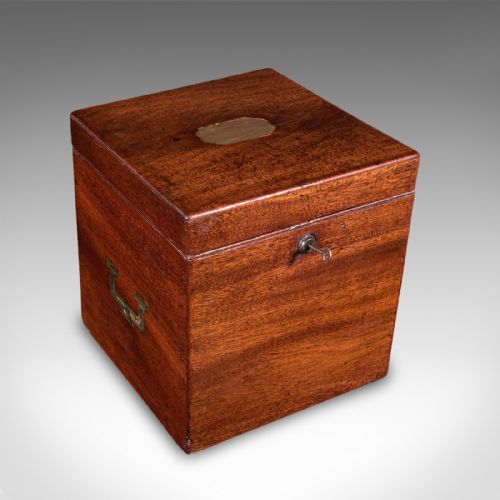
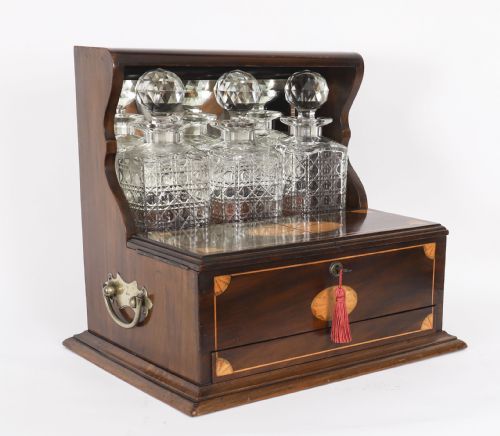
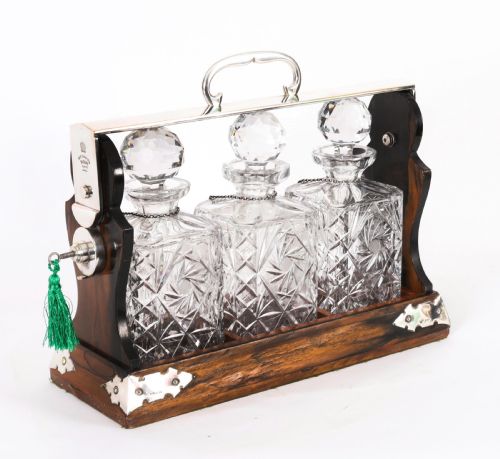
A wooden spirit tantalus is a locking barware carrier engineered to display decanters while preventing unauthorised pours through a clever mechanism. The pieces seen here primarily take the form of tabletop tantalus frames or fitted decanter boxes housing two, three, or four bottles.
Most examples encountered on this page date from the Victorian and Edwardian eras, utilising robust timbers like oak and mahogany. Alongside standard bottle holders, some iterations double as games compendiums, combining social drinking with entertainment.
Originating during the Georgian and Regency periods as secure cellar boxes, the design evolved into the visible locking frames of the late nineteenth century. Whether mounted in brass or inlaid with satinwood, these drinking cabinets remain centrepieces of period hospitality.
Materials and construction
Cabinet makers constructed these pieces using dense hardwoods such as oak, mahogany, walnut, and coromandel, frequently enhanced with marquetry stringing or satinwood inlay. Brass mounts, hinges, and carrying handles provide structural reinforcement while framing the polished timber.
The locking mechanisms often incorporate patented technology, such as Bramah locks, requiring a key to release the metal retaining bar that secures the decanters. Inside, fitted compartments hold cut crystal decanters and glasses, sometimes accompanied by silver plated hardware and hallmarked details.
Periods represented span from the Georgian era through Regency, Victorian, and Edwardian styles up to nineteen hundred.
Indicators of craftsmanship
Quality reveals itself in the selection of timber and the precision of the joinery, from simple box construction to elaborate marquetry and brass binding. The weight and clarity of the cut crystal decanters, alongside the complexity of any integrated games compendium, elevate certain pieces above standard production.
The sophistication of the locking mechanism marks the division between ordinary models and superior examples by notable makers. Complete sets retaining original hardware, functional keys, and matching crystal bottles demonstrate the highest standard of survival.
Betjemann’s
The Wooden Spirit Tantalus Glossary
- Tantalus
- A locking device that holds decanters in place so they remain visible yet unreachable without a key. Named after the mythological figure who was doomed to stand in water just out of reach.
- Decanter Box
- A fully enclosed wooden chest fitted internally to transport and store spirit bottles securely. These predate the open frame tantalus design.
- Games Compendium
- A multi-use box containing equipment for parlour games such as cards, chess, or dominoes, frequently integrated into the base of a barware cabinet.
- Bramah Lock
- A high-security cylinder lock invented by Joseph Bramah in the late eighteenth century, commonly utilised on fine campaign furniture and secure boxes.
- Marquetry
- Decorative woodwork where thin veneers are fitted together to form pictorial patterns or geometric designs on the surface of a cabinet.
Wooden Spirit Tantalus: Frequently Asked Questions
How does a tantalus lock work?
A metal retaining bar engages with the necks or stoppers of the decanters to prevent them from being lifted out of the wooden base. Turning a key in the integrated lock releases this bar, allowing the bottles to be removed.
Most mechanisms are operated from the top or side of the frame, often working in tandem with the lid of the box or a pivoting handle.
What is the difference between a decanter box and a tantalus?
A decanter box is a fully enclosed chest with a hinged lid and doors that completely conceal the bottles inside during transport or storage. A tantalus leaves the cut crystal decanters visible in an open wooden frame while still securing them with a locking bar.
Box forms dominate the earlier Georgian and Regency periods, whereas open frames become common by the late Victorian and Edwardian eras.
Were these cabinets used on ships?
Maritime decanter boxes were constructed with secure internal partitions and heavy brass carrying hardware to withstand travel on board ships. Sturdy timbers like mahogany and walnut protected the glass bottles from shifting during rough journeys.
Not all models are sea-faring, but the sturdy construction reflects an era when barware needed to survive transport between country houses and town residences.
How do I care for the wood and crystal?
Maintain the timber surfaces by applying a traditional beeswax polish sparingly to nourish the antique grain without building up a sticky residue. Avoid placing wooden pieces in direct sunlight or near heat sources to prevent the timber from splitting.
Wash the cut crystal decanters gently by hand using warm water, ensuring stoppers are stored safely separately when the bottles are empty.