

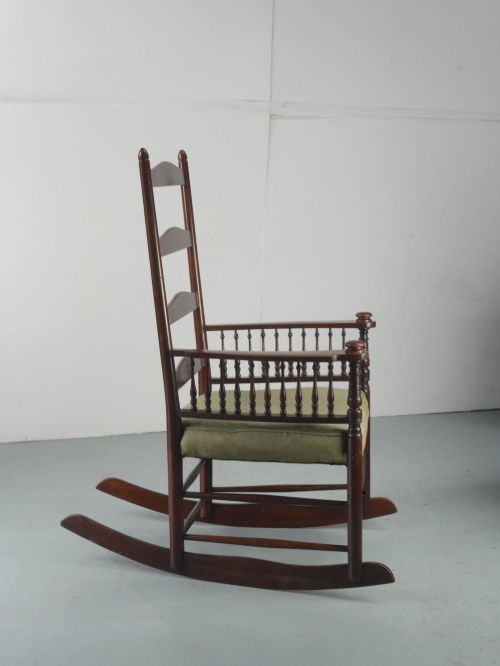
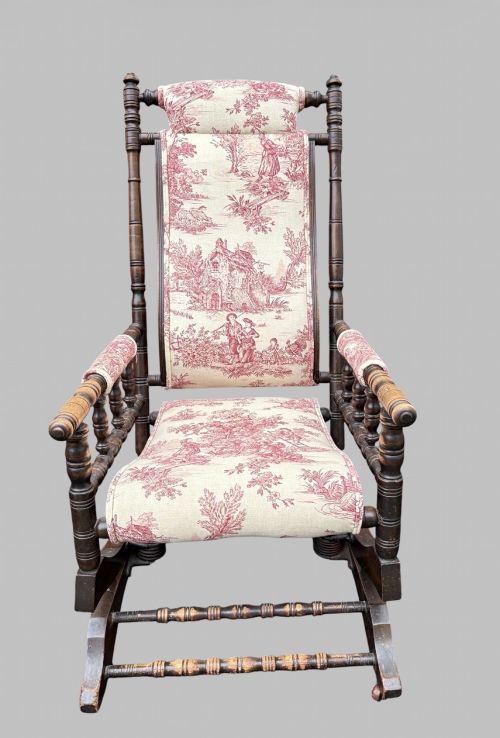
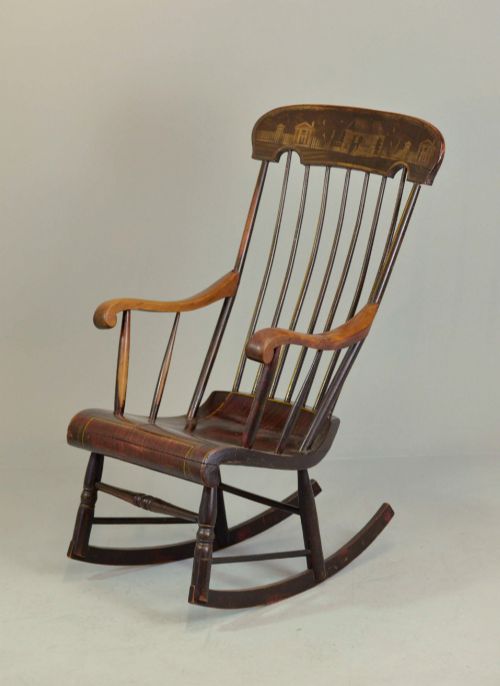
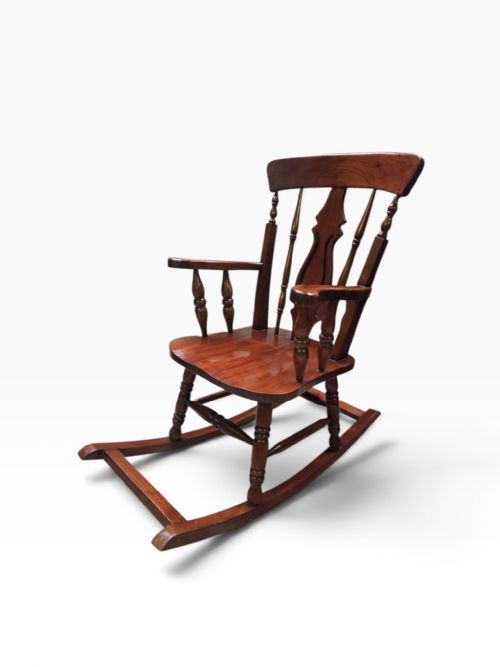
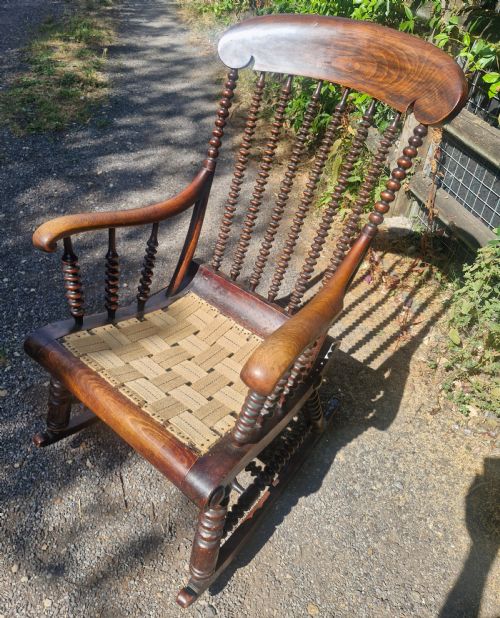
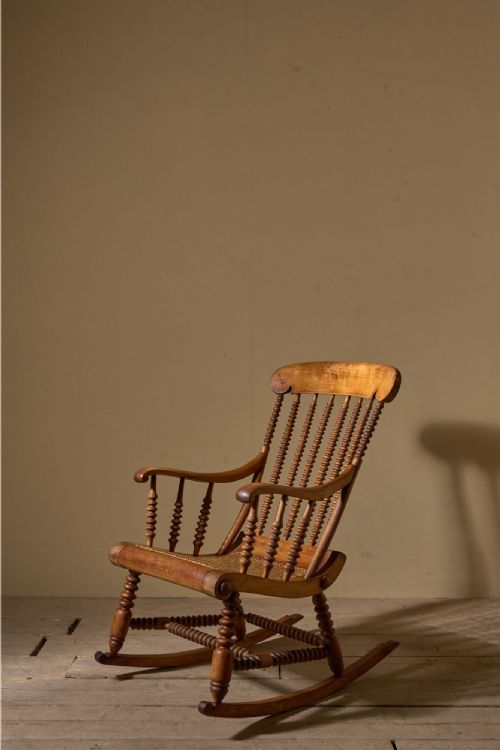
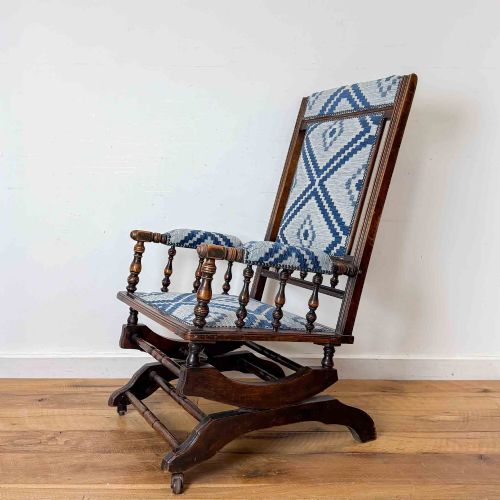
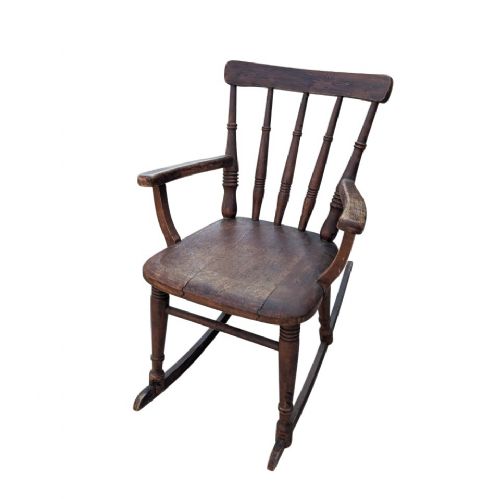

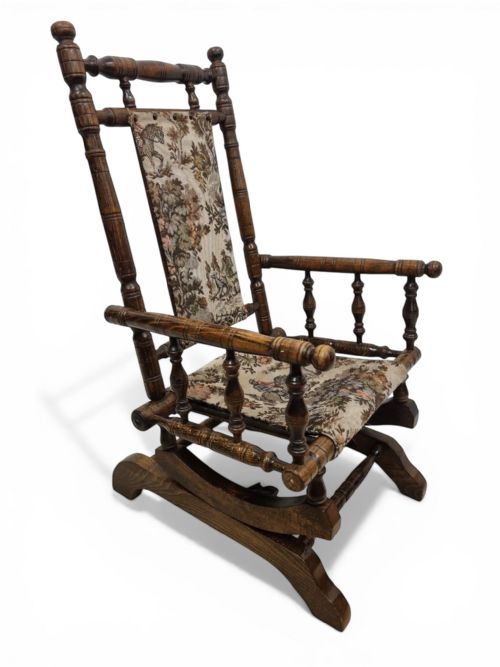


Wooden Spindle Rocking Chair
A wooden spindle rocking chair brings timeless comfort and vernacular charm to any room, offering a supportive seat mounted on curved runners.
Wooden Spindle Rocking Chair
A wooden spindle rocking chair is a traditional seating form defined by turned uprights, spindles, and curved rockers. These pieces span periods from the Regency era through to the early twentieth century.
The selections available here include English country windsors, Scottish vernacular designs, and Swedish country pieces. Buyers frequently encounter chairs featuring spindle backs, bobbin turning, and rush or elm seats.
How they were made
Maker's workshops utilised native timbers such as oak, beech, elm, and pine, often combining woods within a single chair. Solid planks formed the seats, while steam bending shaped the wooden rockers and crest rails.
Joinery relied on traditional turning, mortise and tenon construction, and spindle shaping. Some examples retain original paint finishes, leather upholstery, cane work, or sea grass seating.
Wooden Spindle Rocking Chair Retail Price Guide 2026
Typical asking prices for wooden spindle rocking chair among the pieces listed under this phrase on Sellingantiques today, from the lower quarter to the upper quarter. They describe what is for sale here now, not the wider market.
Listings feature items spanning the Regency period through to the 1920s, utilising materials including elm, beech, oak, pine, cane, and rush.
What varies in quality
Quality rests in the crispness of the spindle turnings and the structural integrity of the frame. Denser hardwoods like oak and elm provide greater longevity than softer timbers.
Surface preservation distinguishes different examples, from untouched original paint finishes to patinated waxed wood. The precision of the joinery and the balance of the rocking action determine the standard of the chair.
The Wooden Spindle Rocking Chair Glossary
- Spindle back
- A chair back constructed from vertical turned wooden rods fitted between a top rail and the seat. This design lightens the visual weight of the chair while offering sturdy back support.
- Bobbin turning
- A type of furniture decoration formed by lathe-cutting a series of rounded, bead-like shapes along a wooden leg or stretcher. It appears frequently on nineteenth-century vernacular seating.
- Windsor
- A traditional chair style featuring a solid wooden seat into which the legs and back spindles are directly socketed. English and American regional variations display distinct back shapes.
- Vernacular
- Everyday furniture made by local regional craftsmen using traditional methods rather than adhering to high-style academic designs. These pieces often reflect the specific materials available in their local area.
- Rocker
- The curved wooden pieces attached to the base of the chair legs that allow the seat to move backward and forward. Their sweep determines the smoothness of the motion.
Wooden Spindle Rocking Chair: Frequently Asked Questions
Where should I place a wooden spindle rocking chair?
These chairs suit fireside settings, bedrooms, and quiet corners where the rocking motion can be enjoyed. Their moderate scale allows them to fit comfortably alongside other seating without dominating a room.
Ensure there is adequate clearance behind the rockers for the chair to move freely. Placing them away from direct heat sources protects the timber and any original finish.
How do I care for a nineteenth-century rocking chair?
Maintain the timber by dusting regularly with a dry cloth and occasionally applying a suitable beeswax to nourish the wood. Avoid modern silicone sprays, which can damage historic finishes.
Check the joints periodically to ensure the wooden components remain tight. Keeping the chair away from rapid temperature changes prevents the wood from drying out and cracking.
Can I use a child's rocking chair for seating?
Child's rocking chairs from the nineteenth and early twentieth centuries were built for small occupants and decorative use. Sitting in them will place undue strain on historic timber frames.
Display them as decorative objects or doll displays to preserve their structural integrity. Their diminutive proportions make them suitable for tabletop or floor-level display.