





Wooden Sewing Stand
A wooden sewing stand brings period craftsmanship into the modern room, offering clever compartment storage beneath a fitted top.
Wooden Sewing Stand
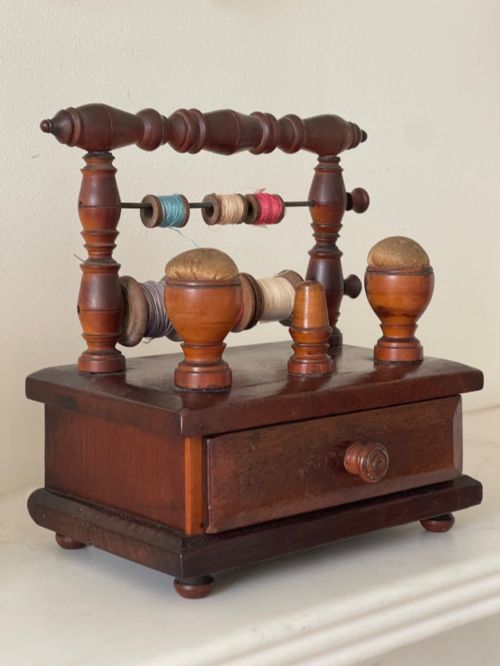
A wooden sewing stand combines a functional work table with dedicated storage for textiles, threads, and needles. You encounter forms ranging from simple freestanding boxes on legs to sophisticated tables with hinged tops.
The selections span distinct historical eras, including Regency, William IV, Victorian, Edwardian, and Art Deco periods. Many examples incorporate fitted interior compartments designed specifically for small sewing accessories and cotton reels.
Makers utilised various timber forms, including mahogany, walnut, burr walnut, satin walnut, and oak. Some pieces double as occasional tables or lampstands while retaining their original utilitarian purpose.
How they were made
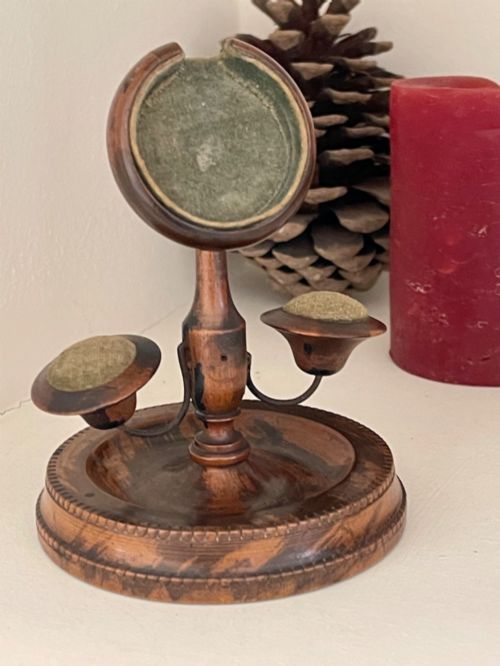
Cabinetmakers constructed these stands using solid timbers and decorative veneers such as mahogany and walnut. Wood inlay and turned wood details frequently appear on legs, stems, and borders.
Interiors often feature fitted wooden compartments lined with velvet to protect delicate sewing tools and jewellery. Brass fittings, such as hinges, handles, and small locking mechanisms, provide structural support and functional closure.
Wooden Sewing Stand Retail Price Guide 2026
Typical asking prices for wooden sewing stand among the pieces listed under this phrase on Sellingantiques today, from the lower quarter to the upper quarter. They describe what is for sale here now, not the wider market.
The listings feature wooden sewing stands spanning the eighteenth, nineteenth, and twentieth centuries, constructed in mahogany, walnut, and oak.
What varies in quality
The refinement of the timber and the intricacy of the veneer work distinguish standard examples from finer pieces. Burr walnut and figured mahogany displays demonstrate superior material selection by the cabinetmaker.
The sophistication of the internal fittings defines the standard of a work table. Retaining original velvet linings, compartments, and matching brass hardware elevates the integrity of the piece.
The Wooden Sewing Stand Glossary
- Work table
- A small occasional table featuring fitted interior compartments designed for needlework and sewing implements. These items served domestic spaces throughout the nineteenth and early twentieth centuries.
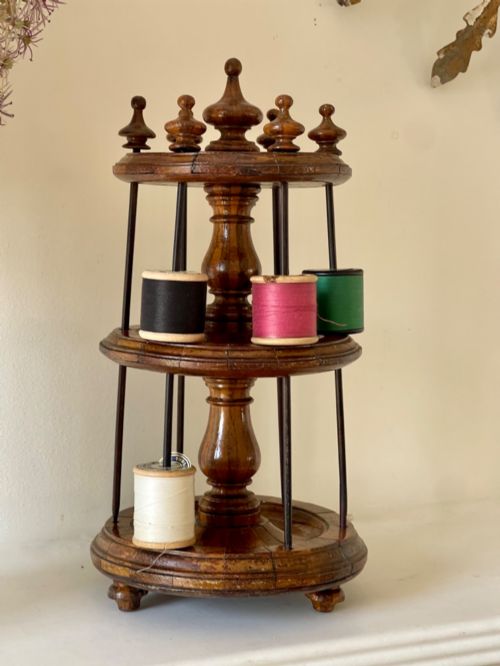
- Cotton reel stand
- A specialised holder designed specifically to organise and display sewing threads during needlework tasks. They appear in wood and silver variants across the nineteenth and twentieth centuries.
- Burr walnut
- A highly prized timber harvested from the wart-like growths on walnut trees, yielding turbulent, swirling grain patterns. Cabinetmakers utilised this material for decorative veneer surfaces on high-status furniture.
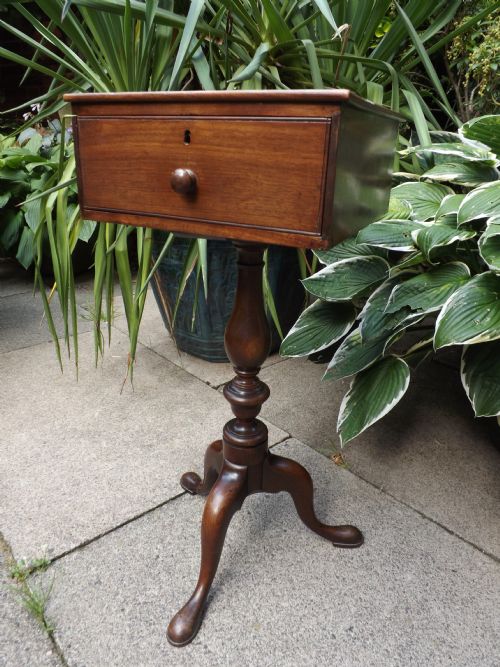
- Tripod base
- A three-legged support structure commonly found on nineteenth-century pillar tables and stands. This configuration ensures stability on uneven domestic floorboards.
- French Rococo Revival
- A nineteenth-century decorative style emulating eighteenth-century continental design through curved lines and ornate detailing. Pieces in this style often feature serpentine forms and rich wood finishes.
Wooden Sewing Stand: Frequently Asked Questions
What is a wooden sewing stand?
A wooden sewing stand is a piece of antique or vintage furniture designed to hold needlework supplies, cottons, and tools. They typically feature a lidded box section mounted on legs or a pillar base.
Inside, you often find divided compartments or lift-out trays. Many double as small side tables or lampstands in modern rooms.
How were sewing stands used?
These stands kept sewing equipment close at hand in nineteenth and early twentieth-century parlours and drawing rooms. Ladies used them to store threads, needles, and ongoing needlework projects.
The fitted tops provided a stable surface for detailed handwork. When closed, the stands presented a neat piece of occasional furniture.
How do I date a sewing stand?
Dating relies on timber choices, leg styles, and construction methods visible in the piece. Regency and William IV examples often feature bold mahogany pillars and brass paw feet.
Victorian and Edwardian versions introduce satin walnut, simpler turned legs, and different interior layouts. Art Deco pieces from the 1930s show geometric lines and simplified forms.
Can I use an antique sewing stand today?
These stands integrate easily into contemporary interiors as bedside tables, hall stands, or living room lamp tables. The interior compartments suit jewellery, trinkets, or modern craft supplies.
Their compact footprints make them practical solutions for small spaces requiring character and surface area.