



Wooden Serving Cabinet
These wooden serving cabinet pieces are substantial furniture designed for dining rooms and entertaining, offering storage and surface space for food and tableware.
Wooden Serving Cabinet
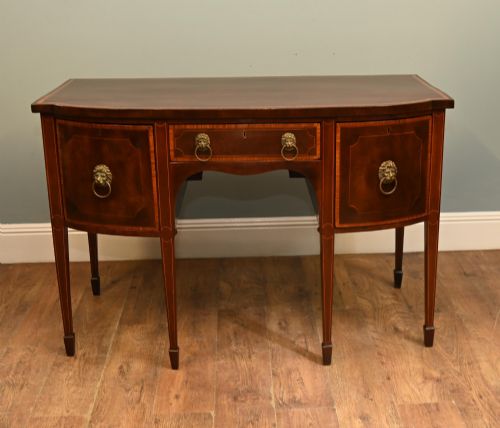
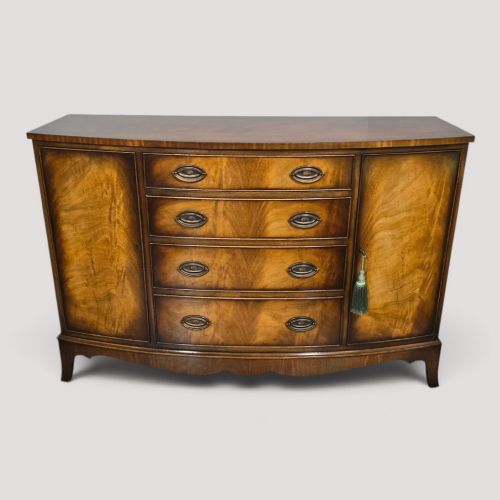
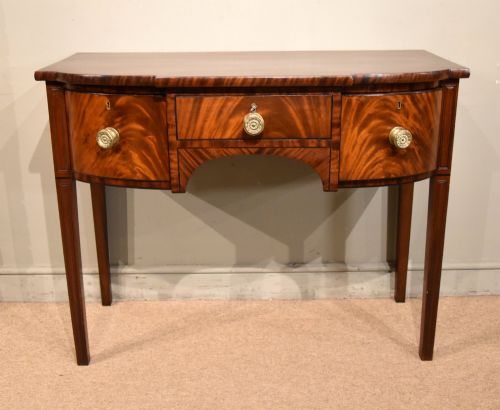
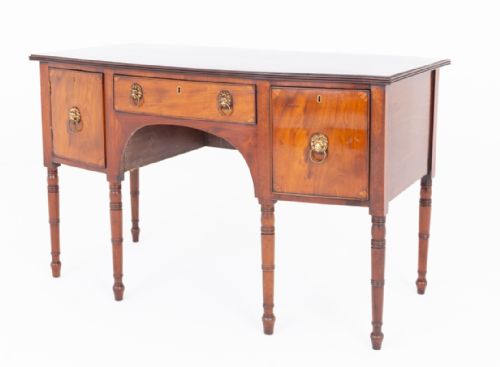
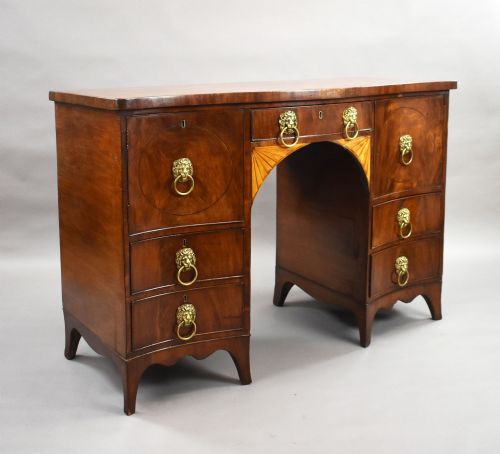
A wooden serving cabinet encompasses a variety of dining room furniture forms, most commonly sideboards, buffets, and serving cupboards from the Georgian, Victorian, and Edwardian periods. Buyers searching for a wooden serving cabinet frequently encounter mahogany sideboards with bowfronts, serpentine fronts, or inlay work.
The selection ranges from early nineteenth-century Regency and William IV pieces to twentieth-century tea trolleys and Art Deco walnut side cabinets. Alongside traditional British styles, listings include continental examples such as French walnut buffets and Belgian carved chiffonier serving sideboards.
How they were made
Joinery techniques span traditional carcase construction, carved ornamentation, and turned supports such as barley twists. Surface treatments emphasise the natural grain of the wood, particularly in burr walnut and figured mahogany examples.
Wooden Serving Cabinet Retail Price Guide 2026
Typical asking prices for wooden serving cabinet among the pieces listed under this phrase on Sellingantiques today, from the lower quarter to the upper quarter. They describe what is for sale here now, not the wider market.
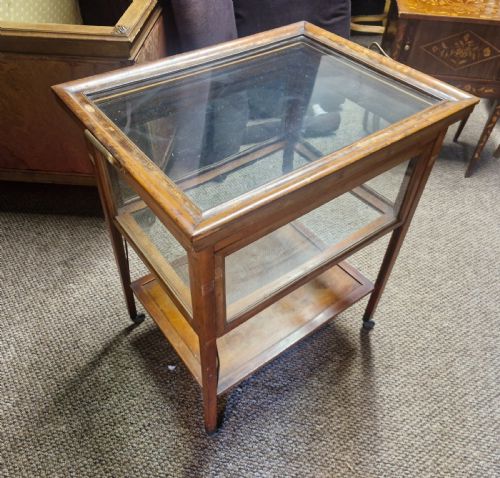
Tea and cake trolleys with drop sides offer a mobile approach to serving, ready to roll out refreshments at a moment's notice.
What varies in quality
Quality in a wooden serving cabinet is determined by the selection of timber veneers, the precision of inlay work, and the integrity of the carcase construction. Pieces featuring figured timbers like flame mahogany or burr walnut alongside detailed boxwood stringing demonstrate superior craftsmanship.
The finesse of carved details, the originality of brass hardware, and the proportion of the overall design separate standard utility furniture from finer architectural examples. Well-executed serpentine or bowfront shapes require advanced woodworking skill compared to straight-fronted carcases.
Epstein
The Wooden Serving Cabinet Glossary
- Bowfront
- A convex, curved cabinet front that projects outward in an arc. This shape became particularly popular during the Georgian and Regency periods on sideboards.
- Serpentine front
- A furniture front characterised by a double-concave curve flanking a central convex curve. It requires advanced carpentry to execute smoothly on a heavy timber carcase.
- Chiffonier
- A low sideboard or cabinet featuring shelves or enclosed cupboards, developed in the nineteenth century for dining rooms. These pieces often incorporate serving surfaces for food and drink.
- Inlay
- A decorative technique where pieces of contrasting wood, such as boxwood or satinwood, are inserted into recessed portions of the primary wood surface. This creates geometric or botanical patterns.
- Flame mahogany
- A veneer cut from timber where the grain resembles flickering flames. Cabinetmakers used this figure on prominent drawer fronts and cabinet doors.
Wooden Serving Cabinet: Frequently Asked Questions
What is a wooden serving cabinet used for?
These cabinets serve as practical furniture for dining rooms, providing dedicated storage for crockery, cutlery, and glassware. The top surface acts as a convenient station for serving food and drinks during meals.
Historically, larger sideboards and buffets held heavy platters and tureens before dishes were brought to the main dining table. Today, they function similarly while displaying decorative items or house bar accessories.
How do I identify a Georgian sideboard?
Georgian pieces typically feature solid mahogany construction, sometimes with bowfront or serpentine shapes, and restrained inlay work. Look for tapered legs, brass drop handles, and classic proportions dating from the eighteenth or early nineteenth century.
Maker styles from this era favour symmetry and clean lines over heavy carving. The interiors often include specific compartments for bottles and cutlery storage.
What is the difference between a sideboard and a buffet?
A sideboard traditionally refers to a long cabinet with cupboards and drawers used specifically for serving food and storing tableware. A buffet is a closely related form, often historically associated with serving from a wall-mounted or freestanding table.
In many listings, these terms overlap depending on the proportions and internal fittings of the specific piece. Both serve the primary function of dining room organisation and hospitality.
How do I incorporate a vintage serving cabinet into a modern room?
A wooden serving cabinet works well as a statement piece in a dining area, living room, or hallway. Its surface provides an ideal platform for lamps, books, or art, while internal storage keeps clutter hidden.
Mixing a nineteenth-century mahogany or walnut cabinet with contemporary seating creates a balanced interior. The natural wood tones add warmth and texture to neutral modern spaces.