


Wooden Roll Top Cabinet
A wooden roll top cabinet is a practical piece of office furniture with a slatted shutter that conceals a fitted interior.
Wooden Roll Top Cabinet
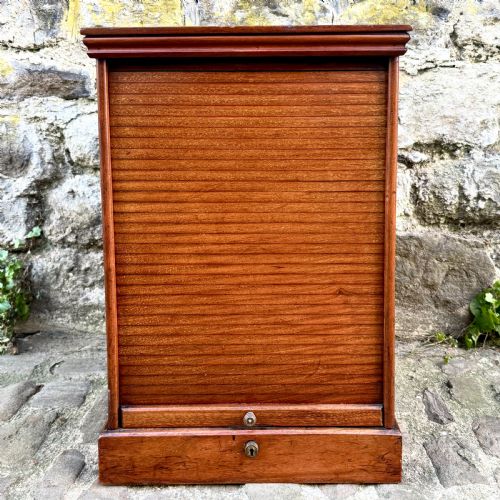
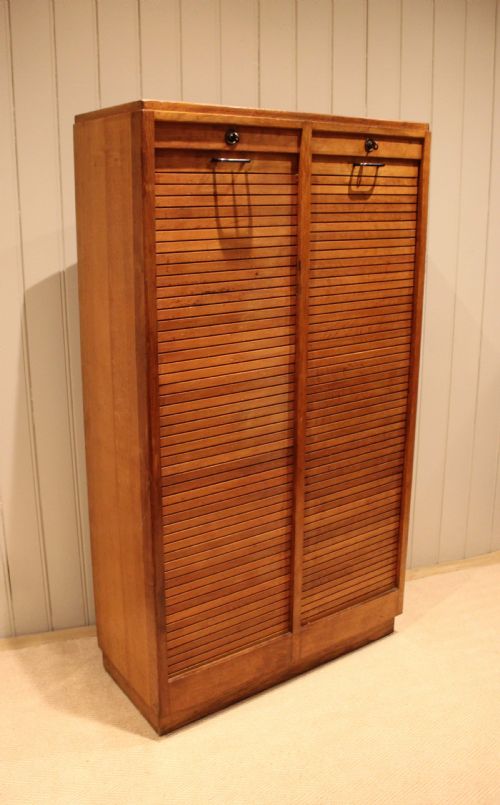
When you search for a wooden roll top cabinet, you are looking at functional storage units designed for papers, stationery, and correspondence. The examples found here range from compact stationary boxes to large office filing cabinets and cylinder desks.
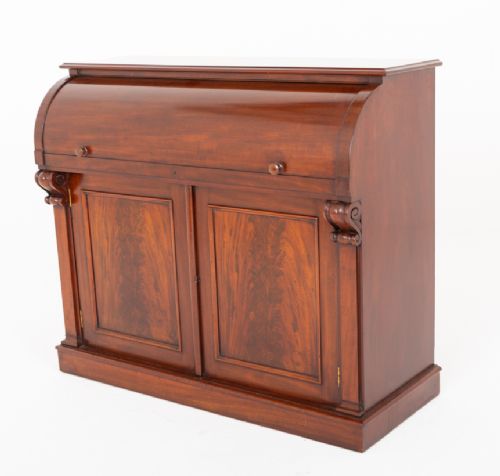
The versions you are most likely to meet on this page date from the nineteenth and early twentieth centuries, with a strong representation of Edwardian and Victorian pieces. Oak and mahogany dominate the selection, often featuring slatted tambour fronts or rotating cylinders.
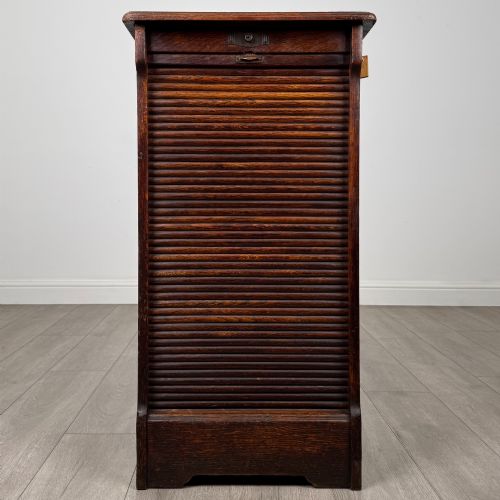
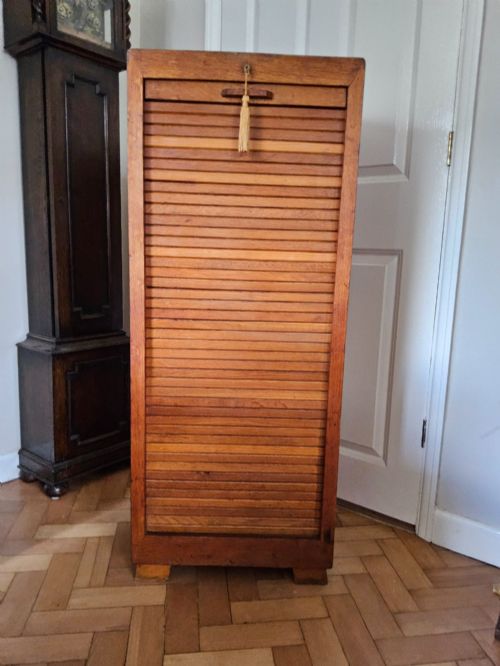
Forms vary from table-top stationery cabinets with adjustable dates to large pedestal desks and double-tambour filing units. These pieces were built for utility in studies and offices, yet many retain sophisticated internal pigeonholes and small drawers.
Materials and construction
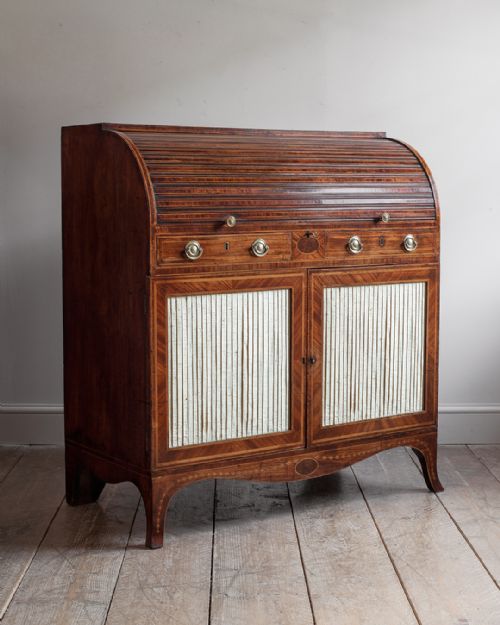
Makers utilised solid timbers and selected veneers such as oak, mahogany, burr walnut, and rosewood. The structural integrity relies on traditional joinery to support the weight of drawers and writing surfaces.
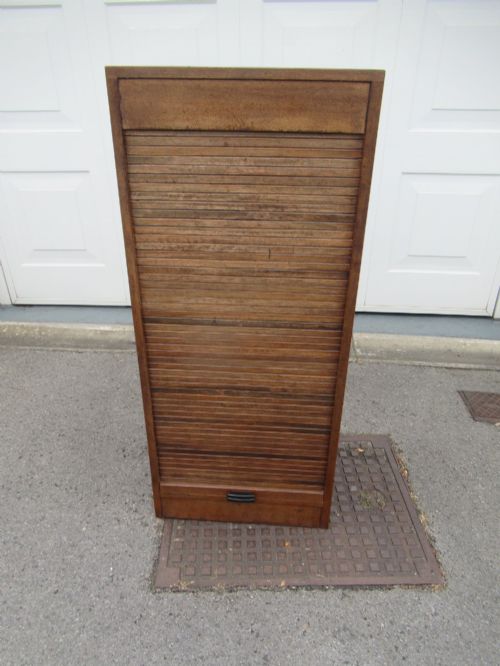
The defining characteristic of these pieces is the tambour shutter or cylinder front, constructed from narrow strips of wood glued to a flexible canvas or fabric backing. This allows the sliding panel to curve smoothly around tracks built into the cabinet frame.
Additional hardware includes brass handles, locks, and hinges, alongside adjustable wooden shelving systems used to configure internal compartments for files and letters.
Some Edwardian stationery cabinets include built-in perpetual calendars requiring manual daily card adjustments to keep track of the date.
What separates the grades
The smoothness of the tambour action dictates much of the functional standard in these cabinets. Slats that run evenly along their tracks without catching demonstrate careful initial fitting and minimal subsequent warping.
Timber selection and interior complexity also separate standard utility models from finer examples. Grain matching on flame mahogany veneer or burr walnut panels, alongside pigeonhole compartments with secret drawers, denotes a higher grade of manufacture.
The Wooden Roll Top Cabinet Glossary
- Tambour
- A flexible shutter made from narrow wooden slats attached to canvas, allowing it to slide around a curved track. This mechanism conceals the desk surface or filing shelves.
- Cylinder desk
- A desk featuring a solid, quarter-circle wooden roll that rotates backwards into the body of the piece to reveal a writing surface. It differs from a slatted tambour.
- Stationery cabinet
- A small desk-top cabinet fitted with compartments, pigeonholes, and occasionally an adjustable calendar or date function. They were designed for correspondence papers and envelopes.
- Davenport
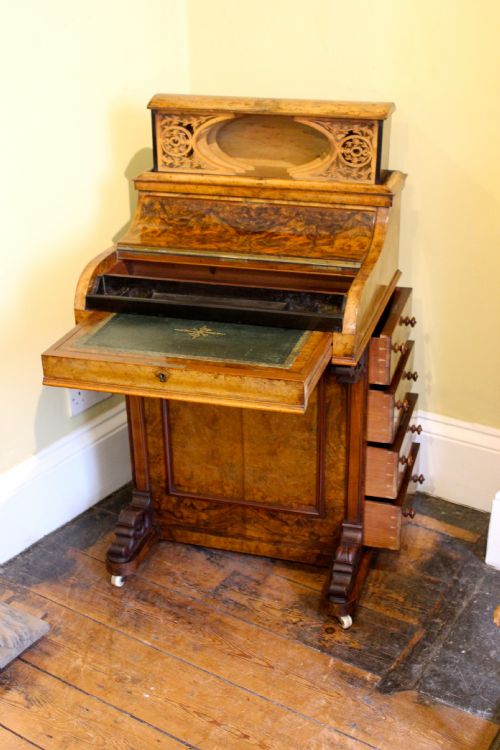
- A compact writing desk with a sloped top, resting on a pedestal of drawers. The design originated in the early nineteenth century.
- Veneer
- A thin layer of decorative wood applied to a secondary timber base. Flame mahogany and burr walnut are common decorative veneers seen on these cabinets.
Wooden Roll Top Cabinet: Frequently Asked Questions
How do I clean a tambour shutter?
Dust the slats gently using a dry, soft brush to remove dirt trapped between the grooves. Avoid using excess moisture that might damage the canvas backing behind the wood.
Apply a traditional beeswax polish sparingly to maintain the timber finish. Ensure the wax does not build up in the channels where the slats slide.
Are tambour slats easy to repair?
Repairing a broken tambour track requires specialist woodworking knowledge and patience. The slats are usually glued to a fabric backing that deteriorates with age and humidity.
If the canvas tears, the entire curtain often needs disassembly to re-secure the individual wooden pieces. Professional restoration is usually recommended for major tracking issues.
What is the difference between a cylinder desk and a roll top?
A cylinder desk uses a solid, curved piece of wood that pivots on a fixed radius into the desk body. It represents a more formal Georgian and Victorian cabinet-making technique.
A roll top utilises many narrow tambour slats fixed to canvas, allowing the shutter to follow a more complex path around a track. This slatted design became common in late nineteenth and early twentieth-century office furniture.
How can I date an oak roll top cabinet?
Examine the construction methods, secondary timbers used inside the drawers, and the style of the hardware. Pieces from the Victorian era often feature hand-cut dovetails and heavy mouldings.
Edwardian and later office furniture from the twentieth century frequently incorporates mass-produced metal brackets and simpler interior layouts. Patent stamps or maker marks inside the drawers can also provide specific chronological clues.