


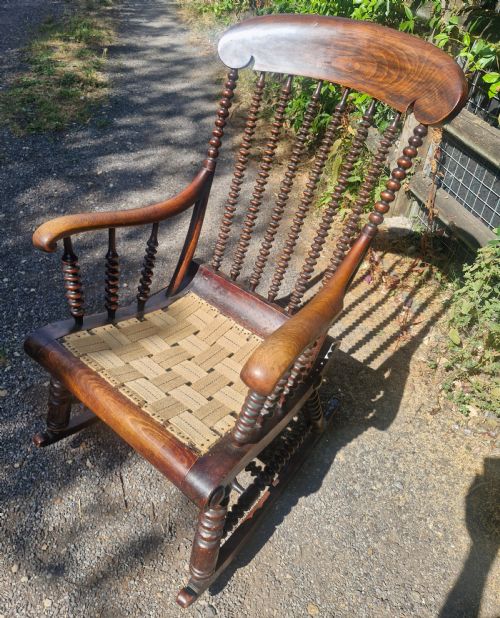
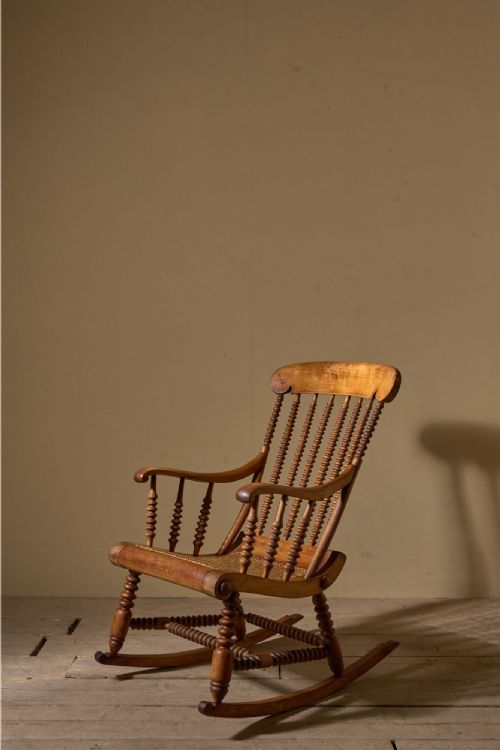
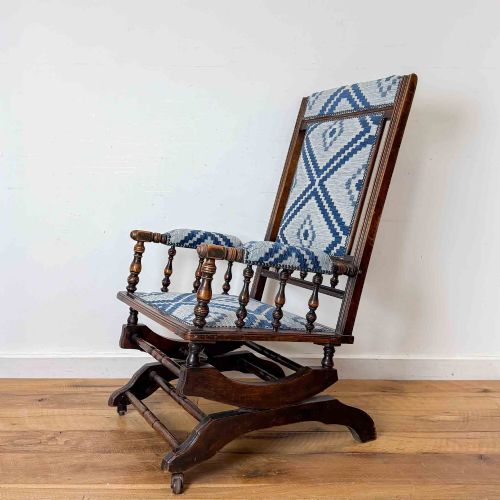
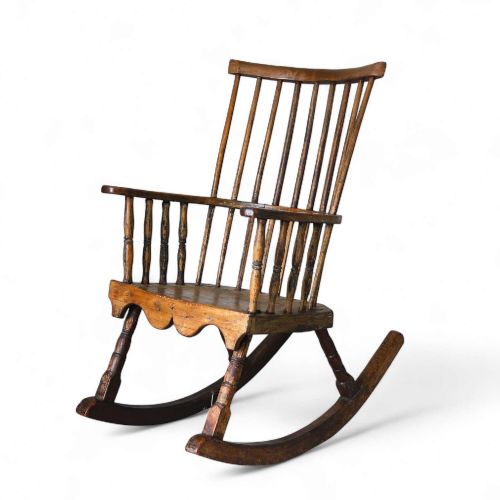



Wooden Rocking Armchair
A wooden rocking armchair brings motion and sturdy comfort to a room, ranging from simple farmhouse seats to elegant bentwood designs.
Wooden Rocking Armchair
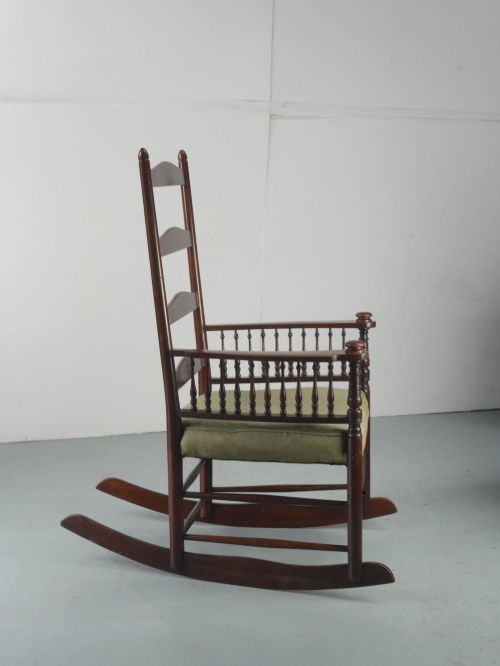
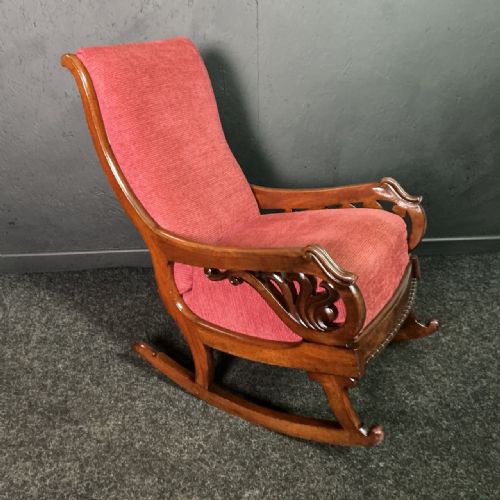
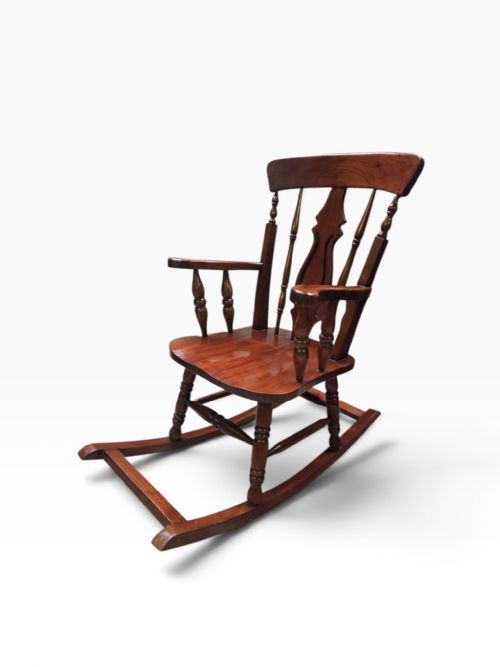
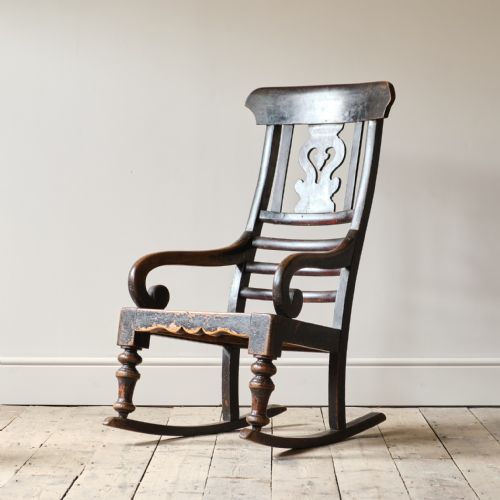
A wooden rocking armchair is a seating form designed for gentle motion, appearing across the nineteenth and early twentieth centuries in various regional and formal styles. Buyers seeking a wooden rocking armchair will encounter everything from robust country Windsor chairs to lighter Edwardian parlor seats.
The selection includes vernacular farmhouse pieces alongside curved bentwood models and inlaid mahogany examples. These chairs served historically beside firesides, in nurseries, or as relaxing occasional seating.
Most examples originate from the Victorian and Edwardian eras, utilising traditional timber framing and curved rockers to achieve stable movement.
Materials and construction
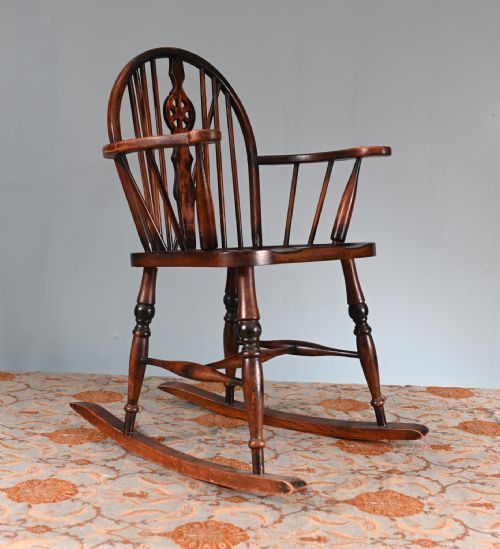
These chairs rely on native hardwoods such as beech, elm, ash, and oak, often combined for different structural components like bent arms or turned spindles. Windsor versions utilise traditional stick-back joinery where spindles connect a solid wooden seat to a bent bow or comb crest.
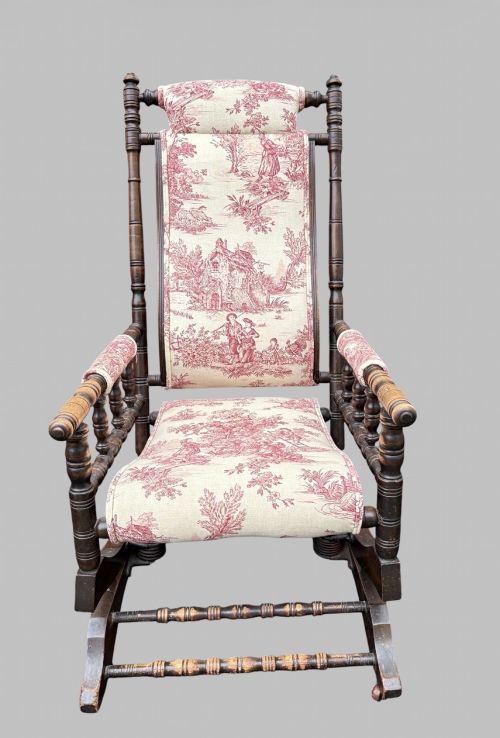
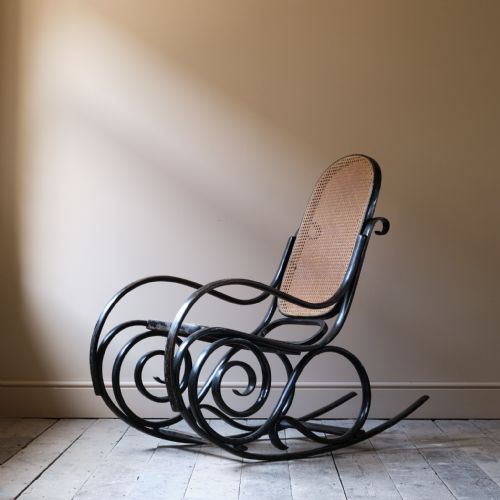
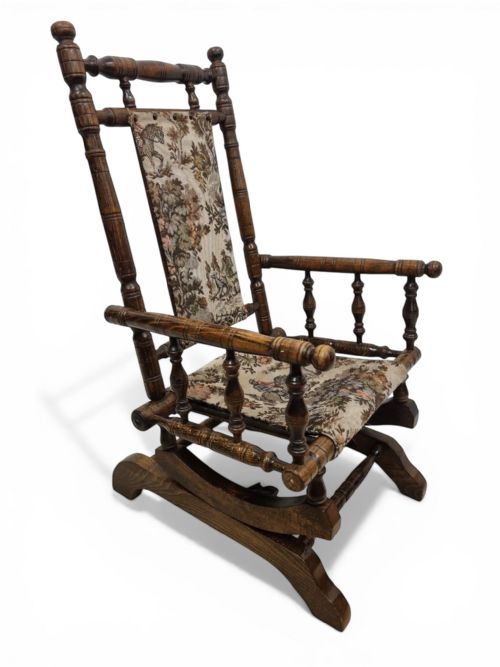
Bentwood examples employ steam-bent timber to form fluid, curved frames held together with screws and structural bracing. Selected pieces incorporate cane, sea grass, leather, or woven tapestry for seat pads and backrests.
Surface treatments range from plain polished mahogany and walnut to original painted finishes and ebonised details.
Wooden Rocking Armchair Retail Price Guide 2026
Typical asking prices for wooden rocking armchair among the pieces listed under this phrase on Sellingantiques today, from the lower quarter to the upper quarter. They describe what is for sale here now, not the wider market.
Listings feature pieces built from beech, elm, ash, oak, mahogany, and walnut, alongside variants with cane, sea grass, and tapestry seats.
Judging quality and character
Quality rests upon the integrity of the timber frame, the smoothness of the rocker curve, and the harmony of the design proportions. Early vernacular pieces show honest hand-tooling and patinated surfaces that reflect decades of domestic use.
Finer formal chairs display crisp decorative inlays, finely turned bobbin framing, or skilled steam-bending without structural compromise. The best examples retain their original upholstery materials, surface paint, or polished finish without heavy modern alterations.
Jacob and Josef Kohn
The Wooden Rocking Armchair Glossary
- Windsor
- A traditional chair type featuring a solid wooden seat into which the legs, back spindles, and arms are separately tenoned. These sturdy seats often include comb-backs or wheelback designs.
- Bentwood
- Furniture formed by steaming strips of timber until pliable, then bending them into curves. This technique creates lightweight yet resilient frames seen in Victorian and continental seating.
- Bobbin framing
- A decorative turning style featuring a series of rounded wooden spheres resembling spools or bobbins. It is commonly found on nineteenth-century vernacular and artistic frames.
- Vernacular
- Everyday domestic furniture made by regional craftsmen using local materials rather than following strict high-style academic designs. These pieces emphasise functional comfort and honest construction.
- Comb-back
- A Windsor chair variation where the top rail resembles the spine of a comb, with vertical spindles rising through a horizontal arm bow.
Wooden Rocking Armchair: Frequently Asked Questions
What is a bentwood rocking chair?
A bentwood rocking chair utilises steam-heated timber bent into sweeping, continuous curves for the frame and armrests.
These pieces typically date from the late nineteenth or early twentieth centuries and offer a lighter profile.
Where were rocking armchairs used in the home?
These chairs served primarily as comfortable seating beside hearths, in bedrooms, or as nursery chairs for nursing children.
Their soothing motion made them popular spots for relaxation across both country farmhouses and formal town drawing rooms.
How can I tell the period of a wooden rocking armchair?
Dating relies on stylistic clues, such as heavy bobbin turnings from the mid-nineteenth century, Edwardian inlaid mahogany, or steam-bent sections from the turn of the twentieth century.
Construction marks and timber choices also help narrow down the decade of manufacture.