

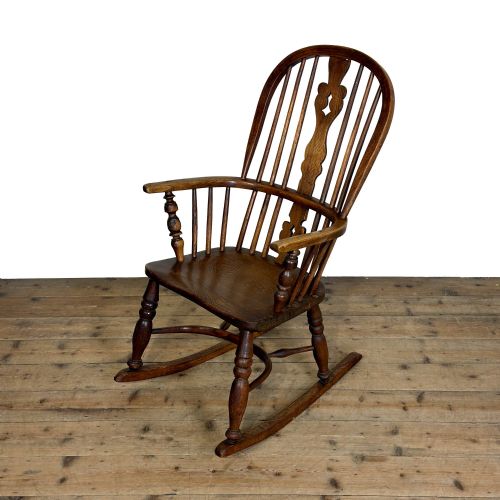
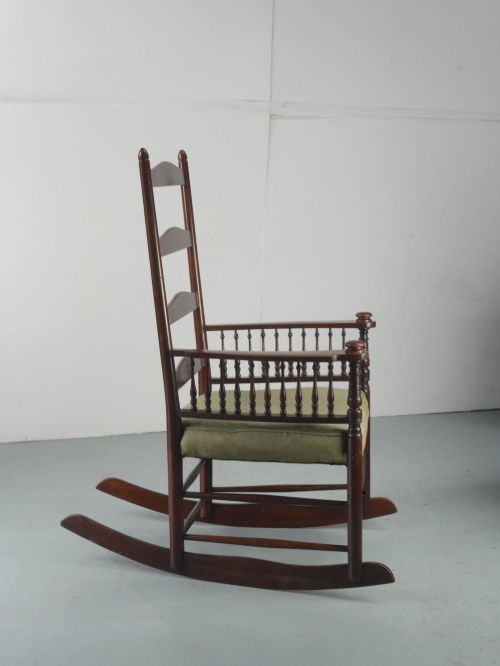

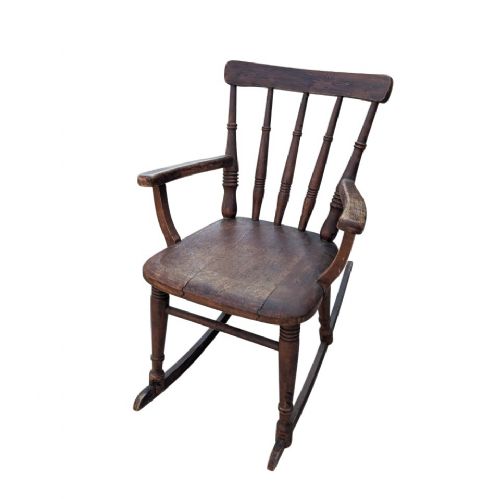


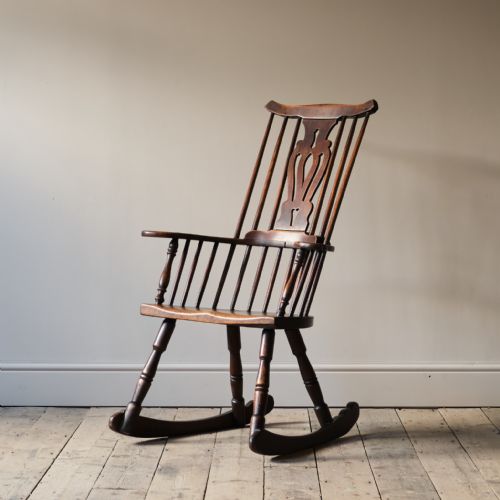


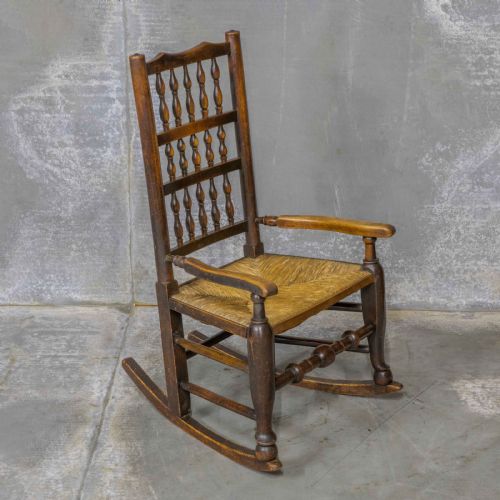
Wooden Rocking Arm Chair
These wooden rocking arm chair pieces offer centuries of domestic seating comfort, combining sturdy frames with gentle motion.
Wooden Rocking Arm Chair
A wooden rocking arm chair brings together traditional seating and curved runners, originating from various periods including the late eighteenth century and the Victorian era. You will encounter forms ranging from rustic country childs chairs to sophisticated bentwood designs.
The selection on this page leans heavily towards nineteenth century examples, featuring regional vernacular styles such as Scottish and Lancashire designs. These functional seats served nurseries, parlours, and hearths across different British and European communities.
Makers utilised local timbers and regional building methods to construct sturdy frames designed for repetitive motion. Each piece reflects the domestic priorities of its era, balancing comfort with utilitarian construction.
How they were made
Cabinet makers and bodgers constructed these frames using native hardwoods such as beech, oak, elm, and mahogany, often combining contrasting timbers for seats and spindles. Techniques included steam bending for curved components and bobbin framing for structural support.
Seats incorporated solid carved timber or woven rush, whilst specialised workshops utilised bentwood technology to create light, resilient structures. Joinery relied on traditional pegging, turning, and spindle-socketing without modern adhesives.
Wooden Rocking Arm Chair Retail Price Guide 2026
Typical asking prices for wooden rocking arm chair among the pieces listed under this phrase on Sellingantiques today, from the lower quarter to the upper quarter. They describe what is for sale here now, not the wider market.
Regional styles represented include Scottish vernacular, Scandinavian country, and Lancashire spindleback traditions from the nineteenth century.
What varies in quality
The distinction between ordinary workshop output and finer examples rests on the harmony of proportions and the integrity of the original timber. Sophisticated turning on bobbin frames and clean steam-bent curves indicate superior craftsmanship.
Original surface patination and untouched construction details elevate a piece above heavily restored alternatives. The retention of early rush seating or original ebonised finishes demonstrates greater historical integrity.
Jacob and Josef Kohn·Thonet
The Wooden Rocking Arm Chair Glossary
- Bobbin framed
- Furniture constructed with turned wooden segments resembling spools of thread. This decorative structural technique appeared frequently in nineteenth century vernacular seating.
- Bentwood
- Wood softened by steam or boiling water and forced into curved shapes while drying. This technique revolutionised chair production around nineteen hundred.
- Vernacular
- Everyday objects built by local craftspeople following regional traditions rather than high style blueprints. These pieces utilise locally available materials and time tested construction methods.
- Spindleback
- A chair design featuring a backrest composed of numerous thin vertical wooden rods. These rods provide flexible support and reduce the overall weight of the frame.
- Rush
- Dried marsh grass woven into durable seats. This traditional material offers a resilient and slightly flexible surface for daily sitting.
Wooden Rocking Arm Chair: Frequently Asked Questions
What is a wooden rocking arm chair?
A wooden rocking arm chair is a seated furniture piece mounted on curved wooden rockers, equipped with side armrests for additional support and comfort.
These chairs evolved from standard household armchairs, adapted specifically to provide a smooth swaying motion for resting or nursing.
How do I date a wooden rocking arm chair?
Dating relies on examining the timber species, construction joints, turning styles, and overall aesthetic movement visible in the frame. Early nineteenth century examples often show regional vernacular turning, whilst later pieces display industrial bentwood techniques.
Comparing structural details against documented period styles helps narrow down the decade of manufacture.
Where were wooden rocking arm chairs used?
These chairs found a place primarily in domestic interiors, particularly beside fireplaces, in bedrooms, and in nurseries. Their gentle motion made them essential for soothing infants and offering relaxed seating after long labour.
Country cottages, town houses, and specialist institutions all utilised these versatile pieces daily.
How do I care for a wooden rocking arm chair?
Maintenance involves keeping the wooden frame clean with a soft dry cloth and applying appropriate wax polish sparingly to nourish the timber. Protecting the joints from extreme temperature fluctuations prevents wood shrinkage and loosening.
Regularly checking the rocker base ensures smooth movement across floor surfaces.