

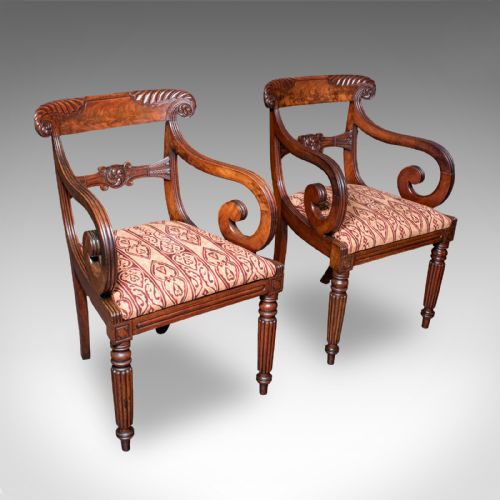
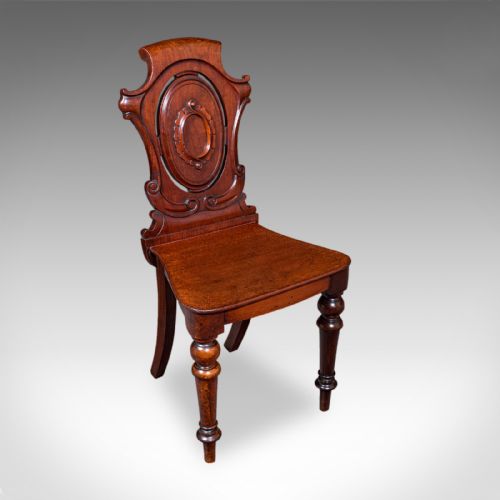
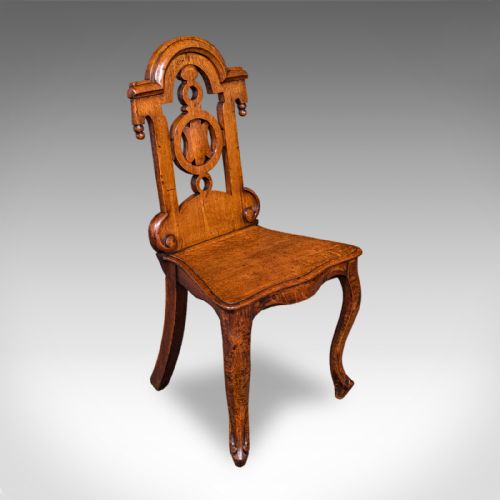
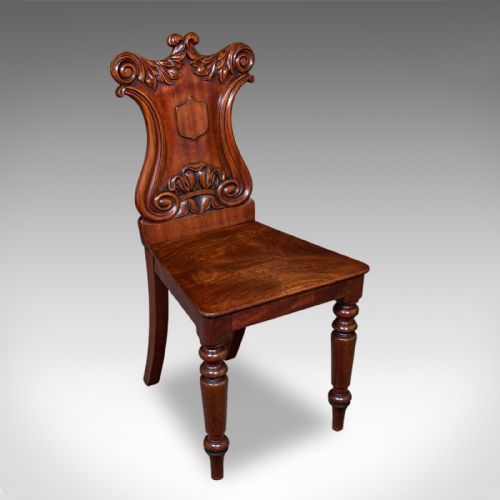


Wooden Reception Chairs
These wooden reception chairs bring sturdy timber frames and period character straight to an entrance space.
Wooden Reception Chairs
When you search for wooden reception chairs, you are looking at substantial seating designed for entrance halls, waiting rooms, and public chambers from the nineteenth and early twentieth centuries. These pieces encompass sturdy hall chairs, side chairs, and elbow chairs built to withstand heavy daily use while making a strong visual impression on visitors.
You are most likely to meet Scottish and English examples dating from the Regency, Victorian, and Edwardian periods. The selection on this page relies heavily on forms originally placed in grand homes, law chambers, and station waiting areas, constructed with upright backs and solid timber seats.
Materials and construction
Cabinet makers utilised dense hardwoods like mahogany, walnut, oak, and beech to build frames capable of enduring generations of use. Elm and satinwood also appear, sometimes paired with brass details, applied fabric, or intricate inlay and marquetry work.
Joinery methods focused on rigidity and strength, particularly in high-traffic station chairs and hall seating where upright posture and solid support took precedence over deep padding. Carved shield backs, Gothic Revival motifs, and tall structural frames demonstrate the diverse decorative techniques applied to standard timber.
Wooden Reception Chairs Retail Price Guide 2026
Typical asking prices for wooden reception chairs among the pieces listed under this phrase on Sellingantiques today, from the lower quarter to the upper quarter. They describe what is for sale here now, not the wider market.
Listings feature woods including mahogany, walnut, oak, beech, elm, and satinwood across Victorian, Regency, and Edwardian periods.
Assessing quality and craftsmanship
The distinction between standard utility seating and finer examples lies in the selection of the timber and the crispness of the carving. Richly figured walnut or mahogany and deeply carved Gothic details elevate a piece well beyond plain functional seating.
Proportion and architectural integrity also separate ordinary production from superior work. Well-balanced frames with tight joinery and refined inlay show the hand of a more accomplished workshop, whereas simpler beech or elm station chairs prioritise utilitarian robustness over decorative flair.
The Wooden Reception Chairs Glossary
- Hall chair
- A rigid wooden seat traditionally placed in an entrance hall, featuring a solid timber seat and a decorated back panel.
- Elbow chair
- An armchair with low arms, often used in morning rooms or reception spaces to provide a comfortable yet upright sit.
- Marquetry
- The art of applying pieces of veneer to a structure to form decorative patterns and pictorial designs.
- Gothic Revival
- A nineteenth-century style drawing inspiration from medieval architectural forms, visible in pointed arches and heavy tracery.
- Shield back
- A chair back shaped in the outline of a heraldic shield, popular in Regency and Victorian formal seating.
Wooden Reception Chairs: Frequently Asked Questions
What are wooden reception chairs?
These are sturdy seating pieces constructed from hardwoods like oak, walnut, and mahogany, designed primarily for entrance halls, waiting areas, and public rooms.
They date from periods ranging from the Regency era through to the early twentieth century, combining practical durability with distinct period style.
How were these chairs used?
They were traditionally placed in hallways, law chambers, morning rooms, and railway station waiting areas to accommodate visitors and guests.
Because they were built for transitional spaces rather than long lounging, their designs emphasise upright posture and robust timber construction.
How do I live with them?
Wooden reception chairs fit easily into modern hallways, landings, and dining spaces where a touch of architectural history is desired.
Their narrow profiles and solid timber frames make them practical for everyday use without requiring delicate maintenance beyond standard wood care.
How do I tell periods apart?
Regency pieces often display classical restraint or early revival lines, while Victorian examples frequently incorporate heavier carving, shield backs, or Gothic Revival and Aesthetic Movement details.
Edwardian and later nineteenth-century forms lean towards simpler station seating or lighter inlaid marquetry patterns.