


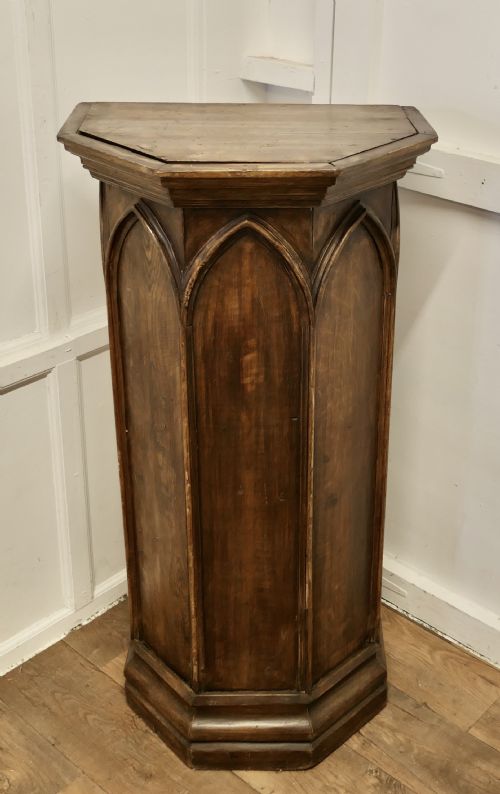


Wooden Podium Stand
These wooden podium stand pieces provide sturdy support for books and reception areas, built primarily from oak and pine during the nineteenth and early twentieth centuries.
Wooden Podium Stand
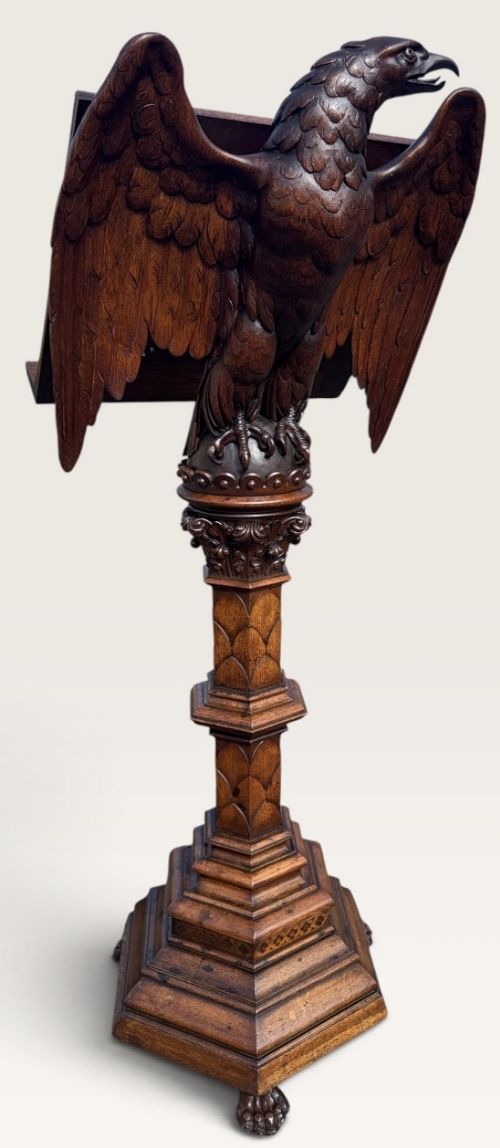
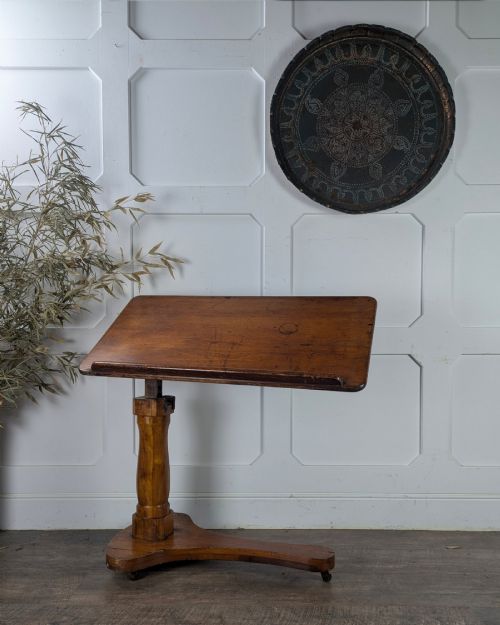
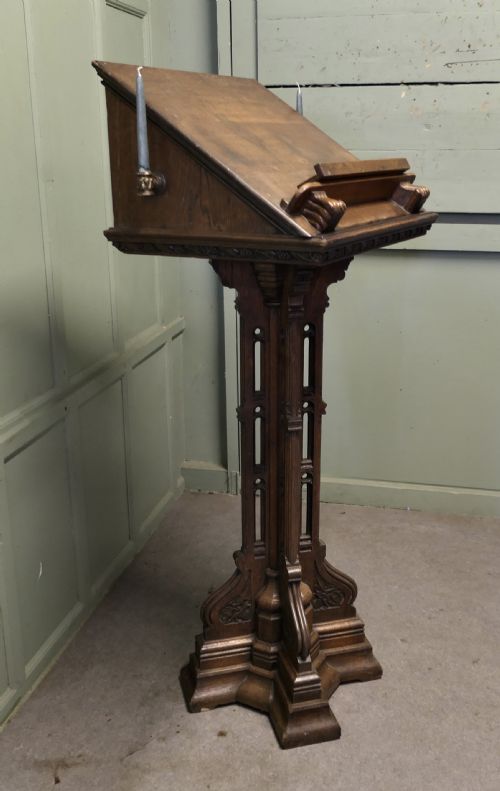
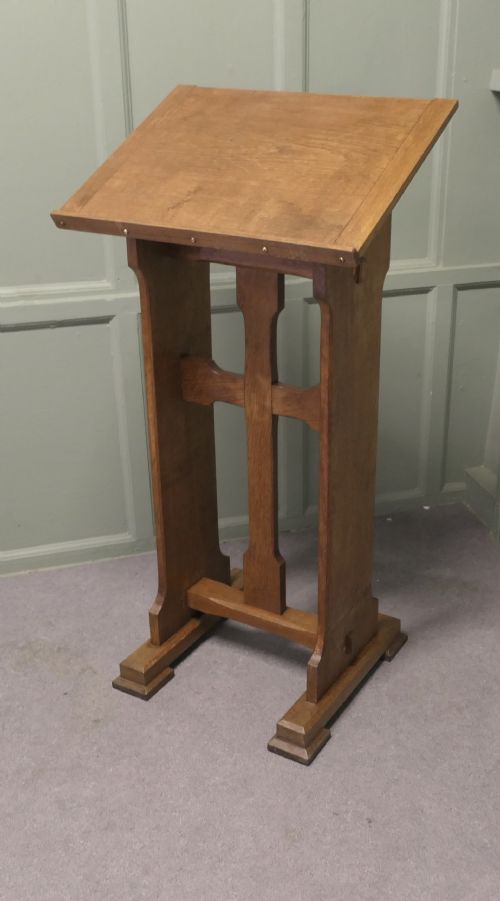
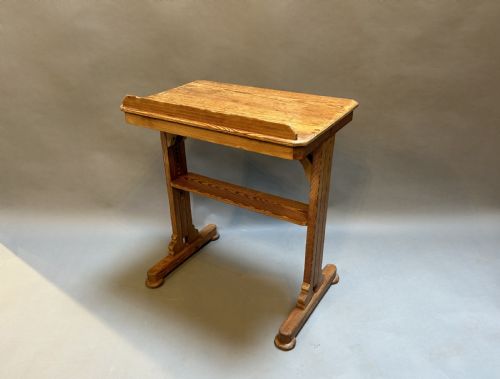
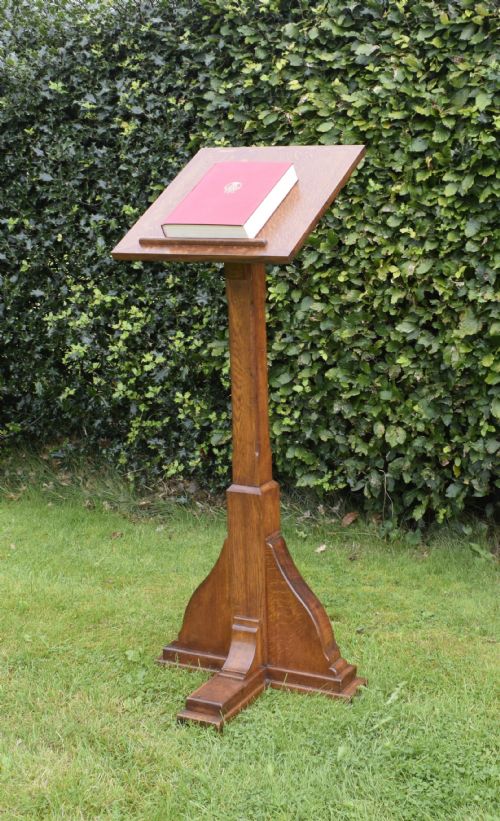
A wooden podium stand serves as a practical surface for reading, greeting, or displaying texts in various settings. These items include church lecterns, restaurant reception stations, and adjustable reading tables.
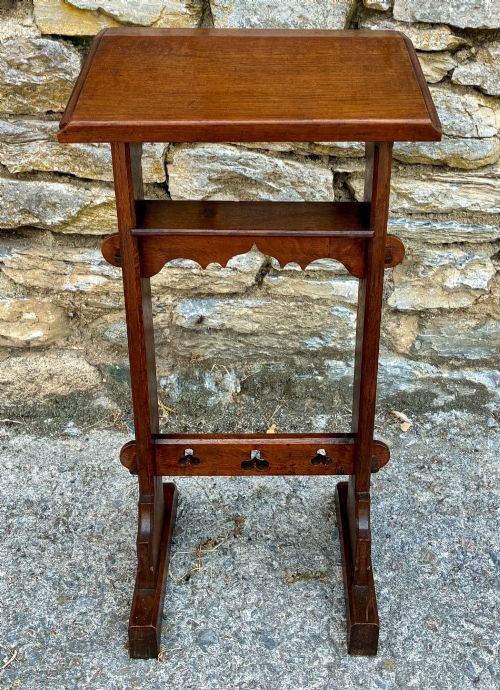
Most examples found here date from the nineteenth and early twentieth centuries, spanning Victorian, Edwardian, and Arts and Crafts periods. Forms range from simple pine reading stands to heavily carved oak church pieces.
Makers utilised woods like oak, walnut, and pine, often incorporating brass fittings or adjustable mechanisms. Buyers frequently encounter church lecterns and reception greeters adapted for modern use.
How they were made
Makers integrated brass work and mechanical adjustments, allowing reading surfaces to tilt or alter in height. Pine and oak frames receive different finishes, ranging from polished surfaces to simpler untreated appearances.
What varies in quality
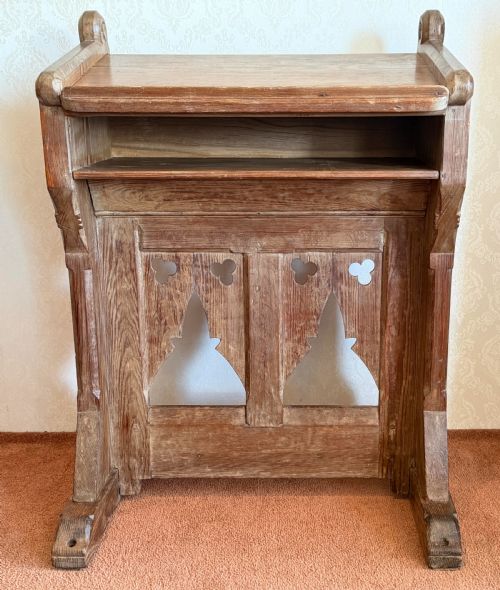
The choice of timber and depth of carving dictate the standing of a piece within its period. Solid oak constructions with intricate Gothic details represent the more ambitious end of production compared to utility pine stands.
The presence of working brass mechanisms and original adjustments separates standard reading surfaces from fully articulated stands. Finer examples maintain structural integrity alongside well-executed decorative elements.
The Wooden Podium Stand Glossary
- Lectern
- A tall stand with a sloped top used to hold a book or notes for a speaker. These often appear in ecclesiastical or institutional contexts.
- Gothic Revival
- A nineteenth-century style drawing inspiration from medieval architecture and ornament. Pieces in this manner feature pointed arches, tracery, and deep relief carving.
- Arts and Crafts
- A design movement valuing traditional craftsmanship and simple forms over mass production. Furniture from this ethos uses honest construction and exposed grain.
- Adjustable
- Fitted with hinges, screws, or ratchets that alter the height or angle of the reading surface. This mechanism allows the user to customise their working position.
Wooden Podium Stand: Frequently Asked Questions
What is a wooden podium stand used for?
These items serve primarily as supports for reading materials, holding texts at a comfortable angle for speakers or readers. Historically found in churches and libraries, they now often function as reception desks or greeting stations in hospitality settings.
Their adjustable heights and sloped surfaces make them adaptable for modern public spaces and studies. The solid wooden construction ensures they withstand regular daily use.
How do I date a wooden podium stand?
Dating relies on observing the timber types, joinery methods, and stylistic cues such as Gothic Revival or Arts and Crafts motifs. Nineteenth-century examples often display hand-carving and heavy oak or pine construction, whereas early twentieth-century pieces lean towards simpler utility designs.
Examining the metal components, such as brass brackets or screws, also helps determine the manufacturing period. Machine-cut parts generally indicate a later nineteenth or twentieth-century origin.
Are these stands fully adjustable?
Many examples feature adjustable mechanisms, allowing the user to alter the angle of the reading slope or the height of the stand. These moving parts typically utilise brass fixings and hinges integrated into the wooden frame.
Not all pieces possess this function, as simpler fixed lecterns and reception stations were built for stationary use. Checking the specific description confirms whether a stand offers movement.
How do I care for antique wood furniture?
Maintenance involves keeping the timber away from direct heat sources and extreme humidity fluctuations to prevent cracking. Regular dusting with a soft, dry cloth preserves the finish without harming the wood grain.
Application of appropriate wax helps nourish older oak and walnut surfaces over time. Avoid harsh chemical cleaners that strip the original patina.