

Wooden Open Arm Chairs
These wooden open arm chairs span centuries from sturdy oak wainscots to elegant mahogany carvers, offering timeless character and comfortable seating for any room.
Wooden Open Arm Chairs
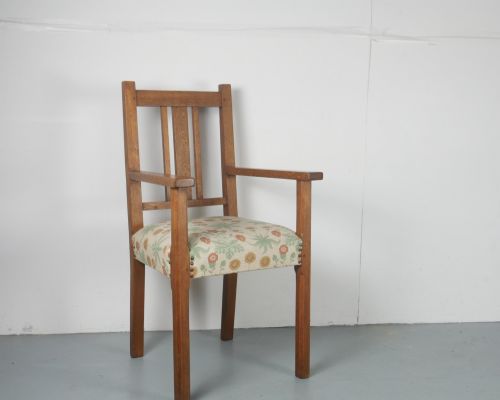
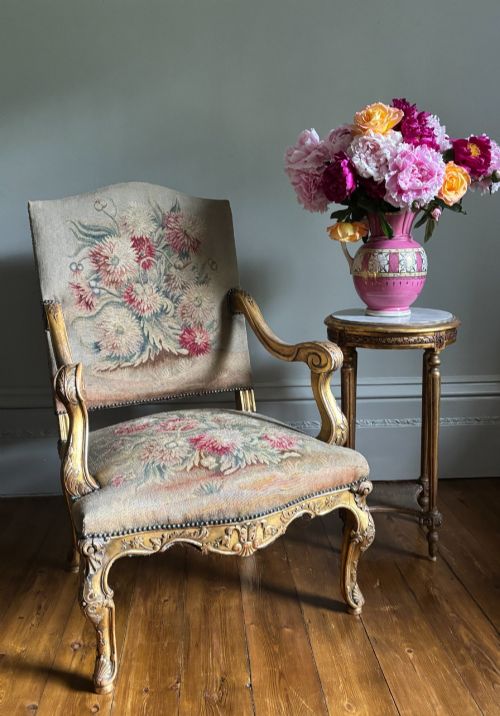
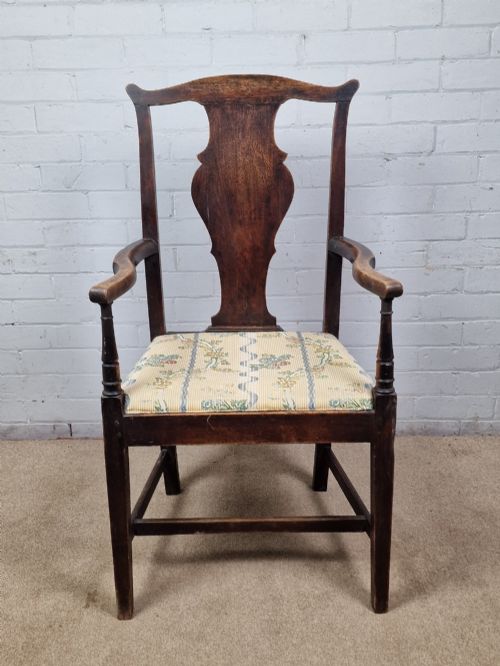
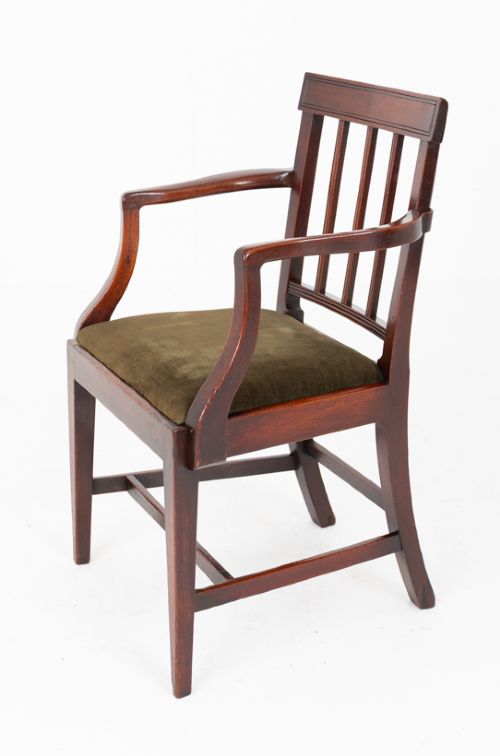
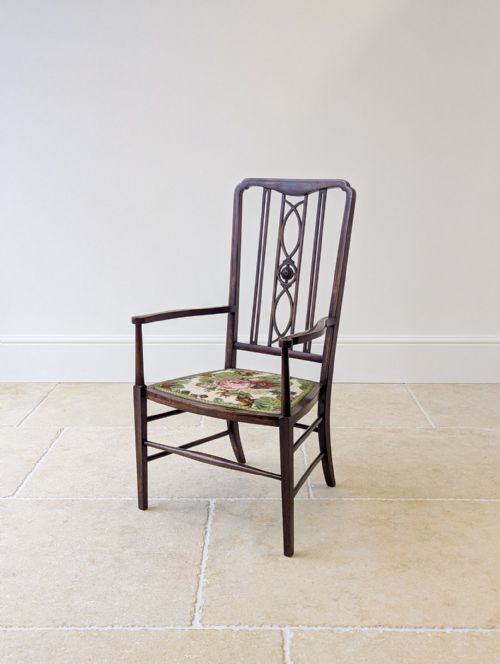
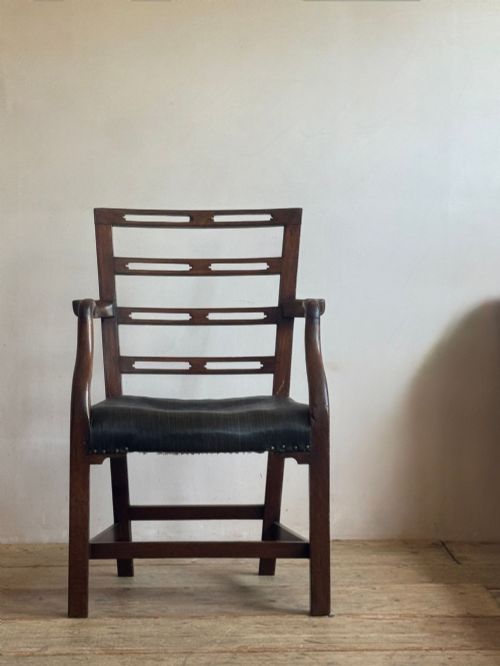
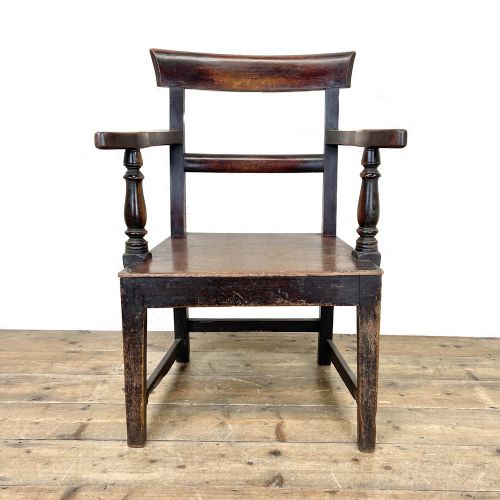
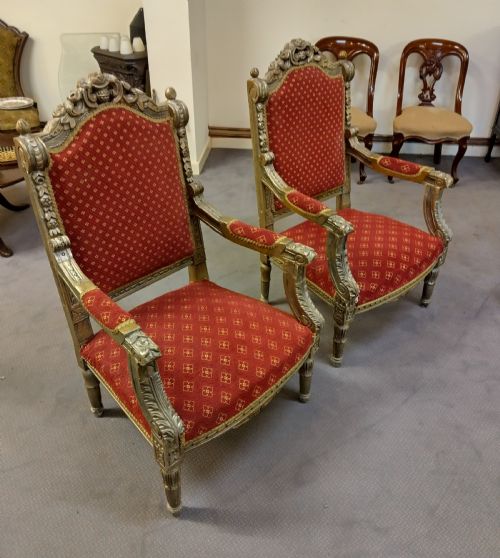
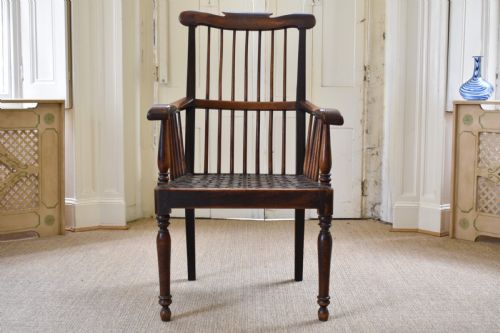
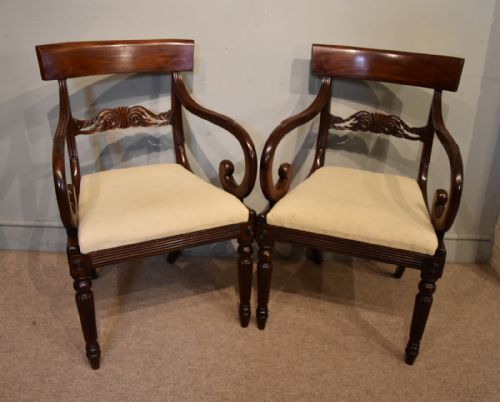
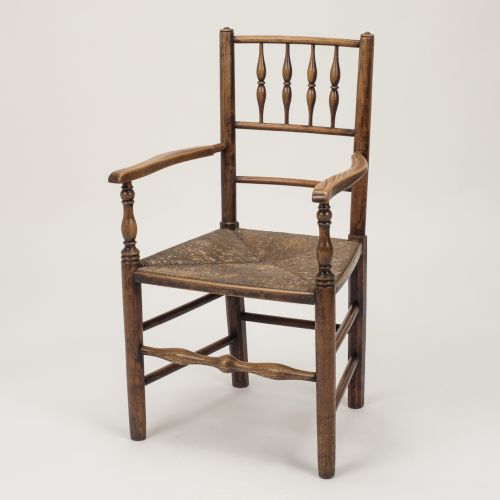
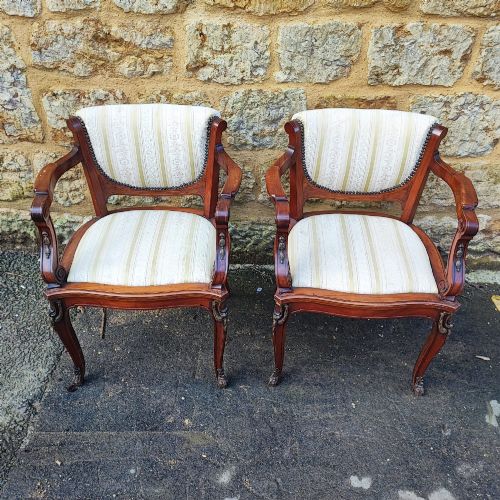
When you search for wooden open arm chairs, you encounter a diverse array of seating forms originating from the seventeenth century through to the early twentieth century. The selection ranges from rustic English country ladder-backs and elm armchairs to formal Georgian mahogany designs and continental styles such as French fauteuils and Swedish Biedermeier birchwood pieces.
The most common examples you are likely to meet on this page are mahogany and oak armchairs from the Georgian and Victorian periods, often featuring upholstered seats in fabric, velvet, or needlework tapestry. Alongside these are specialised seating forms including elbow chairs, carver chairs, and occasional pairs designed for both domestic comfort and formal reception spaces.
How they were made
Craftsmen utilised robust native and imported timbers, primarily working with mahogany, oak, walnut, elm, ash, laburnum, and birch to construct the frames. Structural joinery and detailed hand carvings formed the foundation of these chairs, frequently enhanced with ebonised touches, painted finishes, or gilt details.
Seating portions were completed using traditional methods involving dropped rush seats, woven cane, or padded upholstery finished with various fabrics, brass tacking, and needlepoint panels. Makers integrated structural woods with specialised elements like inlay, brass accents, and carved wooden arm supports to balance durability with aesthetic appeal.
Wooden Open Arm Chairs Retail Price Guide 2026
Typical asking prices for wooden open arm chairs among the pieces listed under this phrase on Sellingantiques today, from the lower quarter to the upper quarter. They describe what is for sale here now, not the wider market.
The inventory records diverse regional styles including English country, French Provincial, Swedish Biedermeier, and Anglo-Indian designs.
What varies in quality
The distinction between standard examples and top-tier pieces rests upon the crispness of the hand-carving, the selection of figured timber, and the overall integrity of the frame construction. Superior pieces display refined proportions and deliberate detailing, whereas lesser items rely on simpler execution or later modifications.
The choice of upholstery materials and the fidelity of historical revival styles also influence the standing of a chair within its period. Chairs retaining original surfaces, undisturbed timber patination, and cohesive period textiles command greater appreciation than those with mixed elements or unsympathetic restorations.
Howard and Sons
The Wooden Open Arm Chairs Glossary
- Wainscot chair
- A heavy wooden armchair dating predominantly from the seventeenth century, constructed primarily from oak with panelled backs and solid armrests.
- Fauteuil
- An open-framed upholstered armchair of French origin, featuring exposed wooden arm supports and padded armrests common in eighteenth and nineteenth-century seating.
- Carver chair
- A sturdy wooden armchair, traditionally used at the head of a dining table or as a principal seat in a parlour.
- Ladder-back
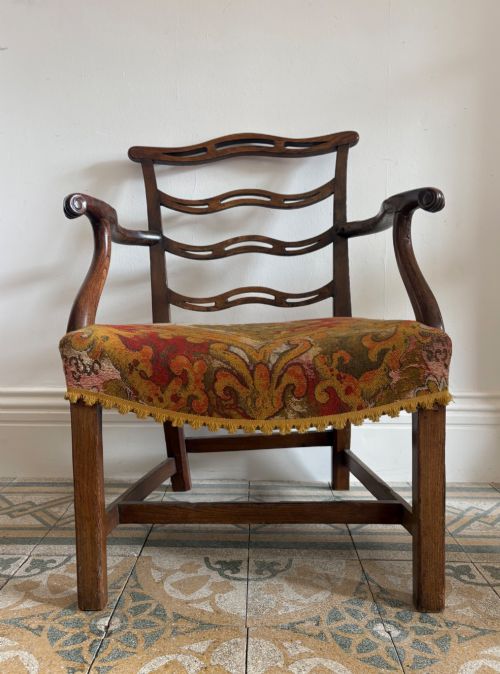
- A chair back featuring multiple horizontal wooden slats or rails between the vertical uprights, frequently seen in country vernacular seating.
- Giltwood
- Timber that has been coated with a thin layer of gold leaf or gold paint to create a decorative, metallic finish.
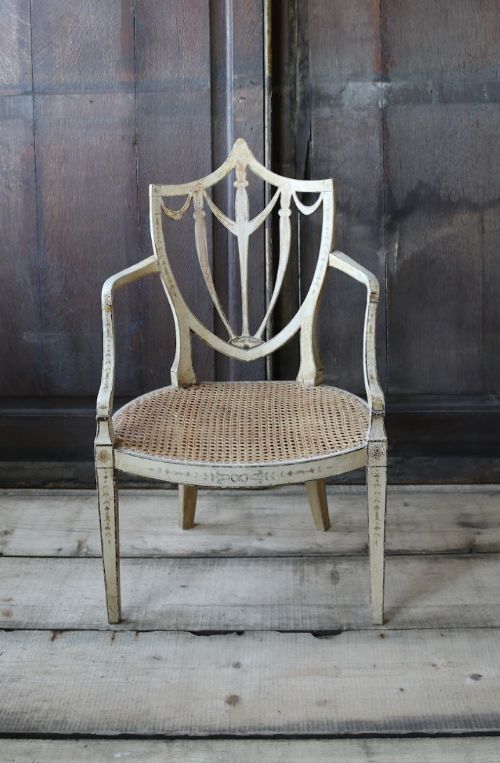
- Shield-back
- A chair back design shaped in the outline of a shield, popularized during the late eighteenth century by cabinet makers such as Hepplewhite.
Wooden Open Arm Chairs: Frequently Asked Questions
How do I identify a Georgian armchair?
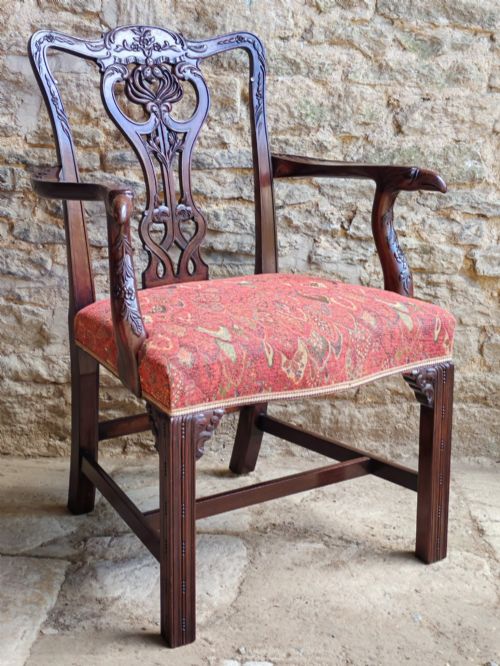
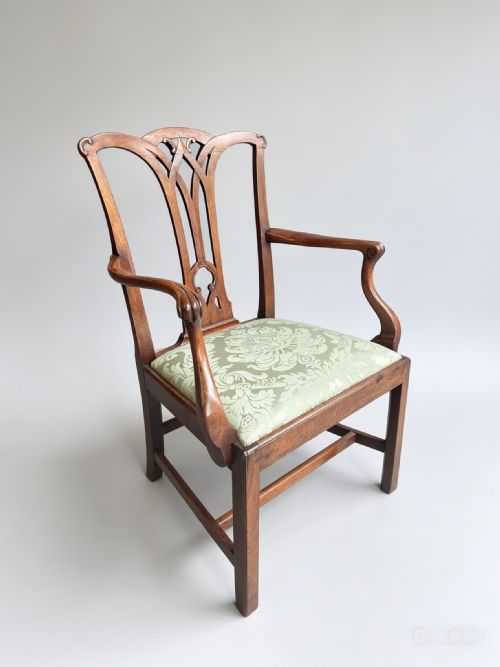
Georgian armchairs typically feature mahogany or oak construction, often displaying classic design influences such as Chippendale or Hepplewhite styling. Look for refined proportions, carved details on the splat or arm terminals, and sturdy square or cabriole legs.
Many examples include drop-in seats or upholstered pads covered in fabric, leather, or needlework that reflect the formal aesthetics of the eighteenth century.
Where were country armchairs used?
Country armchairs served practical daily roles in rural homes, farmhouses, and cottages where durable seating was essential. Elm, ash, and oak were favoured for their local availability and resilience.
These pieces were commonly placed around hearths or utilised as sturdy carver seats at dining tables, prioritizing robust construction over ornate decoration.
How should I care for antique wooden chairs?
Protect antique wooden chairs by keeping them away from direct sunlight and sudden temperature changes that can dry out the timber or cause splitting. Regular dusting with a soft cloth preserves the natural patination of the wood.
Check upholstery and rush seating periodically, avoiding harsh chemical cleaners and utilising professional restoration services for structural repairs.