



Wooden Office Accessories
Wooden office accessories bring functional nineteenth and twentieth century workspace items into modern interiors with practical charm.
Wooden Office Accessories
Wooden office accessories encompass desk calendars, letter boxes, organisers, and tidies designed for workspace organisation. These functional desk pieces reflect the everyday administrative routines of past decades.
The items found in these listings span the Victorian, Edwardian, George V, and Art Deco periods, stretching from the late nineteenth century into the 1930s. Buyers most frequently encounter oak and mahogany calendars alongside tabletop shelves and letter boxes from these eras.
Early twentieth century examples sit alongside late nineteenth century items to form a practical selection of desk furnishings. Each piece served a specific clerical purpose in studies and offices before modern stationery took over.
How they were made
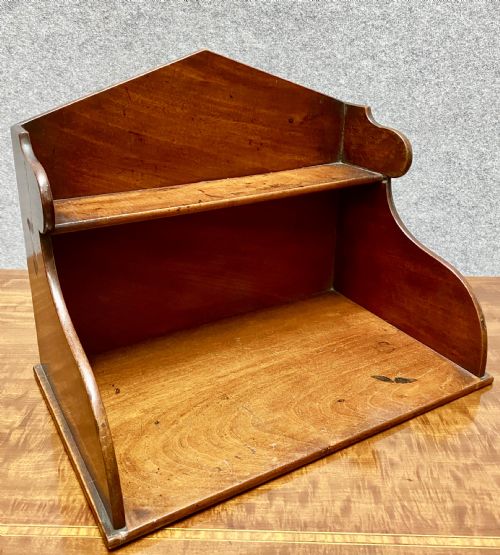
These items rely principally on solid oak and mahogany, woods chosen for durability and polished finishes. Makers shaped these timbers into box frames, calendar housings, and bookshelf tidy units.
Secondary elements include glass panels, metal fixings, paper components, and fabric linings. These auxiliary materials supported daily operation in letter boxes and desk sets.
Wooden Office Accessories Retail Price Guide 2026
Typical asking prices for wooden office accessories among the pieces listed under this phrase on Sellingantiques today, from the lower quarter to the upper quarter. They describe what is for sale here now, not the wider market.
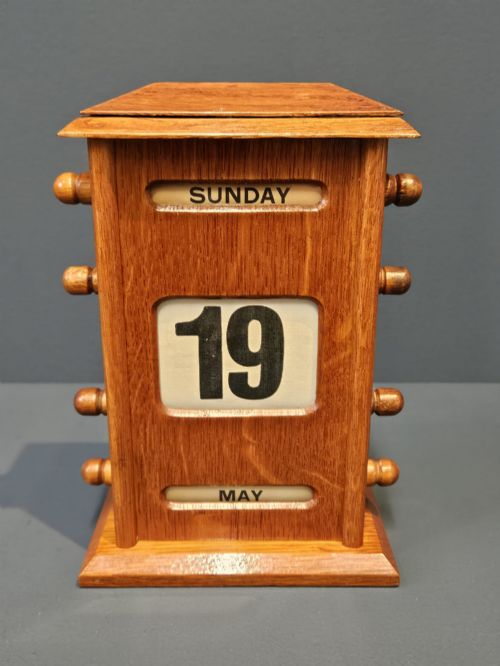
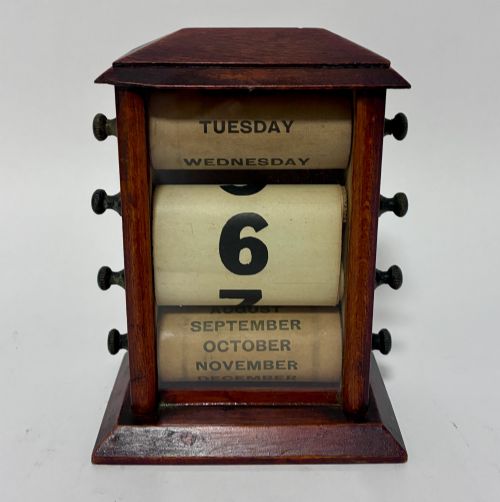
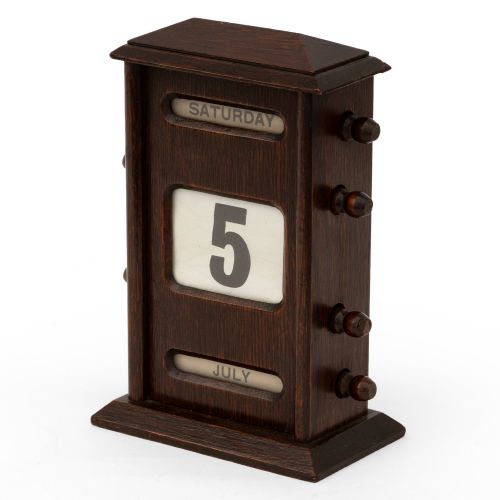
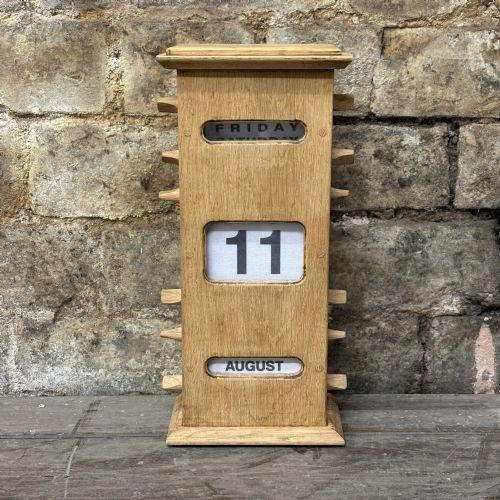
Someone spent decades manually turning the wooden date rollers on these perpetual calendars before they landed on a modern desk.
What varies in quality
Quality separates standard utilitarian items from substantial pieces that incorporate glass and fitted compartments. A large Victorian desk set demonstrates finer joinery than a simple later calendar.
The sophistication of the mechanism and the choice of timber dictate the standing of each accessory. Finer items utilise rich mahogany timbers and complete working calendar components.
The Wooden Office Accessories Glossary
- Perpetual calendar
- A desk calendar with adjustable cards or rollers designed to display the date year after year. These units form the majority of surviving date-keeping accessories.
- Letter box
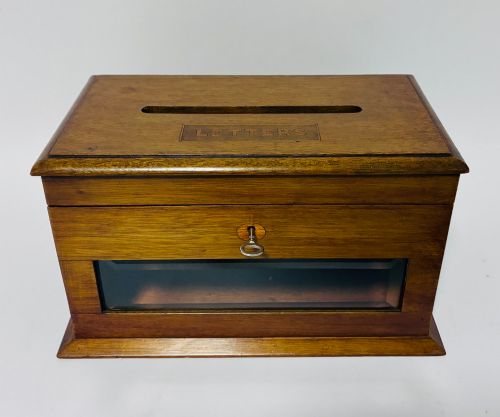
- A box enclosure with a slot for receiving correspondence. These items often feature hinged doors for retrieving sorted post.
- Desk tidy
- A compartmentalised tabletop accessory for holding stationery, books, and small office supplies. They keep the working surface ordered.
- Desk set
- A coordinated group of desk accessories, sometimes combining glass and wood components. These larger ensembles furnished executive writing tables.
Wooden Office Accessories: Frequently Asked Questions
What periods do these accessories cover?
The pieces span the late nineteenth century through to the 1930s. This timeframe includes Victorian, Edwardian, George V, and Art Deco eras.
Dates range from the 1880s up to Art Deco pieces from 1930. Oak and mahogany items appear across both nineteenth and twentieth century production.
How were perpetual desk calendars used?
Users adjusted monthly cards or rotating wooden rollers each day to show the correct date. They sat permanently on writing tables as standard office equipment.
These functional items predated disposable paper calendars and remained in daily service for decades.
What materials appear most often?
Oak and mahogany dominate the construction of these desk furnishings. Timber frames often incorporate glass panels, paper elements, and metal hardware.
Textiles and linen also appear in fitted desk sets and organisational boxes.
How do I identify an Edwardian piece?
Edwardian items frequently utilise golden oak and reflect the decorative tastes of the early twentieth century. They align with the stylistic preferences of the Edwardian period.
Calendar housings and organizers from this era display specific workmanship distinct from earlier Victorian designs.