






Wooden Nursery Armchair
A wooden nursery armchair is a scaled-down seat for young children, offering sturdy construction and traditional vernacular design.
Wooden Nursery Armchair
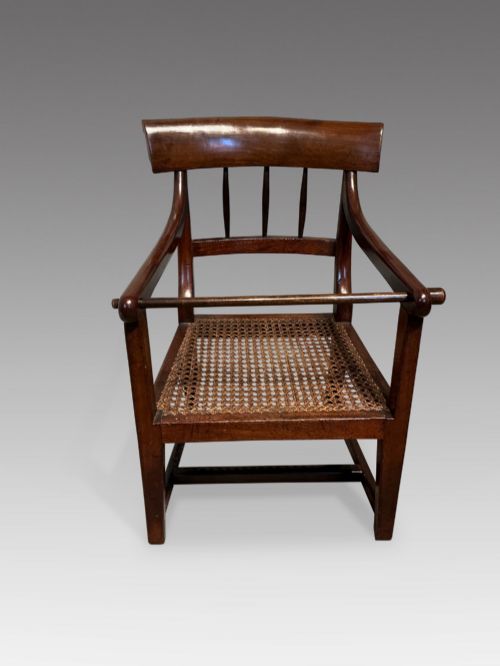
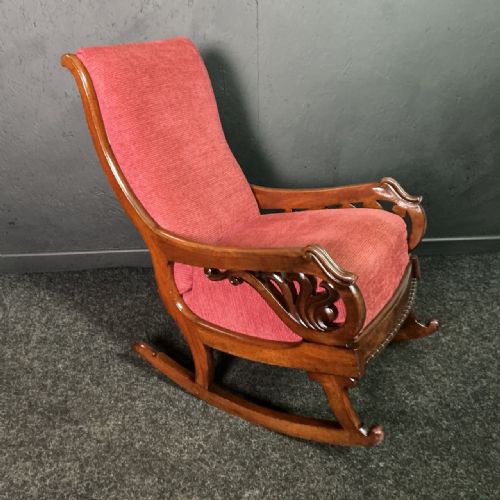
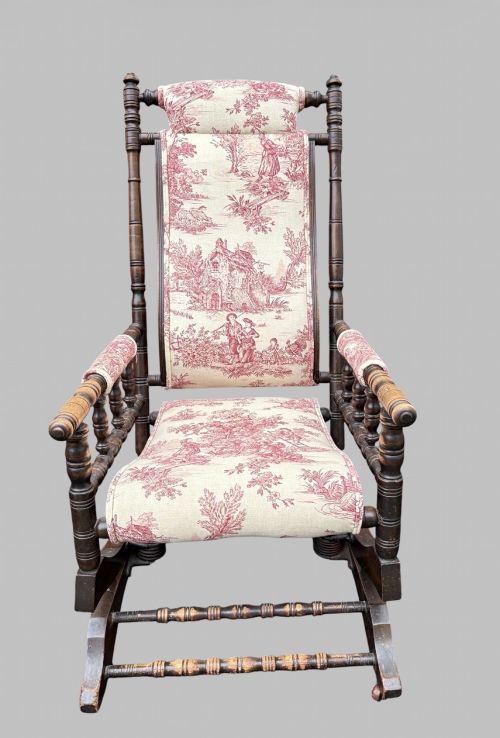
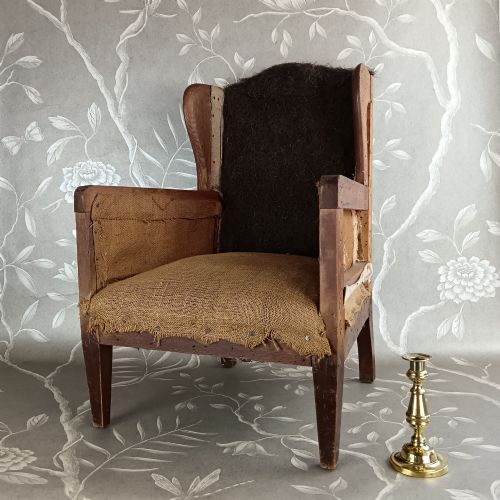
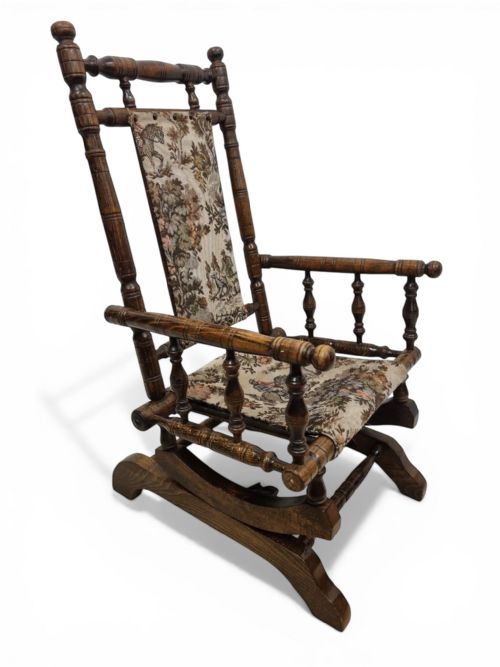
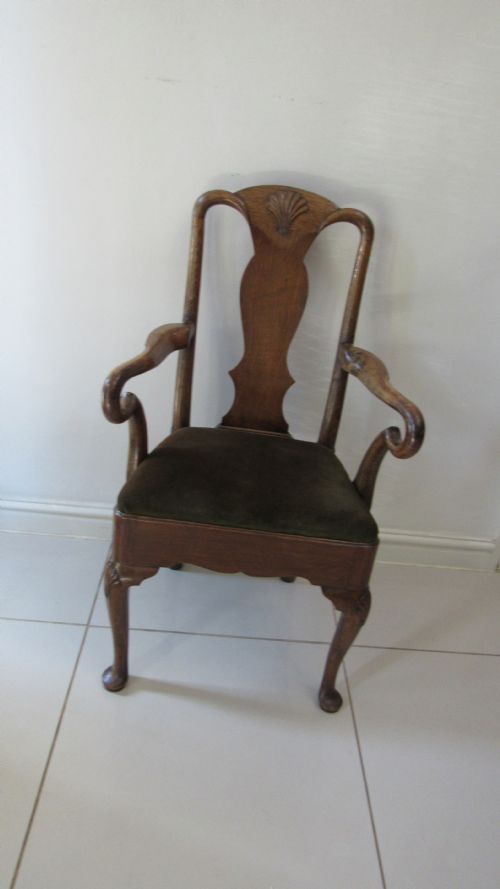
A wooden nursery armchair is a miniature seat built for children, spanning periods from the Georgian era through to the early twentieth century. These domestic pieces serve practical seating needs in domestic spaces, taking forms such as standard armchairs, rockers, commodes, and high chairs.
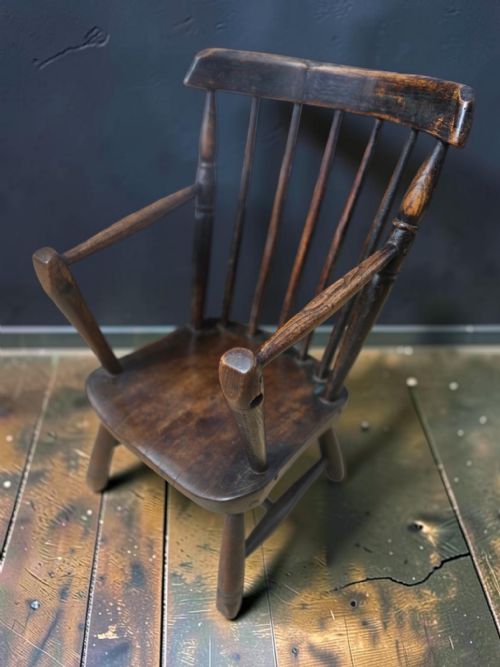
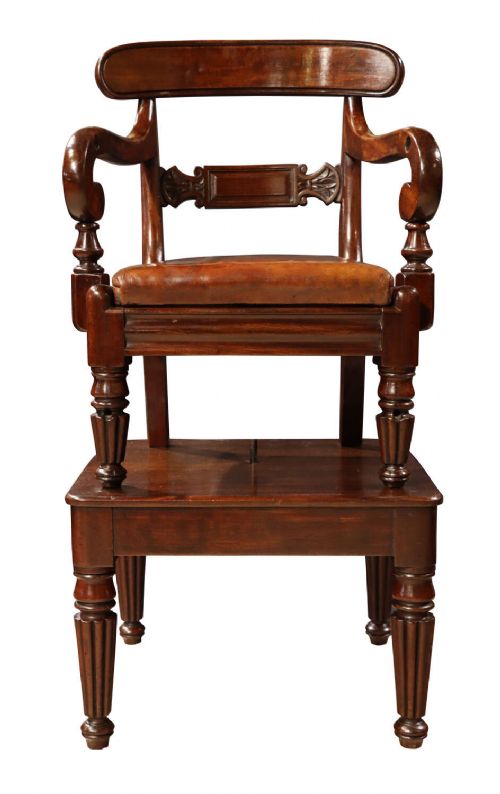
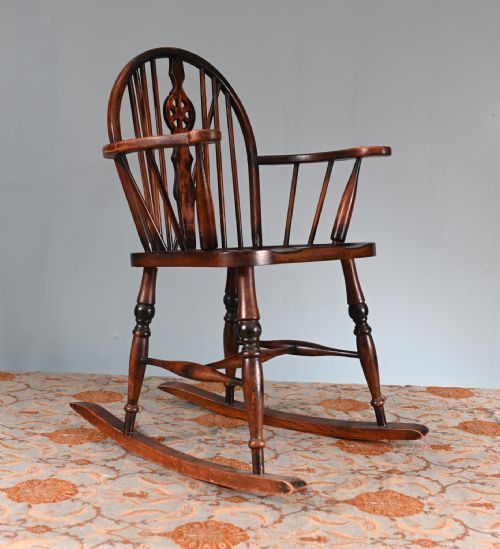
Regional vernacular styles dominate the selection, alongside formal mahogany pieces from the Georgian and William IV periods. Windsor frames, hoopbacks, and wheelbacks appear frequently, constructed by regional makers using local timber stocks.
How they were made
Cabinet makers and vernacular joiners utilised solid hardwoods including elm, ash, yew, oak, mahogany, and beech. Turning techniques shape spindles and legs, while steam-bending forms curved elements like Windsor hoops and bentwood frames.
Joinery methods rely on traditional mortise and tenon joints, dowels, and wedge construction. Upholstered examples integrate fabric, leather, or tapestry over webbing and stuffing, while other pieces remain polished or painted wood.
Wooden Nursery Armchair Retail Price Guide 2026
Typical asking prices for wooden nursery armchair among the pieces listed under this phrase on Sellingantiques today, from the lower quarter to the upper quarter. They describe what is for sale here now, not the wider market.
Listings feature eighteenth, nineteenth, and early twentieth-century periods, utilising native timbers such as yew, elm, ash, and mahogany.
What varies in quality
Quality rests upon the choice of timber and the complexity of the turning. Pieces fashioned from figured yew or dense mahogany sit at the upper end, whereas standard utility pieces utilise simpler ash or elm frames.
Proportion and structural integrity distinguish superior examples from standard workshop output. Refined arm scrolls, well-balanced spindles, and intact original stands indicate careful design rather than basic utilitarian production.
The Wooden Nursery Armchair Glossary
- Windsor chair
- A wooden chair built with a heavy solid timber seat into which the legs and back spindles are direct-inserted. This construction provides robust stability.
- Hoopback
- A chair back formed from a single continuous bent piece of wood that loops around to serve as both backrest and arm supports. This technique requires skilled steam-bending.
- Commode chair
- A seated piece of furniture fitted with a concealed chamber pot or pan beneath the seat. These incorporate lidded seats for nursery use.
- Metamorphic high chair
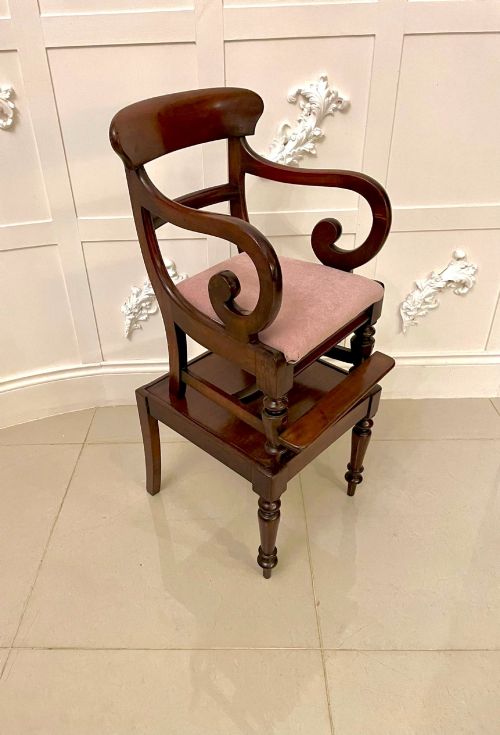
- A convertible piece of furniture that transforms from a high chair into a low child's chair and desk combination. This engineering allowed dual utility in the home.
Wooden Nursery Armchair: Frequently Asked Questions
What is a wooden nursery armchair?
A wooden nursery armchair is a small domestic seat constructed specifically for children during past centuries. They range from simple elm and ash vernacular items to formal mahogany examples.
These chairs reflect the furniture styles of their respective periods, spanning Georgian, Victorian, and Edwardian eras. They served daily seating functions in family homes.
How were these chairs used?
These chairs provided designated seating for young children at tables or by the hearth. Some incorporated rocking rails or commode functions for nursery routines.
High chair variants lifted infants up to table height, while metamorphic designs adapted into play tables as children grew.
How do I live with antique children's seating?
Antique children's seating functions well as decorative display pieces or functional low chairs in living spaces. Their compact proportions allow them to fit easily into modern rooms.
Placing them away from direct heat sources helps preserve the stability of the timber and any original upholstery.