
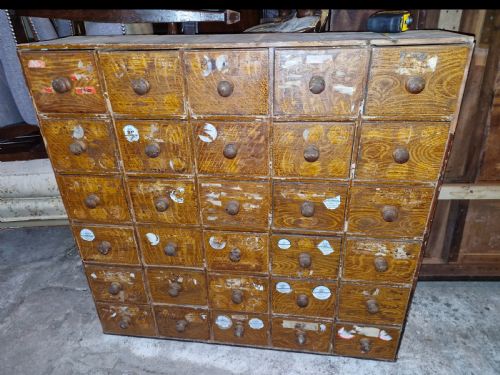
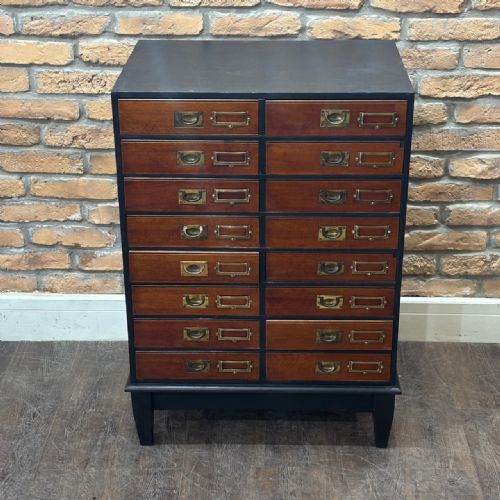
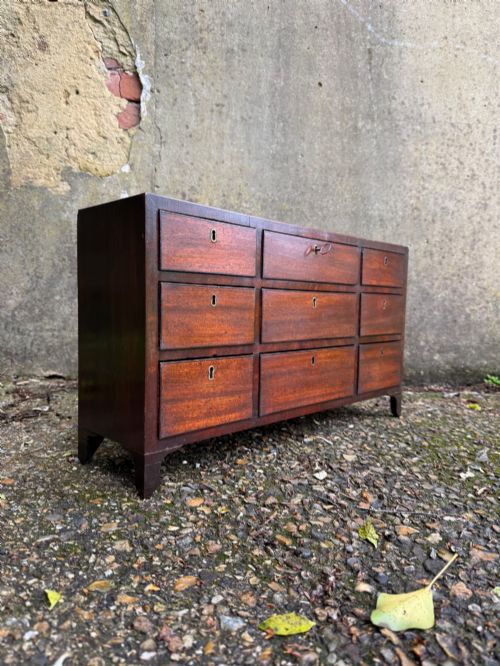


Wooden Multi Drawer Chest
A wooden multi drawer chest brings order to domestic and working spaces alike, offering countless compartments for sorting small items.
Wooden Multi Drawer Chest
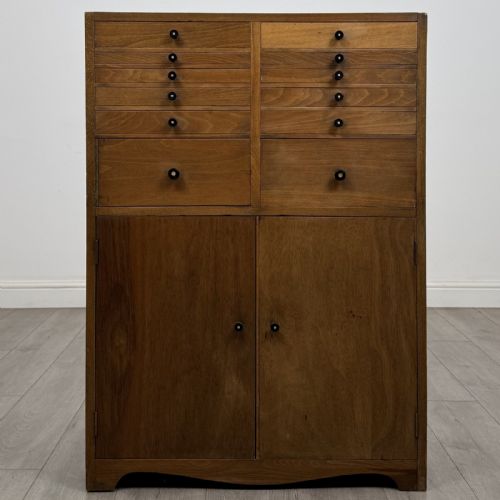
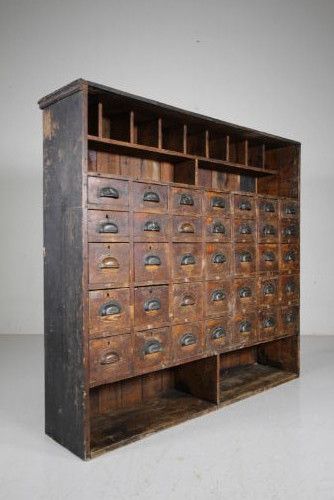
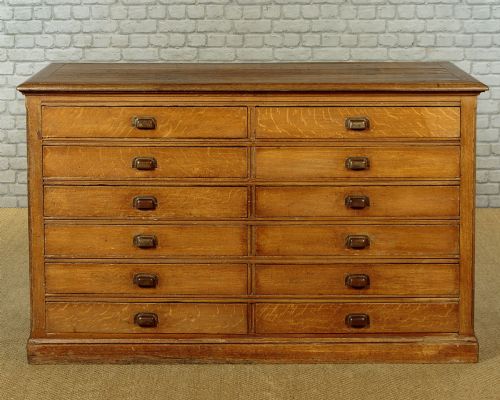
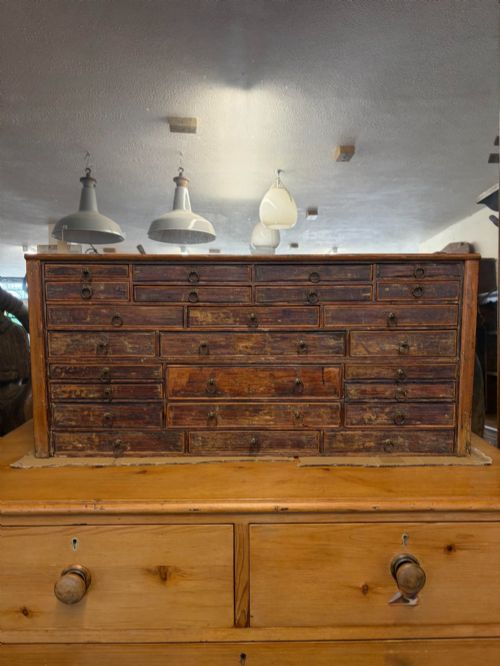
A wooden multi drawer chest encompasses utilitarian forms such as banks of drawers, filing cabinets, haberdashery cabinets, and collectors' cabinets designed for systematic storage. These pieces originate from domestic, commercial, and office environments across the Georgian, Victorian, Edwardian, and early twentieth-century periods.
The versions most commonly met on this page range from nineteenth-century banks of drawers to industrial filing cabinets and shop storage units. They appear in materials including oak, mahogany, pine, and walnut, frequently fitted with brass or cast iron hardware.
How they were made
Cabinet makers utilised robust timbers like oak, mahogany, and pine to construct carcases capable of withstanding heavy daily use. Drawers were built with sturdy joints to endure frequent pulling, often retaining original metal handles made from brass or cast iron.
Surfaces received various finishes depending on the intended setting, ranging from polished mahogany and waxed pine to painted wood and lacquered finishes. Patent mechanisms and specialised labelling holders were integrated into commercial filing cabinets to improve organisation.
One remarkably persistent nineteenth-century cabinet once kept Ilfracombe's paperwork tidy before finding a second life here.
What varies in quality
The standard of a wooden multi drawer chest rests on the selection of timber and the integrity of its construction. Dense hardwoods like oak and mahogany offer greater durability than softer woods, while well-fitted drawer runners ensure smooth operation across many compartments.
Original hardware, maker markings, and patent fittings elevate the standing of a piece. Subtle details in moulding and jointing distinguish standard workshop output from finer cabinet making.
Shannon
The Wooden Multi Drawer Chest Glossary
- Bank of drawers
- A tall or wide storage unit containing numerous small drawers, originally used in offices, shops, or workshops for sorting documents and hardware. These pieces are valued for their high storage capacity and functional appearance.
- Haberdashery cabinet
- A glass-fronted or multi-drawer display unit once used in drapery shops to organise ribbons, threads, and small garments. They are distinctive for their shallow drawers and commercial origins.
- Collectors cabinet
- A specialised storage piece designed to hold specimens, coins, or small curiosities in shallow, dust-proof trays. Collectors prize these for their fine internal joinery and compact proportions.
- Filing cabinet
- An office furniture form developed to store vertical or horizontal documents securely in sliding drawers. Edwardian and later examples often feature patented locking mechanisms and dedicated index card holders.
- Pine
- A softwood commonly used in utilitarian and country furniture, valued for its pale grain and adaptability to being waxed or painted. It appears frequently in nineteenth-century collectors' chests and regional storage units.
Wooden Multi Drawer Chest: Frequently Asked Questions
What were multi drawer chests originally used for?
These chests served various commercial, domestic, and administrative purposes, from sorting shop merchandise to filing office documents. Businesses relied on them to keep small goods and paperwork orderly before modern digital filing systems.
Craftsmen and collectors also used specialised versions to store delicate specimens, tools, or writing materials. Their robust construction ensured they could handle the heavy daily demands of Victorian and Edwardian workplaces.
How do I date a wooden multi drawer chest?
Dating relies on observing timber choices, hardware styles, and construction techniques across different eras. Georgian and Victorian pieces often display hand-cut joinery and solid timber carcases, while early twentieth-century examples incorporate patent mechanisms and commercial branding.
Hardware provides another clear indicator of age, with cast iron and brass pulls shifting in design from the nineteenth century into the 1930s. Examining the interior linings and drawer construction helps confirm the period of manufacture.
Are these chests suitable for modern living?
A multi drawer chest offers practical storage solutions for contemporary homes, fitting well into studies, kitchens, or hallways. The numerous compartments help organise modern clutter such as stationery, cables, and craft supplies.
Their varied footprints allow them to serve as statement sideboards or functional workspace organisers. The distinct character of industrial and antique timber brings warmth and history to modern interiors.
What is the difference between a haberdashery cabinet and a bank of drawers?
Haberdashery cabinets were designed specifically for retail environments to display and store textiles or small drapery items, often featuring glazed panels or shallow trays. They prioritise visual access and neat organisation for selling goods.
Banks of drawers, by contrast, are heavier utilitarian units built for workshops, offices, or institutional archives to hold hardware, documents, or specimens. They focus strictly on capacity and durability rather than retail display.