

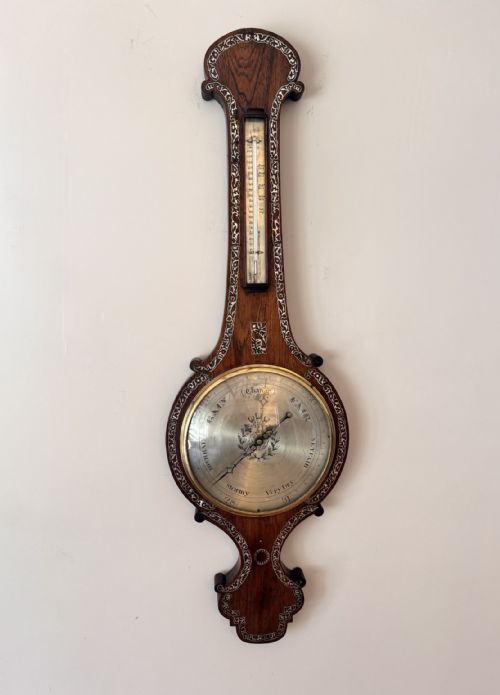





Wooden Mounted Barometer
These wooden mounted barometer examples combine weather observation with period craftsmanship, offering a practical antique for the home.
Wooden Mounted Barometer
A wooden mounted barometer is a domestic weather instrument housed in a timber case designed for wall or desk placement. When you examine a wooden mounted barometer on this page, you encounter forms ranging from banjo wall pieces to stick barometers and combined desk sets.
The selections span the Victorian, Edwardian, and Regency periods, alongside Black Forest and continental styles. Buyers frequently meet oak, mahogany, and walnut cases equipped with glass faces and brass bezels.
Beyond standalone weather gauges, certain examples incorporate thermometers, clocks, or even hatstands. These multifunctional designs reflect the Victorian and early twentieth-century desire for utility alongside decorative appeal.
How they were made
Cabinetmakers utilised dense timbers such as mahogany, oak, and walnut to construct sturdy housings that protect the delicate internal mechanisms. Carpenters shaped these woods through turning, carving, and veneering, occasionally incorporating mother of pearl inlay.
Workshops integrated brass for bezels, dials, and fixings, while glass protected the gauge faces and mercury or aneroid tubes. Ebonised finishes and rich grain patterns demonstrate the careful surface preparation applied by period artisans.
Wooden Mounted Barometer Retail Price Guide 2026
Typical asking prices for wooden mounted barometer among the pieces listed under this phrase on Sellingantiques today, from the lower quarter to the upper quarter. They describe what is for sale here now, not the wider market.
Some barometers doubled as coat racks, ensuring you could check the weather while grabbing your hat.
What varies in quality
The standard of carving and inlay work distinguishes standard items from superior pieces. Deeply carved Black Forest foliage or precise mother of pearl detailing indicates greater artisan skill than plain casework.
The complexity of the instrument setup also separates items within the range. Combined pieces featuring thermometers, clocks, or aneroid dials require advanced calibration and multi-material assembly compared to single-function barometers.
Ciresa of Milan·Malacrida of Dublin
The Wooden Mounted Barometer Glossary
- Aneroid barometer
- An instrument that measures atmospheric pressure without liquids by using a flexible metal capsule. This design allowed for more compact and varied domestic wall cases.
- Stick barometer
- A tall, slender instrument containing a vertical glass tube filled with mercury. This traditional form highlights the fluctuation of atmospheric pressure against a calibrated scale.
- Banjo barometer
- A wall-mounted instrument shaped like a banjo, featuring a circular dial at the base and a long stem above. It became a popular domestic fixture during the nineteenth century.
- Bulkhead clock and barometer
- Marine instruments housed in heavy metal and wood cases designed for ship walls. They bring a nautical aesthetic to land-based interiors.
- Mother of pearl
- An iridescent inner layer of mollusc shell utilised for decorative inlay on instrument faces and surrounds. It adds subtle tonal contrast to dark timber cases.
Wooden Mounted Barometer: Frequently Asked Questions
Where should I hang a wooden mounted barometer?
Select an interior wall away from direct sunlight and sudden temperature shifts, such as radiators or draughty hallways. This placement ensures the internal mechanism responds accurately to ambient atmospheric changes without unnecessary environmental stress.
Ensure the hanging point is secure enough to support the specific weight of the timber case. Heavier carved oak or mahogany pieces require robust fixings to hang safely.
How do I read a barometer?
Tap the glass lightly before taking a reading to settle the indicator needle against friction. The primary pointer shows current atmospheric pressure, while the secondary manual marker tracks recent movement toward fair or stormy weather.
Rising pressure generally indicates improving weather, whereas falling pressure suggests incoming rain or wind. Comparing these shifts daily builds a reliable local forecast.
How do I date these instruments?
Examine the timber species, case style, and dial typography for period clues. Georgian and early nineteenth-century stick barometers often feature simple mahogany trunks, whereas Victorian examples tend towards heavier carved oak or inlaid walnut.
Signatures or paper labels pasted inside the case by instrument makers provide definitive production eras. Stylistic markers like Black Forest carving or Edwardian proportions also narrow the timeline.
What is the difference between aneroid and stick barometers?
Stick barometers rely on an open column of liquid mercury to measure air pressure directly. They present a traditional visual profile within a tall wooden trunk.
Aneroid barometers utilise a sealed metal vacuum box connected to mechanical linkages and a dial face. This enclosed system removes the need for liquid columns and permits round or banjo case formats.