




Wooden Library Seating
Wooden library seating brings substantial character and firm support to a study, drawing on centuries of craftsmanship in mahogany, oak, and walnut.
Wooden Library Seating
Wooden library seating encompasses sturdy armchairs, desk chairs, and office chairs designed for sustained reading and writing in private studies and institutional rooms.
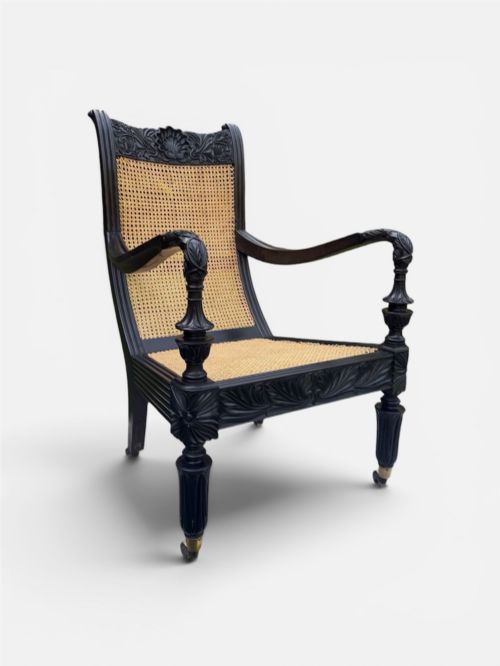
You are most likely to encounter Victorian and Edwardian examples fashioned from rich mahogany or solid oak, frequently fitted with leather upholstery or cane panels.
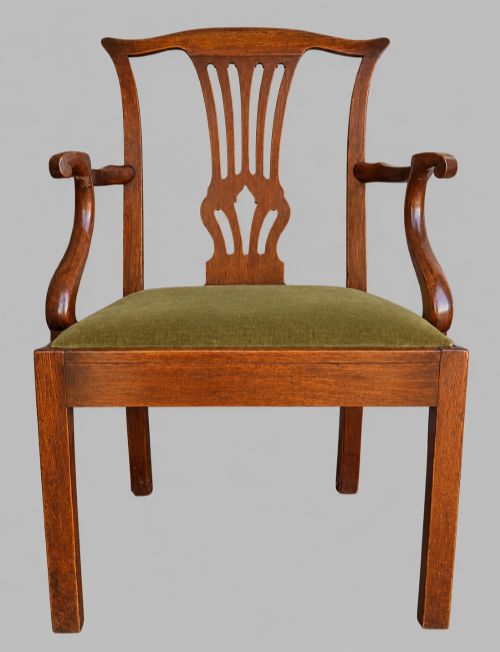
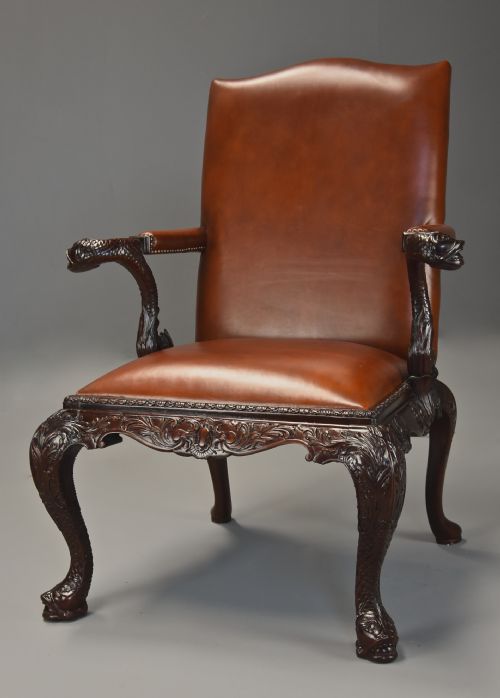
The selection extends from straightforward swivel desk chairs to elaborate George II style armchairs and folding library steps chairs intended for practical utility.
Materials and construction
Cabinet makers utilised dense hardwoods such as mahogany, walnut, and oak to build frames capable of enduring daily use without compromising structural integrity.
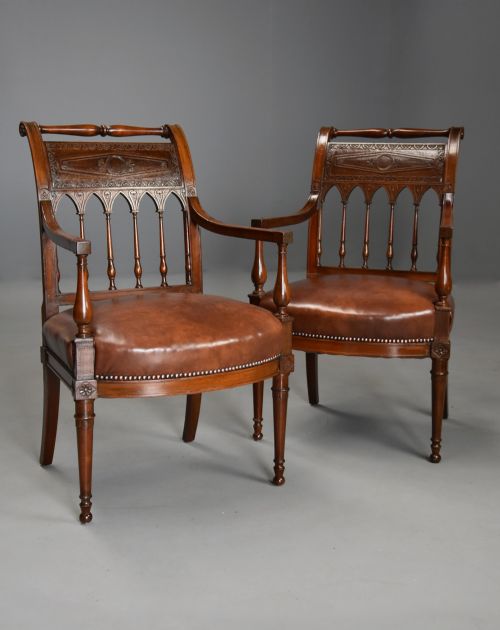
Detailing often involved carved crest rails, bobbin turning, fluting, and bone button decorations, alongside brass hardware for castors and folding mechanisms.
Upholstery required durable textiles including leather, velvet, fabric, and cane webbed seats to ensure comfort during long hours at the desk.
Wooden Library Seating Retail Price Guide 2026
Typical asking prices for wooden library seating among the pieces listed under this phrase on Sellingantiques today, from the lower quarter to the upper quarter. They describe what is for sale here now, not the wider market.
The listings span from the eighteenth century through the 1930s, featuring mahogany, walnut, oak, and ebony frames upholstered in leather, velvet, fabric, and cane.
Distinctions in quality
The calibre of a piece rests upon the selection of timber, visible in the depth of grain on a mahogany surface or the intricate execution of hand-carved armorial motifs.
Construction methods dictate longevity, distinguishing standard commercial output from workshop pieces featuring precise joinery, sturdy turning, and intact internal webbing.
White, Allom & Co.·James Shoolbred
The Wooden Library Seating Glossary
- Bergere
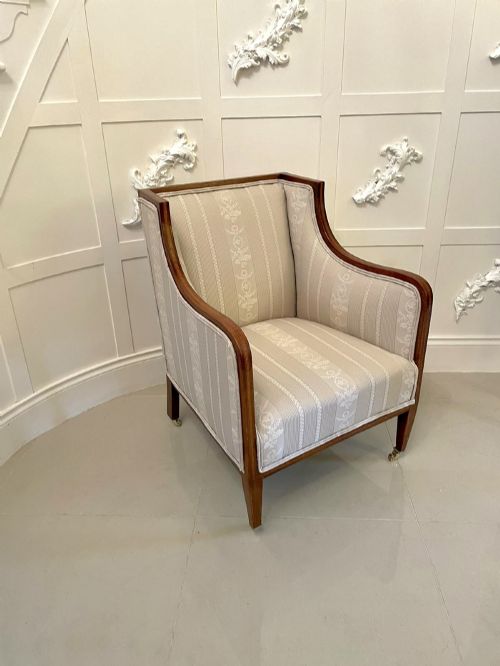
- An enclosed upholstered armchair with a wooden frame where the sides are typically filled with cane or wicker work. This style gained popularity during the eighteenth century and persisted into Edwardian iterations.
- Gainsborough chair
- A wide, low-backed armchair with upholstered arms, a padded seat, and an open wooden frame supported on square or cabriole legs. These chairs were designed specifically for sitting comfortably at a writing desk.
- Smokers bow
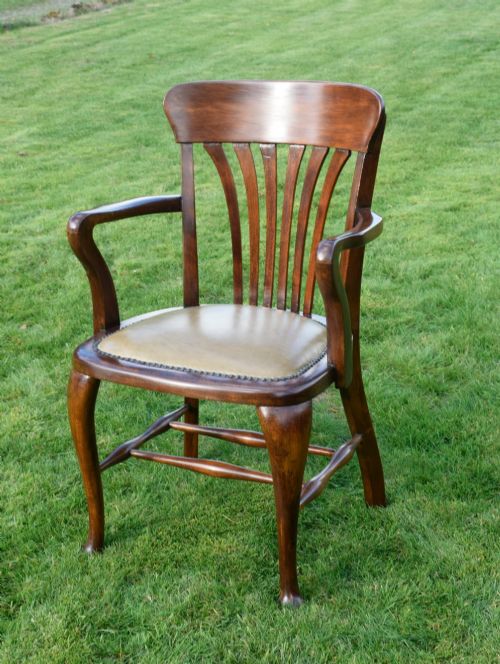
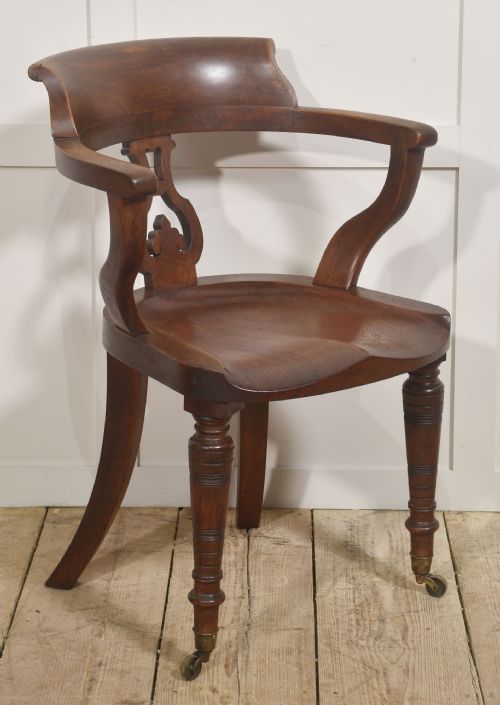
- A sturdy, low-backed wooden armchair with a continuous curved rail forming the arms and backrest, often featuring a shaped solid timber seat. They provide robust seating suitable for daily utility.
- Campaign chair
- A portable piece of furniture designed to fold or dismantle easily for travel. Nineteenth-century examples often incorporate clever hinges and locking pins.
- Spindleback
- A chair back constructed with a series of thin, turned vertical wooden rods or spindles. This method lightens the visual weight of the frame while maintaining sturdy back support.
Wooden Library Seating: Frequently Asked Questions
What distinguishes a library desk chair from a standard armchair?
Library desk chairs are proportioned specifically for use at a table or writing desk, typically featuring lower arms that fit beneath a desktop and upright backs that encourage an attentive posture.
Many of these chairs incorporate swivel mechanisms, castors, or sturdy oak and mahogany frames built to withstand the rigours of daily study.
How do I identify a Victorian library chair from an Edwardian one?
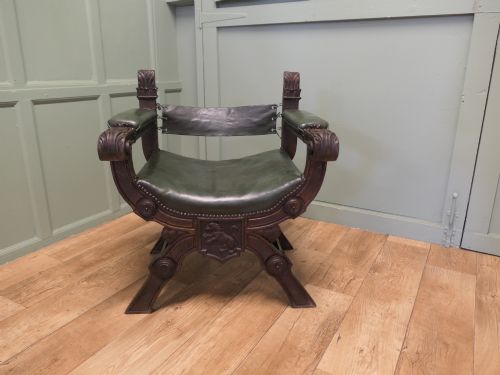
Victorian examples generally display heavier proportions, darker mahogany or rosewood timbers, and deeply carved details such as armorial motifs or heavy button-tufted leather upholstery.
Edwardian pieces tend to exhibit lighter forms, often utilising walnut or mahogany with simpler spindlebacks, cane panels, or restrained inlay work reflecting Arts and Crafts influences.
Are these chairs suitable for modern office desks?
Many antique desk chairs, particularly revolving oak office chairs and upholstered Victorian models, integrate seamlessly into contemporary workspaces by offering classic aesthetics alongside functional seating heights.
When pairing them with a modern desk, check the clearance beneath the desktop to ensure the wooden arms slide in comfortably.
How should I care for leather and wood finishes?
Preserve wooden frames by avoiding direct sunlight and maintaining stable room humidity to prevent the mahogany, oak, or walnut from drying out or splitting.
Treat leather upholstery with specialised saddle soap or leather conditioner periodically to keep the material supple and prevent cracking over time.