

Wooden Inlay Tray
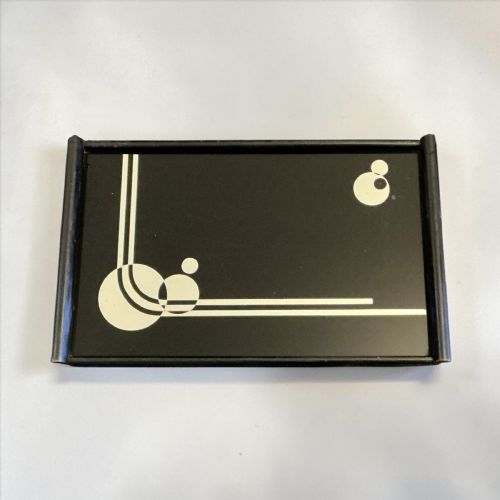
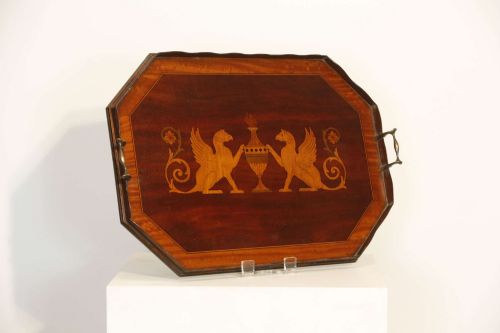
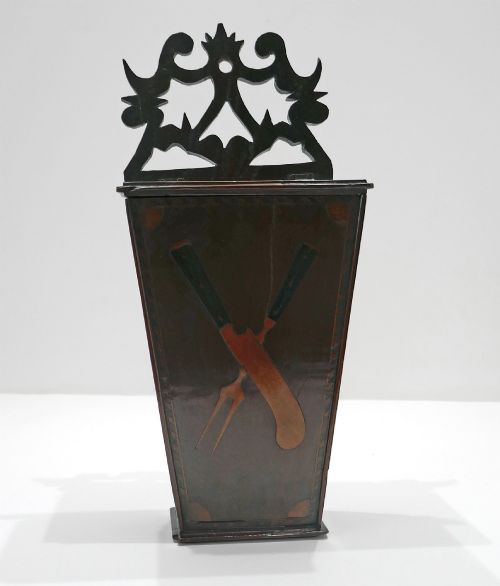
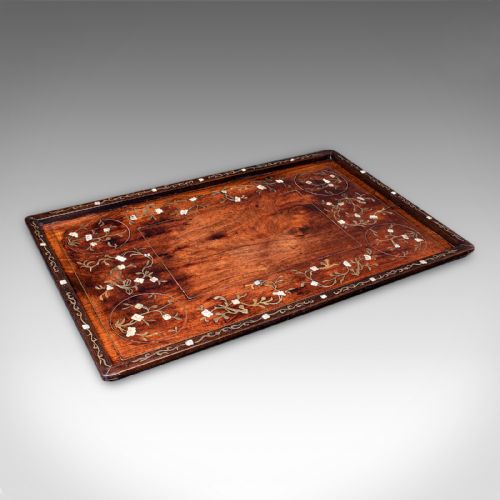
These wooden inlay tray pieces combine domestic function with intricate marquetry, offering a practical centrepiece for afternoon tea or display.
Wooden Inlay Tray
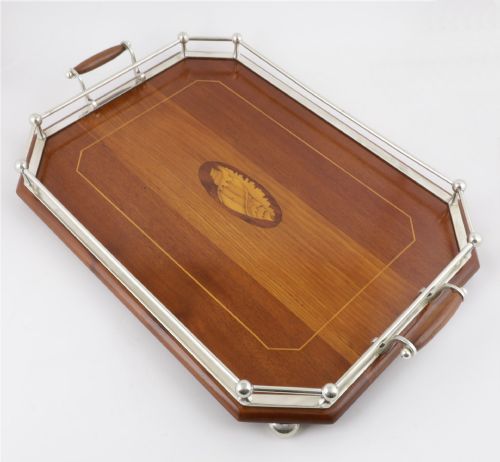
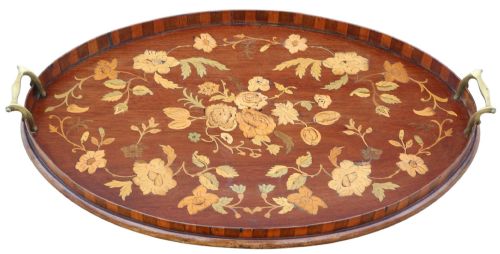
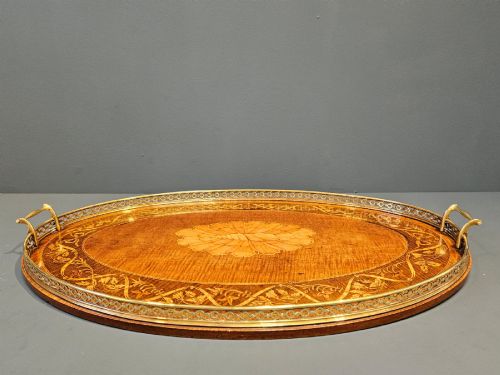
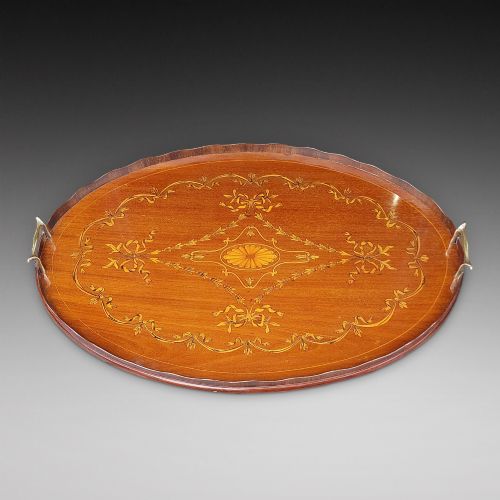
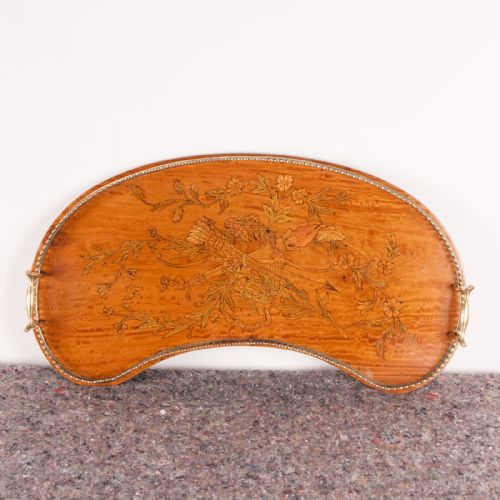
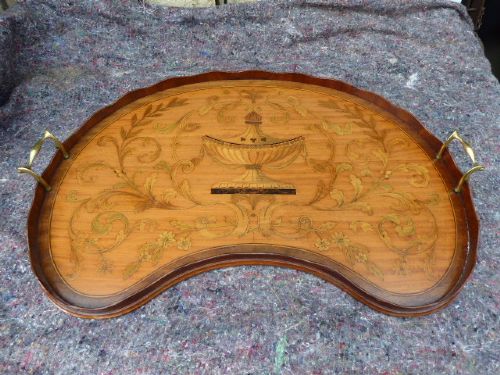
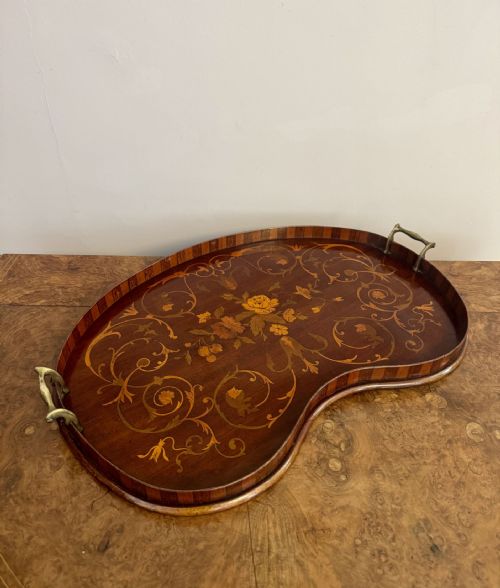
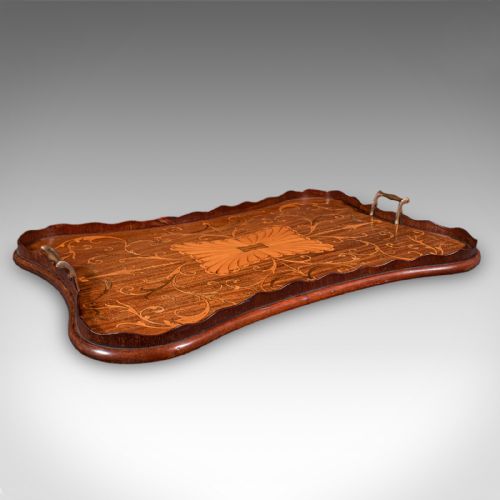
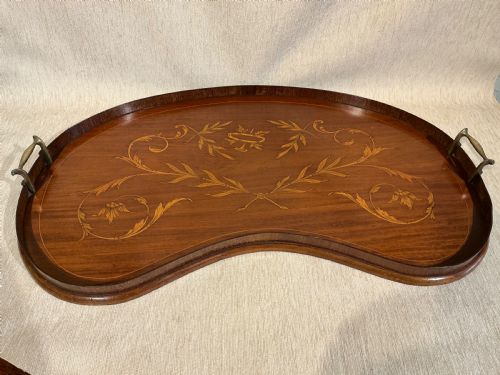
A wooden inlay tray serves as a functional serving platter or display surface, frequently encountered in Edwardian and Victorian forms. Makers constructed these items in oval, kidney, and octagonal shapes designed for domestic hospitality and afternoon tea service.
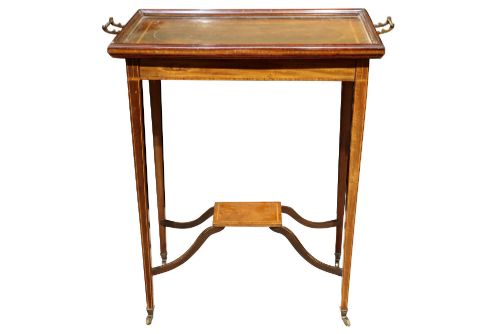
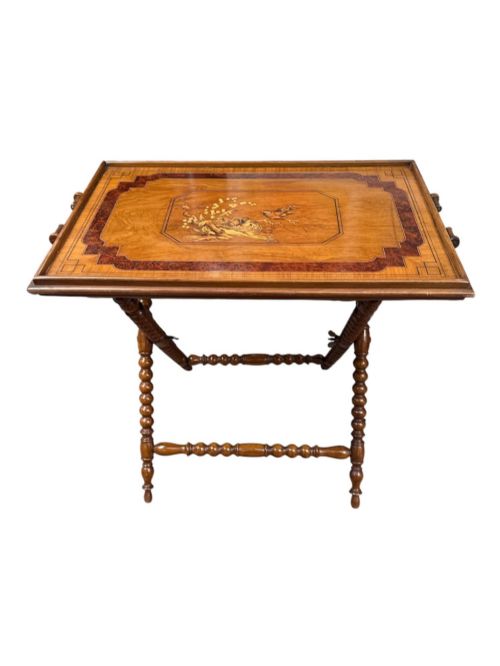
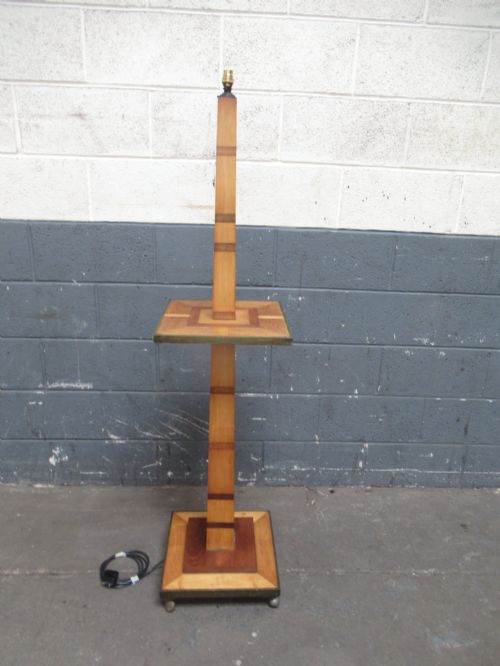
The selection spans from late Georgian mahogany serving pieces to Edwardian satinwood and marquetry designs, alongside occasional tables fitted with removable tray tops. Examples range from simple oval tea trays to elaborate Anglo-Indian teak and Sorrento Ware productions.
Materials and Technique
Craftsmen utilised foundational timbers such as mahogany, rosewood, and teak, applying contrasting veneers like satinwood, boxwood, and ebony to create geometric or floral patterns. Marquetry techniques involve fitting thin slices of wood into carved recesses to form pictorial or symmetrical designs.
Makers incorporated brass handles, silver-plated galleries, and mother of pearl details to reinforce edges and provide functional grips. The integration of varied timbers relies on precise woodworking joints to ensure the flat serving surface remains stable over time.
Wooden Inlay Tray Retail Price Guide 2026
Typical asking prices for wooden inlay tray among the pieces listed under this phrase on Sellingantiques today, from the lower quarter to the upper quarter. They describe what is for sale here now, not the wider market.
Several trays double as folding side tables, proving that Victorians loved multitasking furniture just as much as we do.
Craftsmanship and Execution
Quality rests in the precision of the marquetry cuts and the tightness of the joints between contrasting woods. Superior specimens display seamless integration of boxwood and satinwood inlay without visible gaps or excessive filler.
The choice of primary timber and the crispness of the carved or brass handles distinguish standard production from exceptional examples. Finer trays maintain a smooth, level surface where the grain and inlay sit flush under the polish.
Edwards and Roberts
The Wooden Inlay Tray Glossary
- Marquetry
- The art of applying pieces of veneer to a structure to form decorative patterns. Craftsmen cut various coloured woods and fitted them together like a puzzle before gluing the sheet to the tray base.
- Satinwood
- A light-coloured, lustrous timber native to India and Sri Lanka. Cabinet makers prized this wood for its reflective grain, utilising it for contrasting inlay work and border banding.
- Sorrento Ware
- A style of decorative woodworking originating from Sorrento in Italy. This technique employs intricate micro-mosaics and marquetry to depict architectural scenes and floral motifs.
- Gallery
- A raised ornamental border fitted around the edge of a tray. This feature prevents items from sliding off the surface during transit.
Wooden Inlay Tray: Frequently Asked Questions
What are wooden inlay tray items used for?
These pieces function primarily as serving platters for afternoon tea or as decorative display surfaces on side tables and commodes.
Historically, households utilised them for carrying glassware and porcelain, or placed them on folding stands to create temporary occasional tables.
How do I distinguish Edwardian trays from Victorian ones?
Edwardian examples tend to feature lighter satinwood finishes and delicate floral marquetry, reflecting the Sheraton Revival taste for brightness.
Victorian pieces often rely on darker mahogany or rosewood foundations with heavier brass fittings and simpler geometric inlay patterns.
Can I use these trays for daily service?
Most antique trays handle light domestic use, but moisture and heat can damage historical French polish and lift delicate veneer.
Protecting the surface with linen or placing them on display stands preserves the integrity of the antique wood and inlay work.
What is a tray top table?
This form combines a removable serving tray with a folding or fixed wooden stand, allowing the top to lift off independently.
Cabinet makers designed these dual-purpose furnishings to transition easily between hospitality service and standard living room furniture.