


Wooden Horse Carving
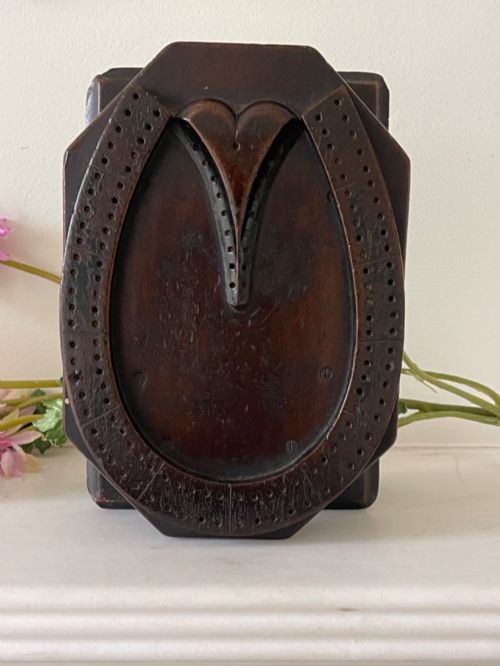
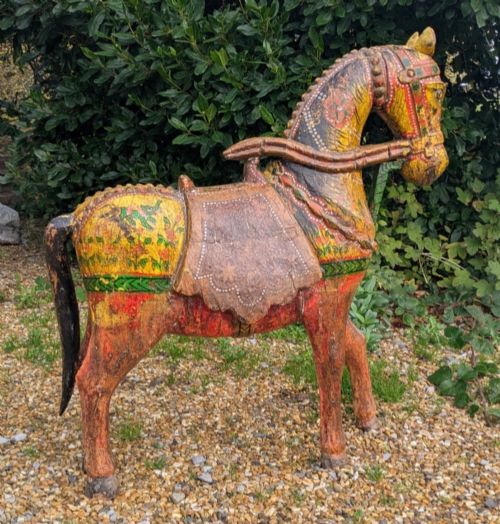
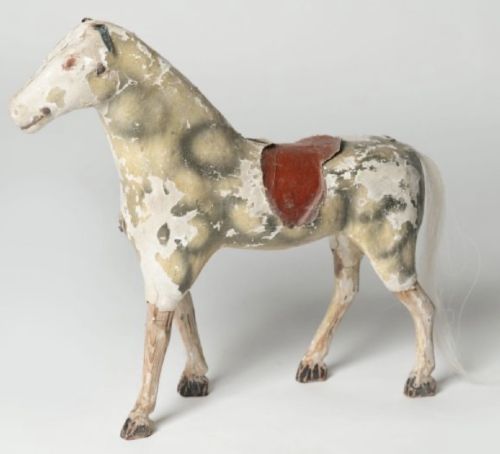
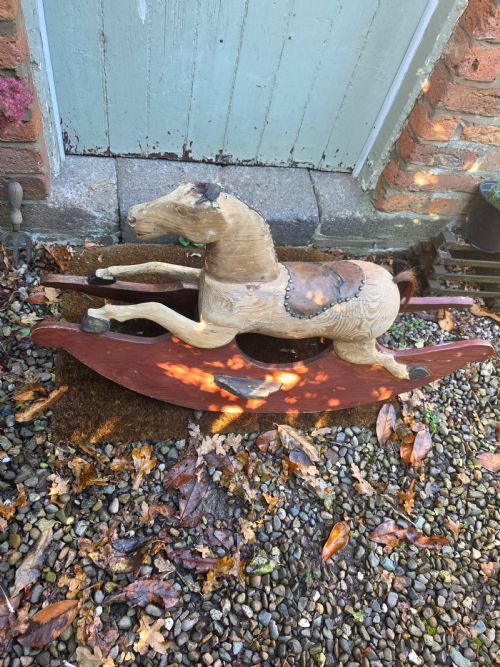
A wooden horse carving brings enduring character to a room, ranging from naive folk art toys to large playground rockers.
Wooden Horse Carving
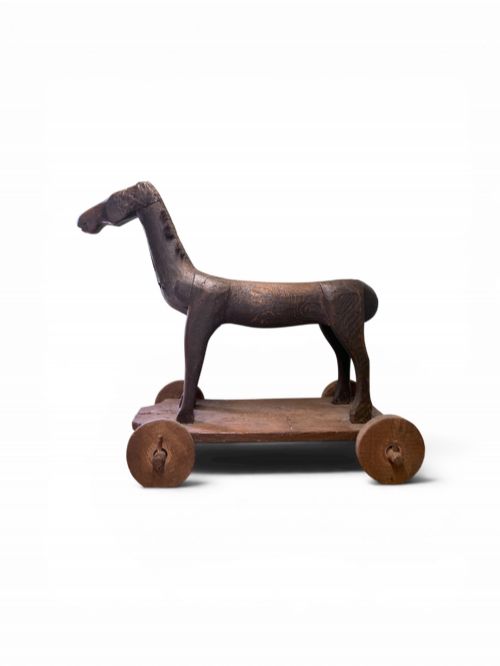
A wooden horse carving encompasses a diverse group of objects shaped from timber, most commonly encountered here as rocking horses, naive sculptures, and fairground figures. Buyers seek these pieces for their sculptural presence and historical charm, connecting domestic interiors with traditional craftsmanship.
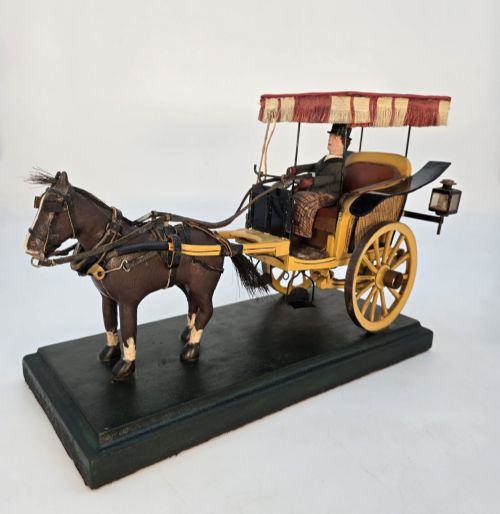
The selection on this page draws heavily from the nineteenth and early twentieth centuries, spanning Victorian folk art alongside maker-marked nursery pieces. Traditional rocking horses dominate the forms, accompanied by smaller carved figures and carousel animals originating from Britain, France, and beyond.
How They Were Made
Maker's hands shaped these forms primarily from solid timbers like pine, mahogany, walnut, and teak, often building up larger bodies over wooden frames. Structural iron and metal brackets reinforced rockers and internal joints to withstand heavy use.
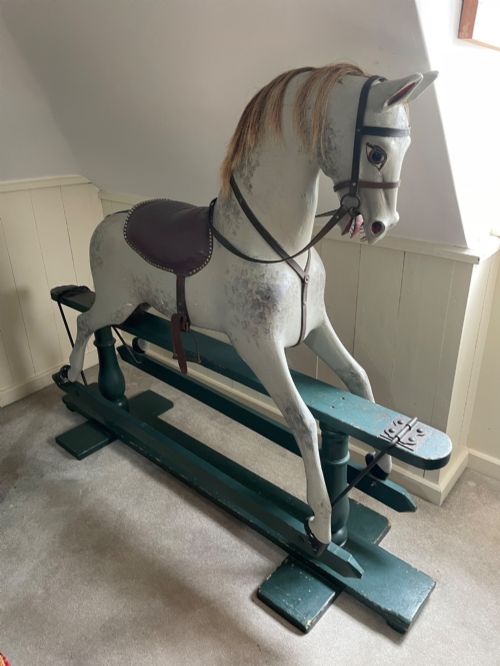
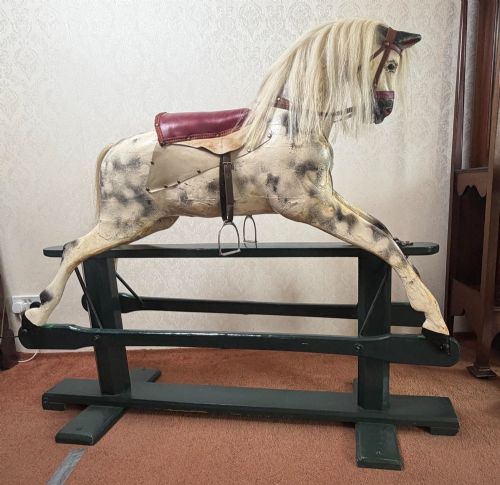
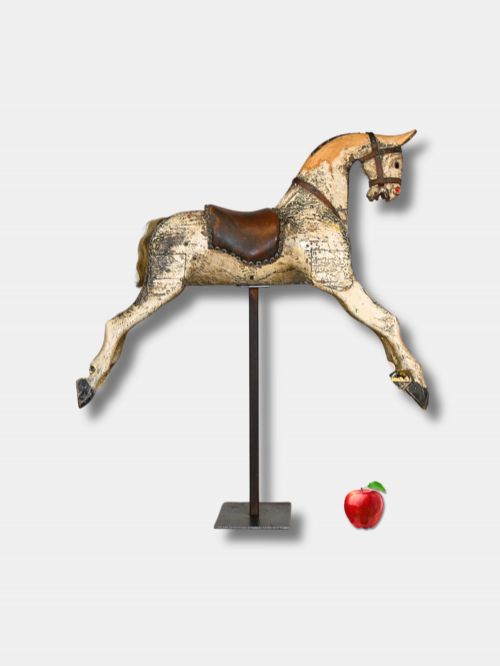
Surfaces frequently retain layers of original paint, horsehair manes, and leather tack, showing the practical materials applied to bring each animal to life. Carvers utilised hand chisels to define musculature and facial expressions, leaving tool marks that separate handmade creations from later mass production.
Wooden Horse Carving Retail Price Guide 2026
Typical asking prices for wooden horse carving among the pieces listed under this phrase on Sellingantiques today, from the lower quarter to the upper quarter. They describe what is for sale here now, not the wider market.
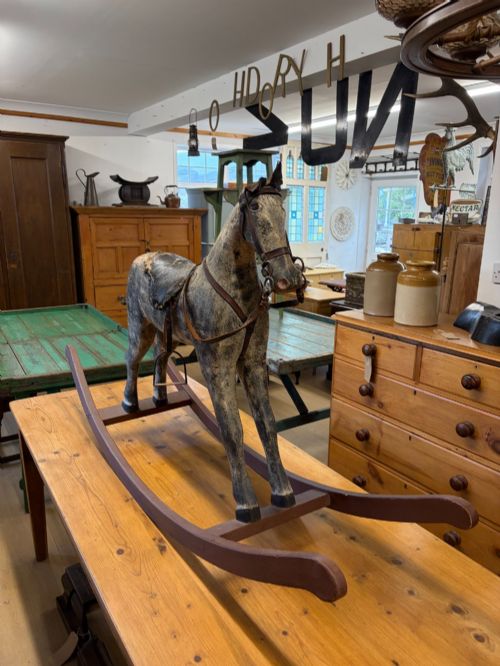
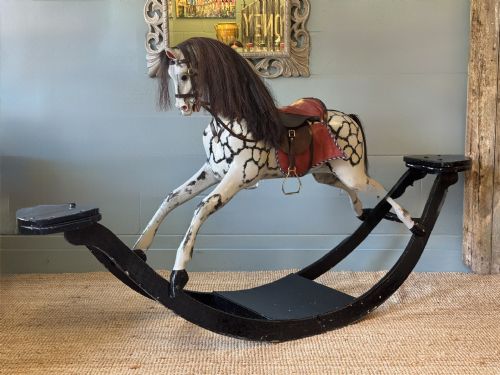
Several horses peer out wearing genuine horsehair manes and leather tack, ready to gallop straight off their nineteenth-century rocking stands.
What Varies in Quality
Quality rests upon the proportion and anatomical accuracy achieved by the carver, alongside the preservation of original surface finishes. Master makers such as G and J Lines or F.H. Ayres delivered spirited carving with convincing movement, whereas naive or provincial pieces rely on charming simplicity.
The survival of original paint, leather tack, and authentic horsehair contributes significantly to desirability. Pieces retaining their original rockers or stands hold greater historical integrity compared to those altered or stripped down over time.
G and J Lines·F.H.Ayres·Collinson·Lines Bros Sportiboy·Masayuki
The Wooden Horse Carving Glossary
- Folk art
- Objects created by self-taught or provincial makers outside academic traditions. These pieces prioritise expressive design over strict anatomical proportion.
- Rocking horse
- A carved wooden equine figure mounted on bow rockers or safety swing stands for children to ride. Larger examples often include leather saddles and real horsehair.
- Carousel horse
- A carved wooden figure removed from a fairground roundabout, typically detailed with dynamic poses and decorative harness trappings. Many exhibit remnants of bright original paint.
- Primitive
- A descriptive term for early or naive items displaying simple construction methods and unpretentious artistic execution. These objects often date from the eighteenth or nineteenth centuries.
- Mangle board
- A carved wooden domestic board used historically in Scandinavia for smoothing linen, frequently finished with an elaborate horse head handle.
Wooden Horse Carving: Frequently Asked Questions
How do I date a wooden horse carving?
Dating relies on examining the construction methods, nail types, timber species, and paint layers visible on the piece. Nineteenth-century examples often display hand-forged ironwork and dense pine or hardwood bodies.
Comparing structural details with documented workshop styles from makers like F.H. Ayres or G and J Lines helps narrow down the decade of production.
Are these pieces suitable for everyday use?
Most antique rocking horses and carved figures function primarily as decorative focal points rather than active toys. Their historic timber and original surfaces require gentle treatment to prevent unnecessary wear.
Placing items away from direct heat sources and strong sunlight preserves the paintwork and prevents the wood from drying out.
What is the difference between folk art and factory carvings?
Folk art and naive carvings are typically one-off creations made by local artisans or owners without formal academic training. They often possess charming irregularities and simple painted details.
Factory carvings from established nineteenth-century firms follow standardised patterns with refined musculature, professional tack, and maker stamps.
How should I clean original painted wood?
Dusting gently with a dry, soft cloth remains the safest method for maintaining antique painted surfaces. Avoid water, modern chemical sprays, or abrasive cleaners which can strip away historic pigment.
Consulting a professional restorer is recommended if deeper cleaning or structural consolidation becomes necessary over time.