

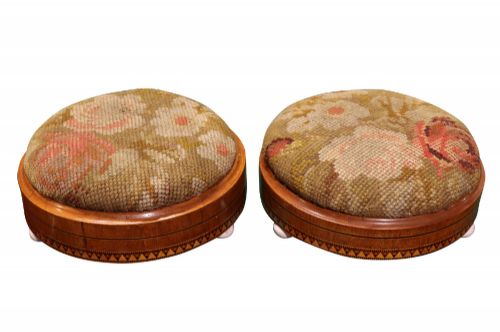
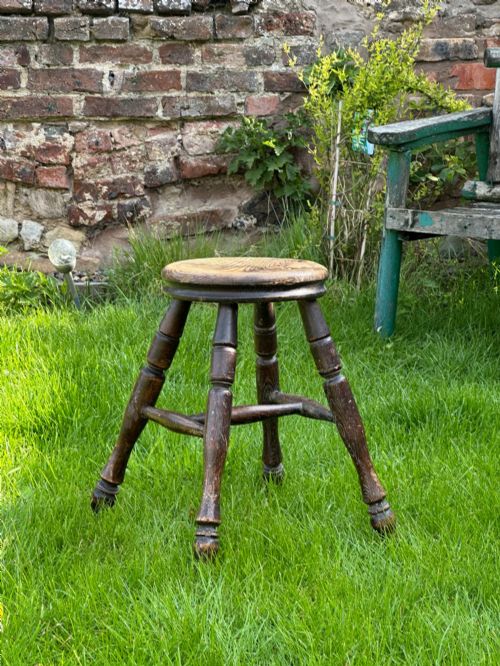


Wooden Hearth Stool
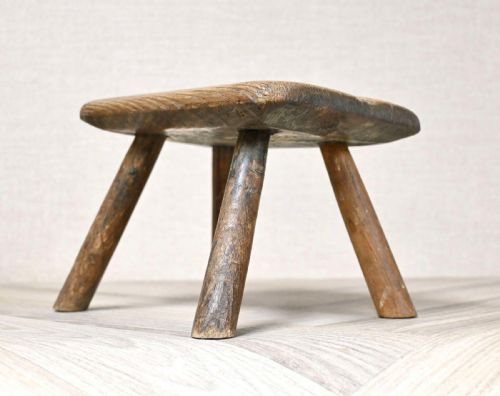
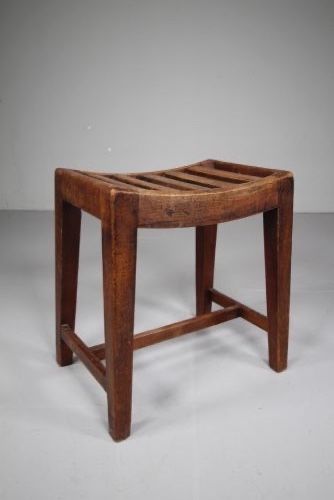
These wooden hearth stool examples bring low, solid seating right to the fireplace, combining sturdy timber frames with traditional craft.
Wooden Hearth Stool
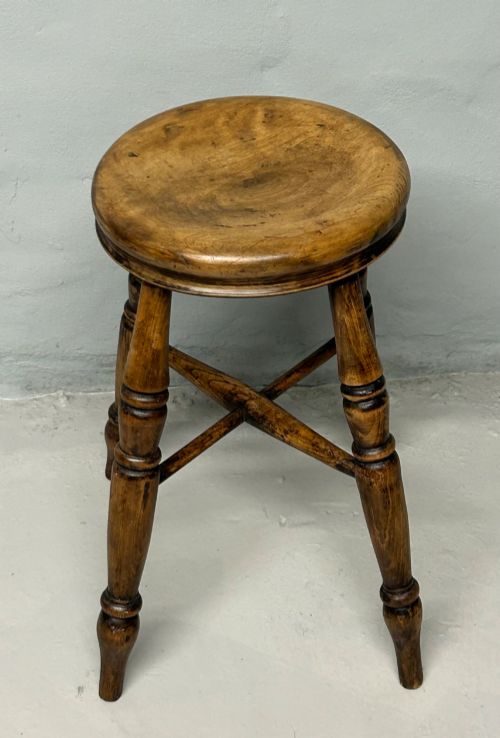
A wooden hearth stool provides low seating or foot support by the fireplace, appearing in formats from the eighteenth century through to the Edwardian period. The versions most commonly met here include simple rustic country forms in oak or elm, alongside more formal Victorian and Georgian iterations.
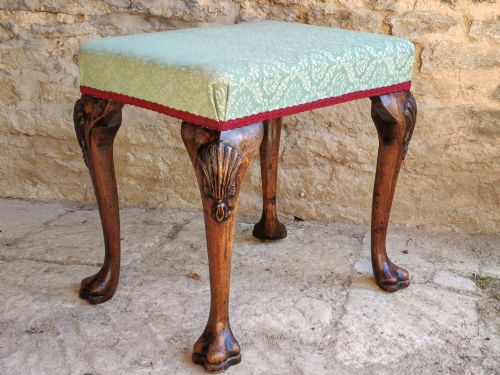
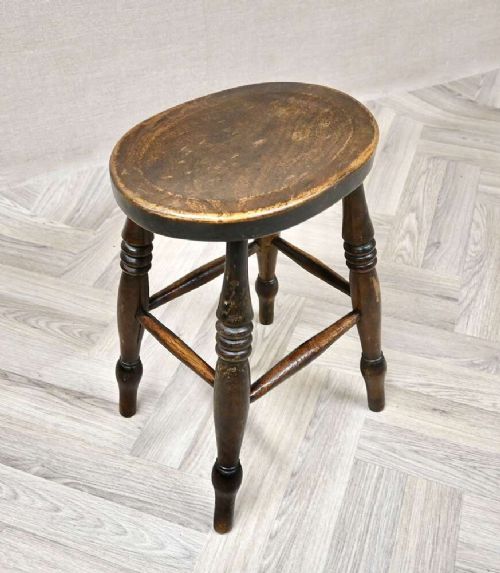
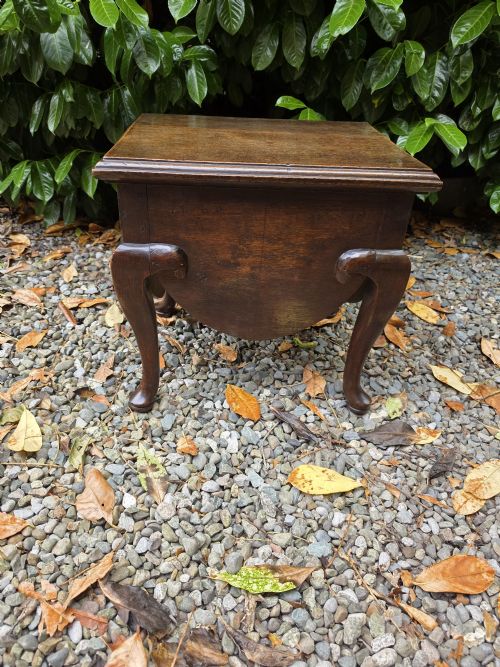
Makers shaped these low forms as oval seats, long fender stools, and shaped or slatted frames designed to sit comfortably near a hearth. Examples span primitive country styles, rustic variants, and refined mahogany or walnut designs with cabriole legs or needlepoint upholstery.
How they were made
Craftsmen built these pieces using solid hardwoods like oak, elm, beech, walnut, and mahogany, often pairing contrasting timbers for seats and turned legs. Joinery methods relied on sturdy pegging and turning techniques suited to heavy daily use by the fireside.
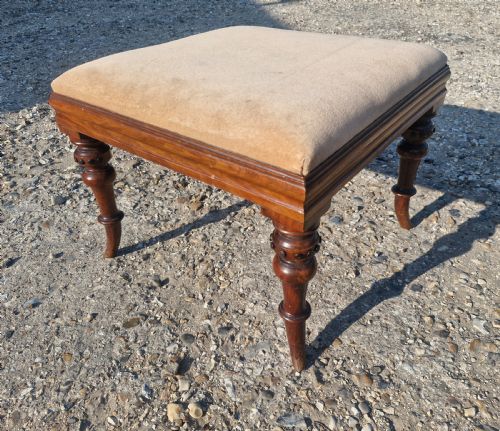
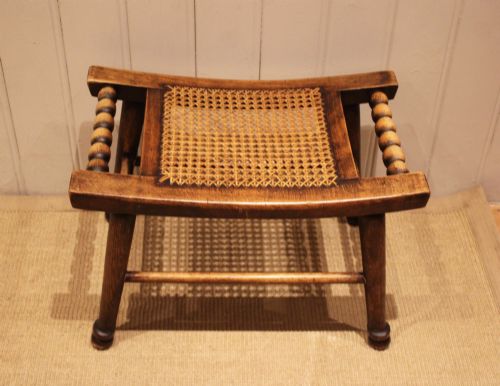
Surface finishes and added textures varied from bare timber and pokerwork decoration to woven cane, rush, leather, tweed, and original needlepoint textile upholstery.
Surviving examples demonstrate diverse seating surfaces, combining solid timber with cane, rush, leather, tweed, and needlepoint textile.
What varies in quality
The distinction between ordinary and superior pieces rests on the choice of timber and the ambition of the design, moving from basic utilitarian pine and beech up to figured walnut and mahogany with carved detail. Finer examples display careful shaping to the legs, such as cabriole supports or precise turning.
Upholstery and secondary materials also set pieces apart, where original needlepoint, tweed, or intact cane and rush seating elevate the execution beyond a plain wooden board.
The Wooden Hearth Stool Glossary
- Cabriole leg
- A furniture leg that curves outward at the knee and tapers inward to an ankle, common on finer eighteenth-century and revival designs. This shape mimics animal limbs and adds stability without heavy stretcher bars.
- Fender stool
- A long, low stool designed to sit tightly against a hearth fender to keep feet warm. These pieces are typically narrow and elongated to match the width of the fireplace.
- Pokerwork
- A decorative technique using a heated metal tool to scorch designs into wood. It appears on nineteenth-century pieces to add folk art inscriptions or imagery.
- Rush seat
- A woven seating surface made from dried marsh grasses twisted into cords. It provides a resilient, traditional finish on country stools.
Wooden Hearth Stool: Frequently Asked Questions
What is a wooden hearth stool used for?
These low stools were traditionally placed directly by the fireplace to serve as low seats or footrests during colder months. Their compact height kept users close to the warmth of the hearth.
Over time, they adapted into versatile domestic furnishings used across living spaces as small seats or occasional display stands.
How do I date an antique wooden hearth stool?
Dating relies on identifying the timber species, joinery methods, and stylistic cues such as cabriole legs or turned spindles. Eighteenth-century pieces often feature heavier oak construction, while Victorian examples introduce walnut, ebonizing, and elaborate carving.
Examining the secondary materials, such as cane, rush, or textile upholstery, also helps narrow down the period of manufacture.
Are these stools comfortable to sit on?
Many variants provide firm seating through solid wooden tops shaped into ovals or flat boards. Other versions offer softer surfaces thanks to original needlepoint, leather, or tweed upholstery.
Low frames mean they are best suited for short periods of rest by the fireside.
How do I care for a wooden hearth stool?
Maintenance involves keeping timber away from direct heat sources and sudden temperature shifts that can dry out the wood. Gentle cleaning with appropriate wax helps preserve the finish of older surfaces.
Upholstered sections require careful brushing and protection from moisture to maintain fabric and cane integrity.