
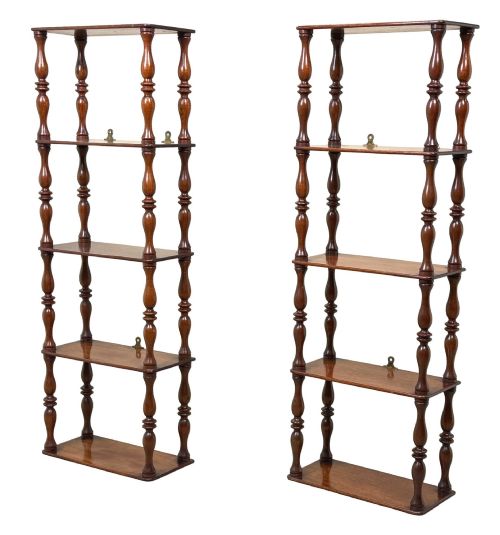
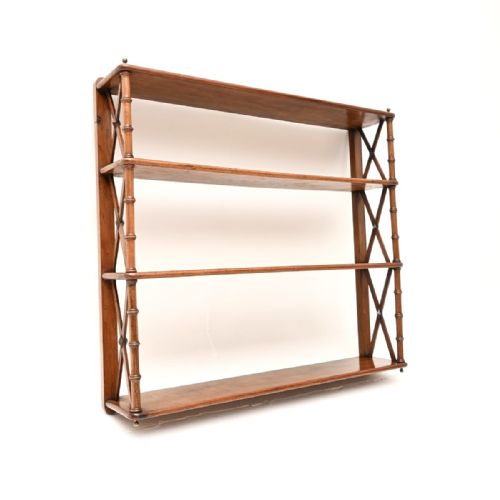
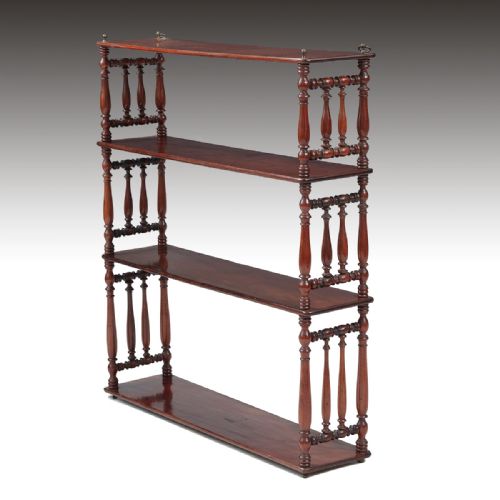
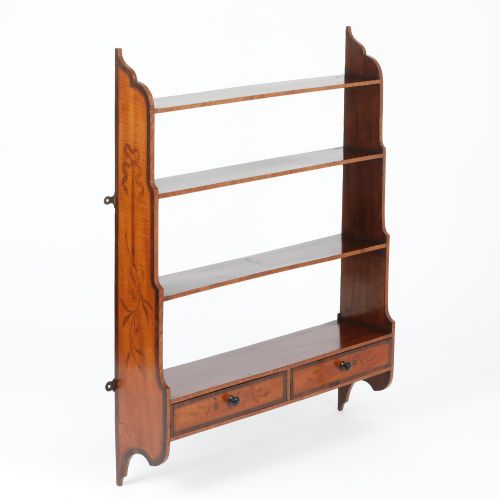


Wooden Hanging Bookcase
These wooden hanging bookcase pieces clear floor space while keeping volumes at hand, combining utility with period cabinet-making.
Wooden Hanging Bookcase
A wooden hanging bookcase suspends volumes upon walls, saving valuable floor space in cramped studies or parlours. The pieces on this page span several centuries, featuring wall shelves, wall cabinets, desk organisers and hanging waterfall bookshelves.
Most examples found here date from the Georgian, Regency, Victorian and Edwardian eras, alongside Arts and Crafts and 1920s designs. Cabinets and open shelves appear in varied timbers, offering practical storage for books and display items without crowding a room.
How they were made
Cabinet-makers relied on dense hardwoods such as mahogany, walnut, oak, satinwood and satin birch to bear the weight of books. Timber selection determined the structural integrity of these wall-mounted units.
Brass fittings occasionally reinforced joints or added decorative contrast to mahogany and walnut carcases. Inlaid details and fabric linings appear on select pieces, showing traditional joinery methods adapted for vertical display.
Mahogany and walnut dominate the timber selection across these listings, appearing alongside satinwood, oak, cherry wood and satin birch.
What varies in quality
The refinement of the timber figure and the subtlety of inlay dictate the standing of a piece. Finer examples display carefully selected grain patterns and balanced proportions that elevate standard utilitarian storage into decorative furniture.
Construction methods also distinguish standard workshop output from superior cabinet work. Dovetailed joints, substantial backboards and robust hanging brackets indicate how well a piece manages the weight of heavy volumes over time.
Arthur Simpson
The Wooden Hanging Bookcase Glossary
- Waterfall bookshelves
- Tiers of graduating shelves that step back progressively from bottom to top. This form became popular in the eighteenth and nineteenth centuries for displaying books.
- Pigeon holes
- Small vertical and horizontal compartments arranged within a desk organiser or cabinet. They sort correspondence and small papers.
- Satinwood
- A pale, lustrous timber imported from the tropics, prized for its golden sheen. Cabinet-makers used it for banded borders and inlaid decoration.
- Wall cabinet
- A hanging storage unit enclosed by doors, often featuring glass panels. It protects delicate volumes from dust.
Wooden Hanging Bookcase: Frequently Asked Questions
How do I hang a heavy wooden bookcase safely?
Secure the unit directly into wall studs using appropriate fixings matched to the weight of the timber and books. Avoid relying solely on plasterboard for older hardwood shelves.
Ensure the mounting brackets or internal screw points are sound before loading any volumes onto the shelves.
Were these bookcases meant for kitchens or studies?
Most hanging shelves and wall cabinets served in studies, libraries, or parlours to keep reference books close to hand. Smaller organisers also functioned on tabletops or walls for correspondence.
Their primary purpose was saving floor space in period rooms while displaying prized volumes.
How do I distinguish Regency hanging shelves from Victorian ones?
Regency pieces often display clean classical lines, sometimes incorporating brass mounts and rich mahogany timbers. Victorian versions tend to be heavier, with darker walnut finishes and more elaborate carvings.
Construction details and secondary woods help confirm the period of manufacture.
Can these wall shelves hold heavy hardback books?
Hardwood carcases made from mahogany or oak possess the structural strength to support standard book collections. Much depends on the depth of the shelves and the condition of the backboards.
Lighter paperbacks and smaller volumes suit delicate satinwood or tiered waterfall shelves best.