

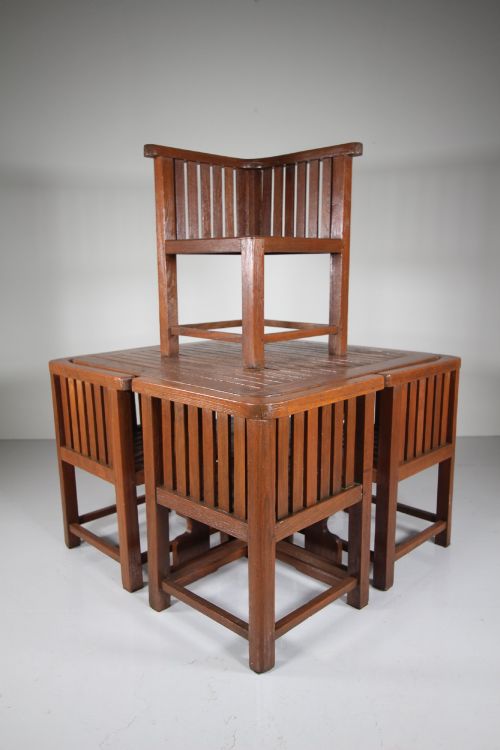
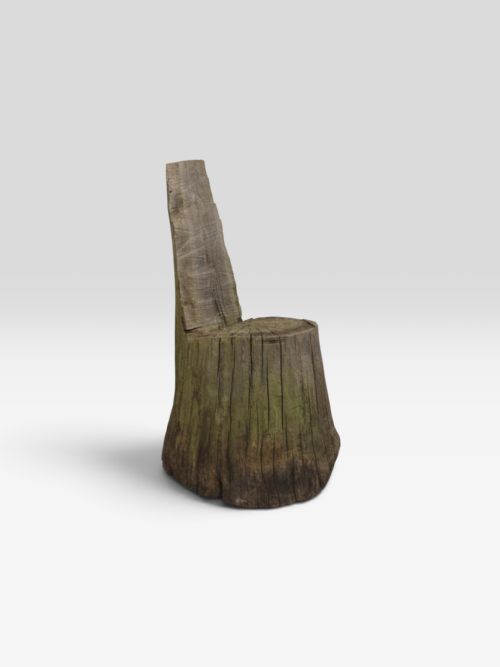
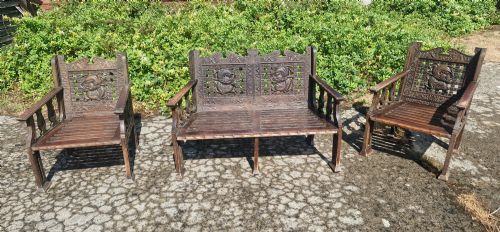
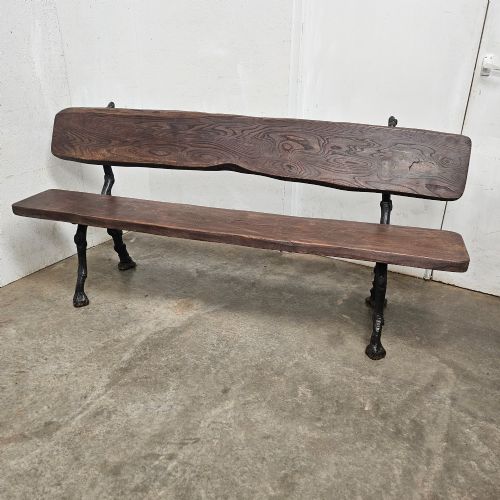


Wooden Garden Chairs
These wooden garden chairs offer sturdy seats and enduring outdoor forms, spanning nineteenth-century benches to early twentieth-century steamers.
Wooden Garden Chairs
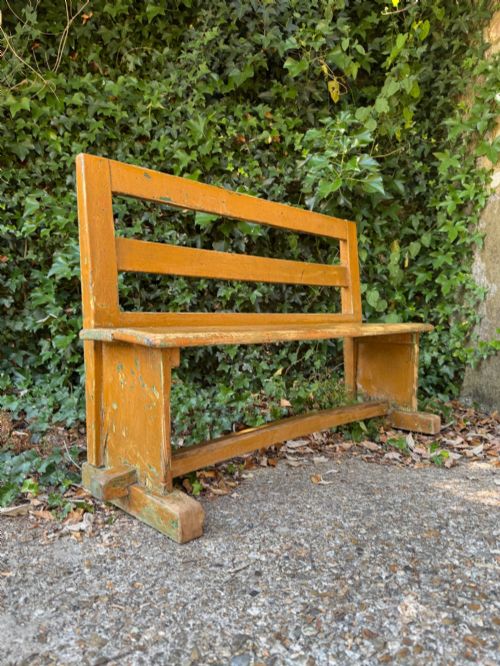
When you search for wooden garden chairs, you encounter practical outdoor seating and decorative exterior benches spanning multiple decades and distinct regional traditions. The selections on this page range from nineteenth-century pine benches and elm faux bois designs to Edwardian tree seats and interwar steamer deck chairs.
How They Were Made
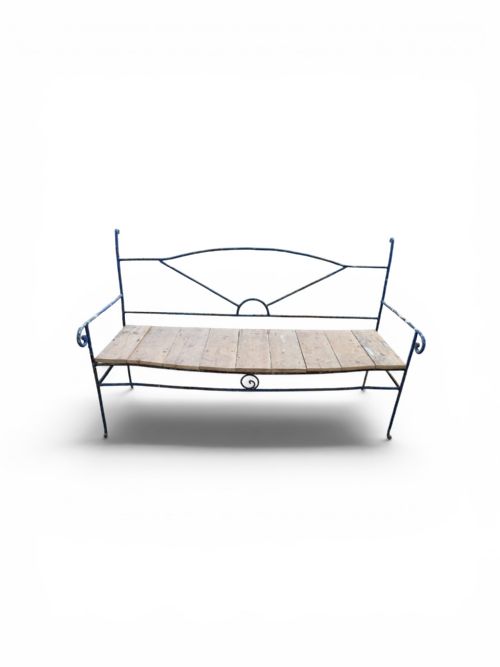
Makers utilised durable timbers such as teak, pine, elm, and walnut to withstand exterior conditions, often pairing wooden slats with cast iron or wrought iron frames. These mixed-media constructions provided structural rigidity for garden benches and folding steamer chairs.
Surface ornamentation involved hand-carving, demonstrated in Burmese country house conservatory suites and sculptural tree seats. Structural joints relied on traditional carpentry methods suited to items subjected to weathering and constant movement.
Wooden Garden Chairs Retail Price Guide 2026
Typical asking prices for wooden garden chairs among the pieces listed under this phrase on Sellingantiques today, from the lower quarter to the upper quarter. They describe what is for sale here now, not the wider market.
Listings feature items spanning the nineteenth century through the 1930s, constructed from timber, pine, teak, elm, walnut, and iron.
What Varies in Quality
Quality rests in the integrity of the timber and the sophistication of the joinery rather than mere age. Pieces featuring dense hardwoods like teak or figured elm retain their structural cohesion far better than softer timbers exposed to damp conditions.
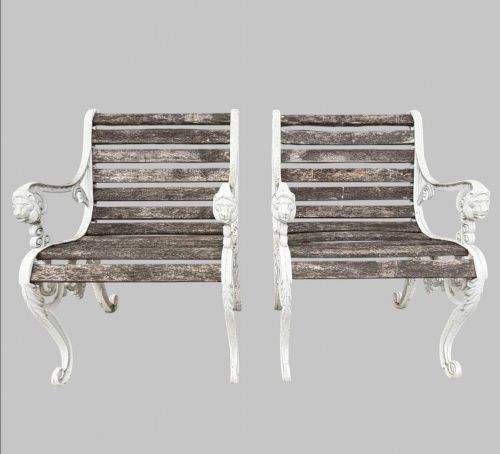
The refinement of decorative elements sets apart ordinary seating from exceptional examples. Carved details, such as lion mask armchairs or intricate Anglo-Indian woodwork, demonstrate superior craftsmanship by the hands that shaped them.
The Wooden Garden Chairs Glossary
- Faux Bois
- A decorative technique mimicking natural wood grain using concrete or iron. This style appears on nineteenth-century French garden benches.
- Steamer Deck Chair
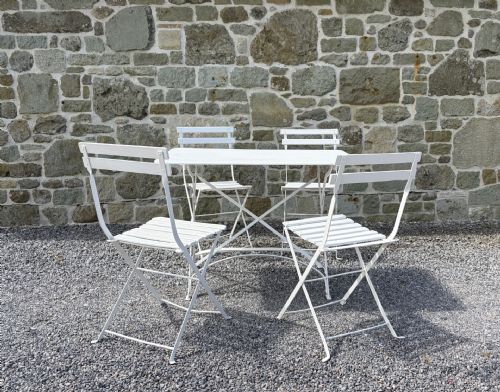
- A reclining wooden seat designed for outdoor leisure and easy storage. These fold via hinged wooden or metal frames.
- Conservatory Suite
- A matched grouping of seating intended for semi-enclosed glass spaces. These sets often incorporate carved woodwork.
- Tree Seat
- A circular bench built to encircle the trunk of a mature garden tree. Edwardian examples often feature sculptural timber construction.
Wooden Garden Chairs: Frequently Asked Questions
What woods were used for early garden chairs?
Makers utilised durable timbers including pine, teak, elm, and walnut for exterior furniture. These woods offered natural resistance to outdoor elements.
Iron components frequently accompanied the timber frames to provide additional structural support.
How do I date an old garden bench?
Dating relies on observing construction methods, timber types, and stylistic indicators such as Edwardian proportions or nineteenth-century carving styles. Regional origins and hardware details also clarify the era of manufacture.
Comparing structural joints helps distinguish nineteenth-century examples from interwar productions.
Were these chairs meant for outdoor use year-round?
Many pieces served in sheltered conservatories, covered verandahs, or open gardens depending on their specific timber and iron construction. Folding deck chairs allowed easy movement indoors during inclement weather.
Heavier benches remained fixed in the landscape throughout changing seasons.
What is a faux bois garden bench?
A faux bois bench imitates the natural appearance of wood using durable materials like iron or concrete. Nineteenth-century French makers favoured this naturalistic style for gardens.
Such pieces combined organic forms with lasting exterior durability.