



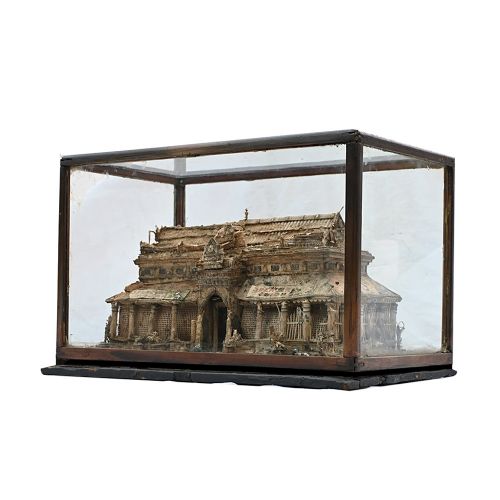

Wooden Framed Display Case
A wooden framed display case holds everything from intricate maritime dioramas to Victorian natural history specimens.
Wooden Framed Display Case
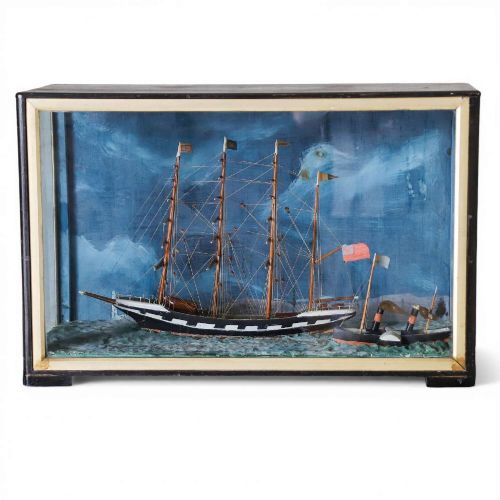
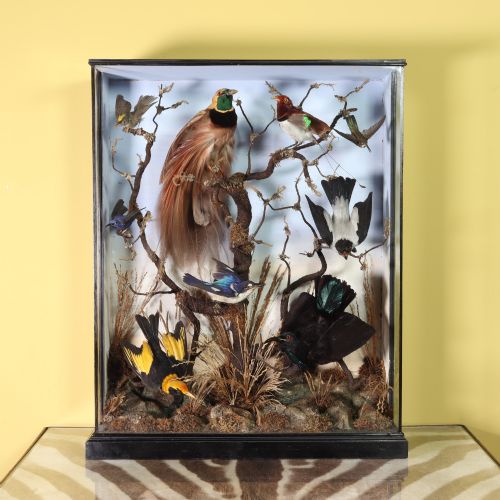
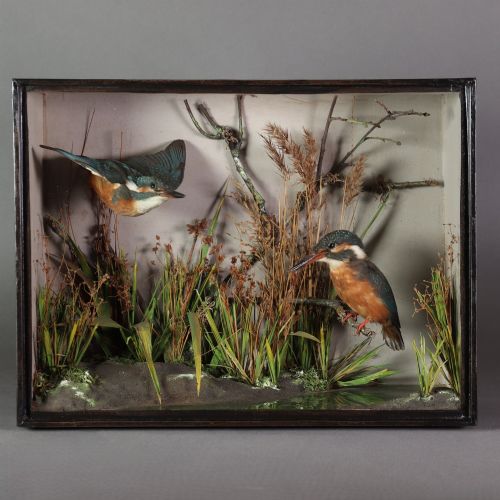
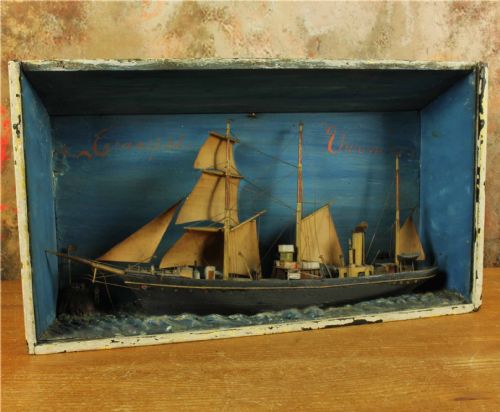
A wooden framed display case protects and showcases three-dimensional objects, most commonly taking the form of shadow box dioramas, maritime folk art, and taxidermy cases. These enclosures serve to preserve delicate artefacts while presenting them clearly to the viewer.
The versions most frequently met on this page date from the nineteenth century, including Victorian and Edwardian examples alongside later twentieth-century pieces. They range from small wall-hanging boxes containing stuffed birds or straw work to larger mercantile display counters and ship models.
Makers housed these items behind glass panels set into timber frames, often incorporating painted backgrounds, canvas, paper, or fabric to create atmospheric settings. The resulting objects blur the line between utilitarian shop fittings and domestic curiosity cabinets.
How they were made
Makers constructed the primary structures from timber, utilising glass to front the enclosures and protect the contents from dust and handling. Many nineteenth-century examples integrate painted plaster, canvas, or paper backgrounds to give depth to maritime dioramas and taxidermy scenes.
Metal components such as brass frequently appear in framing elements, hinges, and fittings, particularly in retail display counters and specialised cabinets. Fabric and painted finishes line the interiors, providing a contrasting backdrop for the displayed specimens and ship models.
Wooden Framed Display Case Retail Price Guide 2026
Typical asking prices for wooden framed display case among the pieces listed under this phrase on Sellingantiques today, from the lower quarter to the upper quarter. They describe what is for sale here now, not the wider market.
Object forms recorded here include taxidermy cases, shadow box dioramas, grocery store models, and retail display counters.
What varies in quality
The success of a wooden framed display case lies in the relationship between the exterior carpentry and the internal composition, whether that is a detailed ship model or arranged taxidermy. Superior pieces demonstrate precise joinery in the timber frame and a careful artistic arrangement of the contents within.
Materials also indicate the tier of the piece, with brass hardware, hand-painted backdrops, and specialised maritime folk art elements separating bespoke commissions from standard commercial production. Preservation of the original glass, paint, and fabric linings preserves both historical integrity and visual impact.
T. E. Gunn·Hutchings of Aberystwyth·Saml. Elliott & Sons
The Wooden Framed Display Case Glossary
- Shadow Box Diorama
- A deep wooden frame enclosing a three-dimensional scene, often featuring a ship model set against a painted canvas background. These cases protect intricate maritime folk art from environmental damage while creating a sense of perspective.
- Taxidermy Case
- A glass-fronted wooden enclosure built to house preserved birds, mammals, or natural history specimens. The interior often replicates the natural habitat of the subject using plaster, paper, and painted foliage.
- Folk Art
- Objects created by self-taught or traditional makers working outside mainstream academic art traditions. In this context, it describes handmade ship models, straw work, and dioramas fashioned with local materials.
- Display Counter
- A shop fitting featuring wood and glass construction designed to showcase merchandise or grocery store models. These practical units combined robust framing with maximum visibility for retail environments.
Wooden Framed Display Case: Frequently Asked Questions
What fits inside a wooden framed display case?
These enclosures traditionally hold taxidermy specimens, ship models, straw work, and three-dimensional dioramas created by folk artists and commercial makers. The depth of the timber frame allows for layered compositions that standard flat frames cannot accommodate.
Retail versions, such as shop display counters, were built to house goods and small models rather than natural history or maritime scenes. Each case was tailored to the specific nature of its contents.
How do I date a wooden framed display case?
Dating relies on examining the timber construction, glass manufacture, internal materials, and stylistic cues associated with periods like the Victorian era or the early twentieth century. Maritime dioramas and taxidermy cases often carry specific construction methods characteristic of the nineteenth century.
Papers, painted canvas backgrounds, and brass hardware also offer clues to the age of the piece. Maker signatures or labels found on the frame or backing provide the most precise chronological indicator.
Where were these display cases used?
Nineteenth-century shadow boxes and taxidermy cases were primarily domestic objects displayed in parlours and studies as part of Victorian natural history collections. They allowed collectors to exhibit exotic birds and maritime scenes safely within the home.
Larger variants served commercial purposes in grocery stores and shops, functioning as retail display counters for goods. Maritime folk art pieces often originated in coastal communities where sailors and local craftsmen constructed ship models during long voyages.
How should I care for a wooden framed display case?
Preservation involves keeping the timber frame away from direct sunlight and fluctuating humidity to protect the wood, painted backgrounds, and internal fabric linings. Gentle dusting of the exterior glass maintains clarity without disturbing delicate antique components inside.
Internal elements, particularly taxidermy or paper components, require stable environmental conditions to prevent degradation. Opening sealed historical cases is generally discouraged to protect the enclosed fragile materials.