



Wooden Four Poster
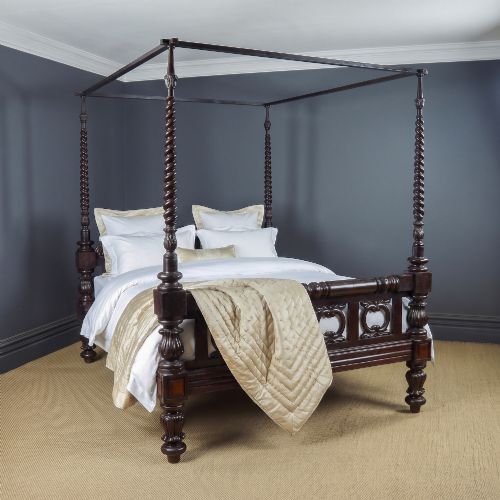
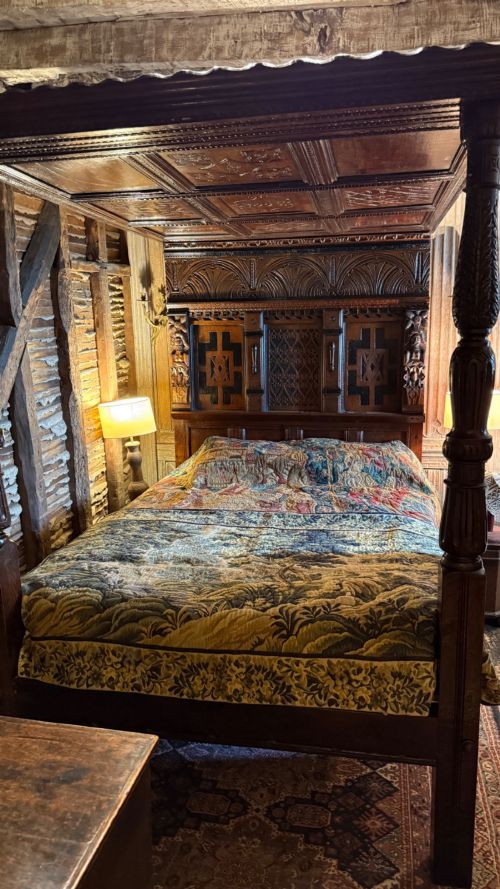
A wooden four poster provides undeniable architectural presence in a bedroom, combining substantial posts with an overhead tester canopy.
Wooden Four Poster
A wooden four poster bed stands as a substantial sleeping platform defined by four vertical posts supporting an overhead tester or canopy frame. Buyers searching for a wooden four poster encounter full-scale sleeping quarters alongside architectural salvage elements such as isolated bed posts and specialised items like pet furniture.
The selections span centuries of craftsmanship, presenting heavy 17th-century jointed constructions through to lighter Edwardian interpretations and revival pieces. Oak and mahogany dominate the offerings, occasionally accompanied by alternative hardwoods, textile canopies, and painted finishes.
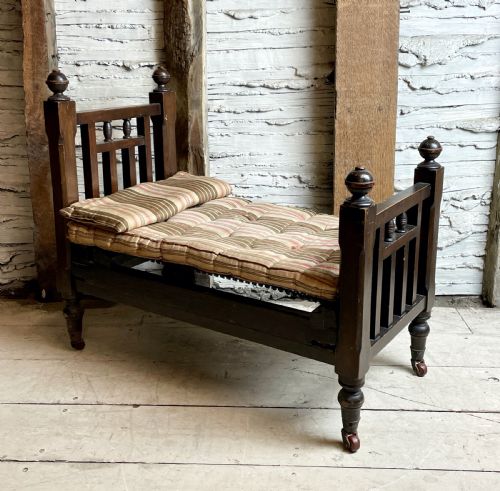
Regional variations introduce distinct aesthetic traditions, ranging from formal Georgian proportions and Regency elegance to Anglo-Indian colonial designs and Chinese hardwood marriage beds. Scale shifts dramatically across the inventory, accommodating standard double dimensions up to super king sizes alongside miniature doll beds and dog furniture.
How they were made
Carpenters constructed these frames primarily from durable timbers such as oak, mahogany, teak, and tiger maple, frequently enriching the surfaces with fruitwood inlay, red lacquer, or paint. Structural integrity relied on traditional joinery methods appropriate to the period, securing heavy posts to headboards, footboards, and overhead testers.
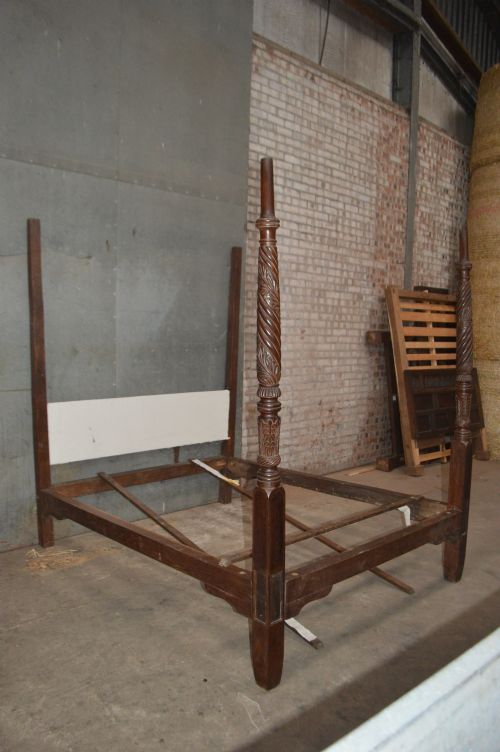
Carving served as the primary decorative technique, yielding intricate relief work on posts, headboards, and cornices. Canopies often integrated textiles and fabric hangings, suspended from the wooden framework to enclose the sleeping space.
Wooden Four Poster Retail Price Guide 2026
Typical asking prices for wooden four poster among the pieces listed under this phrase on Sellingantiques today, from the lower quarter to the upper quarter. They describe what is for sale here now, not the wider market.
Listings feature wooden four poster beds spanning the 17th century through the Edwardian era, utilising oak, mahogany, teak, and tiger maple.
What varies in quality
The ambition of the carving and the selection of timber dictate the standing of an individual bed. Dense, well-figured mahogany or richly patinated early oak with crisp, deep-relief carving separates finer examples from plain utilitarian frames.
Proportion and architectural harmony define the upper tier of design. Pieces retaining their original configuration, complete posts, and authentic testers command greater architectural integrity than modified frames or assembled components.
Howard And Sons
The Wooden Four Poster Glossary
- Tester
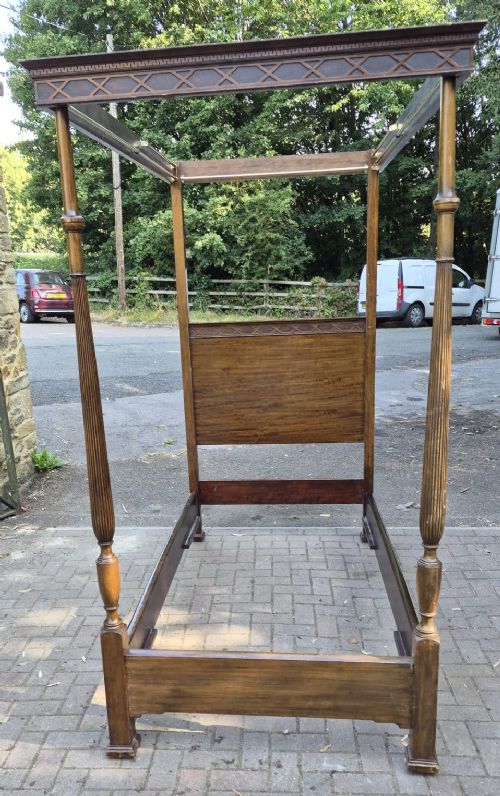
- The wooden canopy frame supported by the four posts above the bed. It often holds fabric linings or cornices.
- Bergere
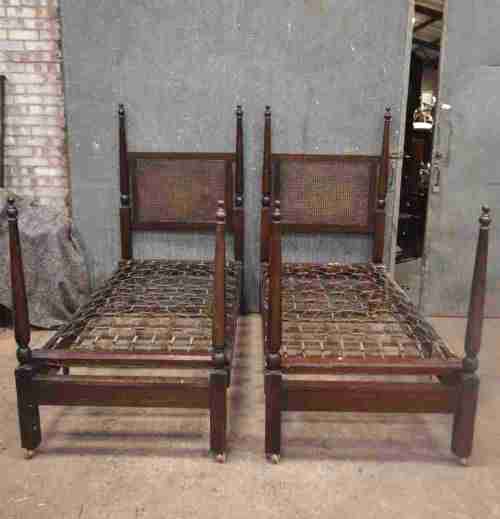
- A type of enclosed upholstered armchair or, in this context, a bed design incorporating woven cane panels. The technique introduces lighter textural elements to heavy wooden frames.
- Fruitwood inlay
- Decorative wood contrasting with the primary carcase timber. Craftsmen used lighter fruitwoods to create geometric or floral patterns.
- Architectural salvage
- Building elements or furniture parts rescued from older structures. This category includes isolated bed posts and dismantled framing sections.
Wooden Four Poster: Frequently Asked Questions
How do I assemble a wooden four poster?
Most antique four poster beds rely on traditional wooden peg or metal bolt systems joining the posts to the headboard, footboard, and side rails. Assembling the heavy framework typically requires multiple people to ensure the vertical posts remain plumb before securing the overhead tester.
Careful alignment of the joints protects the antique timber from splitting. Once the primary skeleton is locked together, any fabric tester linings or hangings can be fitted to the upper frame.
How do I date an antique four poster?
Dating relies on examining the timber species, joinery techniques, and stylistic vocabulary of the carving. Seventeenth-century examples display heavy oak construction with pegged joints, while Georgian and Regency pieces favour mahogany with classical proportions and refined reeding.
Changes in turning styles on the bed posts provide strong clues to the period of manufacture. Cross-referencing hardware marks and secondary woods helps confirm the era.
How do I care for antique wooden beds?
Maintenance involves keeping the timber away from direct heat sources and drastic humidity swings that cause wood to split. Regular dusting with a soft, dry cloth preserves the aged patina without stripping natural wax finishes.
Periodically check and gently tighten structural bolts to prevent stress on ancient joints. Avoid silicone-based polishes, opting instead for traditional beeswax applied sparingly.