





Wooden Folio Stand
These wooden folio stand pieces provide sturdy support for large prints and books, offering practical elegance for any collector's study.
Wooden Folio Stand
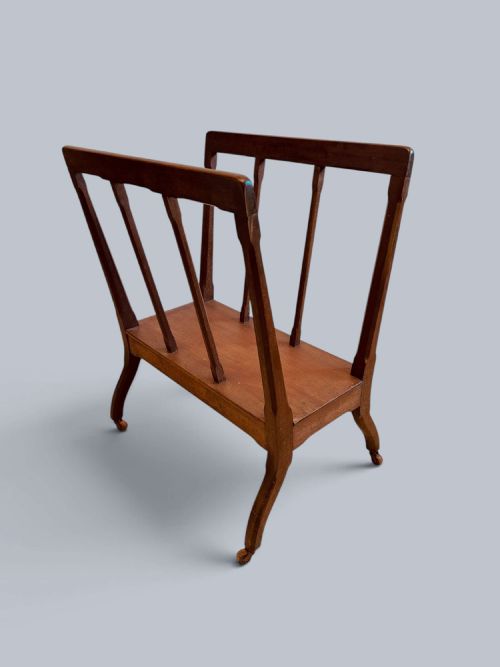
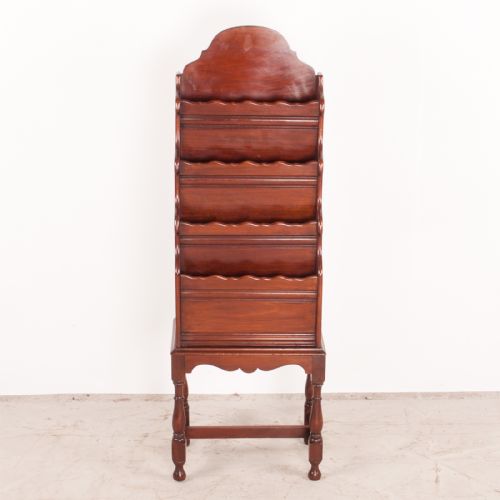
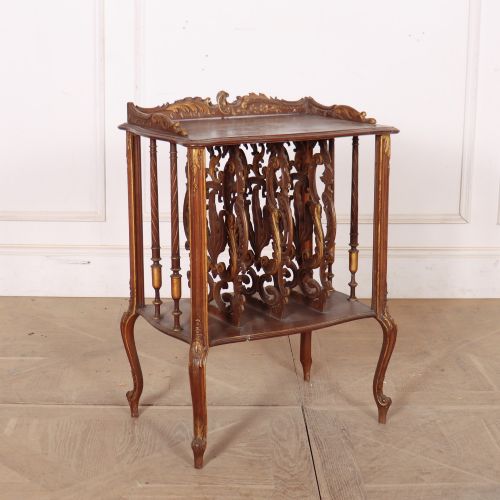
The pieces listed on this page include specific forms such as traditional folio stands, magazine racks, music stands, and canterburys. Mahogany and rosewood frequently appear among the materials, alongside oak and walnut, reflecting the preferences of past makers from the Georgian and Regency eras.
Many items show dual utility, functioning as both a folio stand and a large canterbury of country house proportions. Architectural picture racks and artist stands also feature prominently, demonstrating the practical workshop origins of these items.
How they were made
Cabinet makers utilised dense timbers such as mahogany, rosewood, and walnut to construct these sturdy folio stands and canterburys. These hardwoods provided the necessary structural integrity to support heavy portfolios and books without warping.
Brass fittings and gilt details frequently complement the timber framework, particularly on Regency and George IV examples. French carving and revival styles also showcase the detailed handiwork applied to late nineteenth-century iterations.
Wooden Folio Stand Retail Price Guide 2026
Typical asking prices for wooden folio stand among the pieces listed under this phrase on Sellingantiques today, from the lower quarter to the upper quarter. They describe what is for sale here now, not the wider market.
Listings feature mahogany, rosewood, and walnut across Georgian, Regency, and Victorian periods.
What varies in quality
The refinement of the timber grain and the depth of the polish dictate the visual distinction between standard and superior pieces. Finer examples display carefully selected mahogany or rosewood veneers and well-figured solid woods.
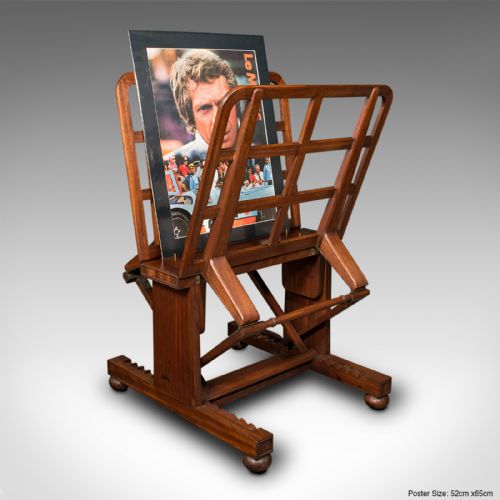
Mechanical sophistication separates basic racks from elite stands, notably in adjustable brass ratchets and pivoting frames designed for artists and architects. Solid joinery and substantial country house proportions also elevate the status of individual items.
The Wooden Folio Stand Glossary
- Folio stand
- A hinged wooden frame designed to hold large books, prints, and unbound paper flat or at an angle. These pieces often feature trestle bases and adjustable struts.
- Canterbury
- A low stand with vertical partitions used originally for sheet music or folios. Many incorporate small drawers or lower shelves.
- Regency
- A British design period spanning the early nineteenth century, characterised by classical restraint and archaeological influence. Pieces from this era often employ rosewood and brass inlay.
- Gilt
- A thin layer of gold leaf applied to wood surfaces for decoration. It appears on carved details of nineteenth-century stands.
- Trestle
- A supporting framework consisting of a horizontal beam supported by two pairs of sloping legs. This structure underpins many adjustable folio stands.
Wooden Folio Stand: Frequently Asked Questions
What is a wooden folio stand used for?
These stands serve to display and store large flat paper items, maps, architectural drawings, and art folios. They keep delicate works accessible while protecting them from damage.
Collectors and artists utilise them to browse through prints without having to lay them flat on a table. Their angled design makes viewing large formats comfortable.
How do I date a wooden folio stand?
Dating relies on identifying timber choices, construction techniques, and stylistic markers associated with specific eras like the Regency or Victorian periods. Mahogany and rosewood were favoured in earlier Regency pieces, while later nineteenth-century items might display revival carving.
Hardware details, such as brass ratchets and screw types, also offer clues to the age of the mechanism. Comparing the proportions to known country house furniture helps narrow down the decade.
Where should I place a folio stand in my home?
A folio stand suits a study, library, or drawing room where large books or prints form part of the daily environment. Placing the piece away from direct sunlight protects paper items from fading.
Because many examples feature oversized country house proportions, ensure there is adequate floor space around the stand to allow the frame to open fully.
Are these stands sturdy enough for heavy books?
The dense hardwoods used in these pieces, including oak, mahogany, and walnut, provide substantial weight capacity. They were originally built to hold heavy architectural folios and art books.
Period examples rely on robust structural joints and sturdy brass fittings to maintain stability under a heavy load. However, balancing the weight evenly across the rack remains sensible practice.