




Wooden Foldover Table
A wooden foldover table is a versatile surface that expands to serve tea or games, prized for clever engineering and handsome timbers.
Wooden Foldover Table
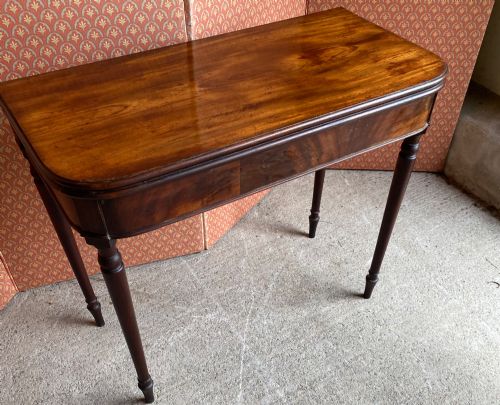
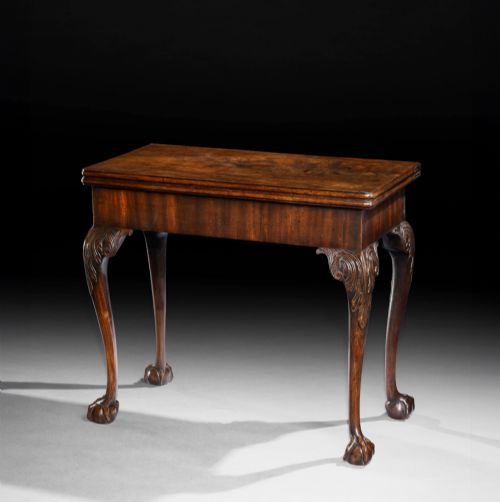
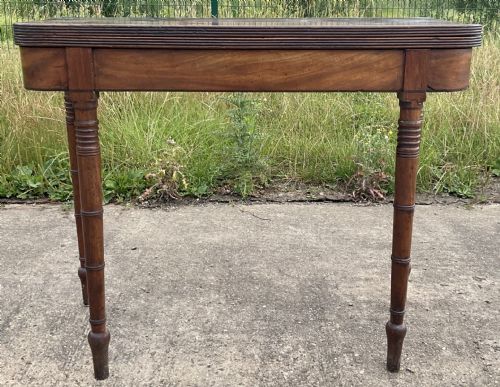
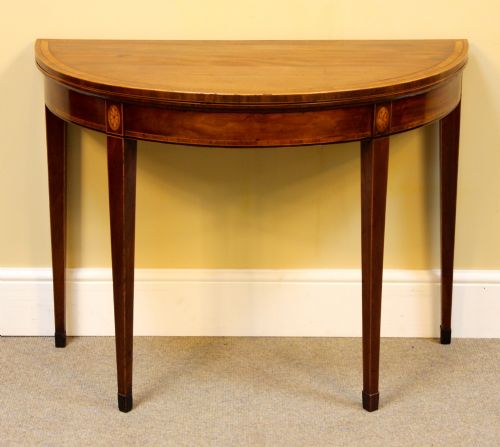
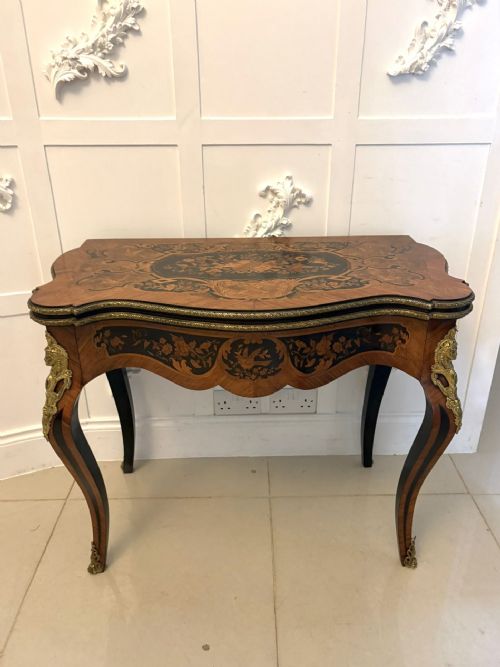
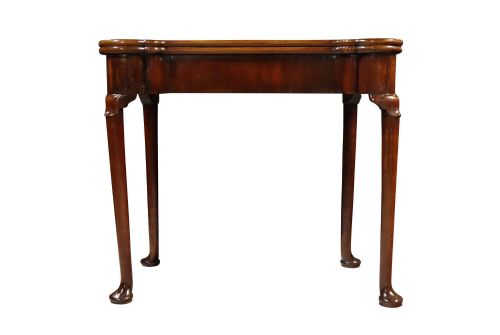
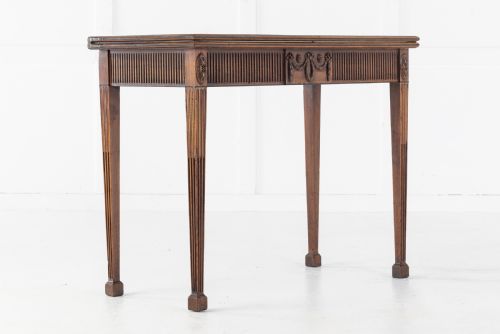
A wooden foldover table combines a compact closed profile with a hinged top that opens to double the surface area. The pieces seen here span the eighteenth century, the Regency period, and the Edwardian era, showing how cabinet makers adapted the form for domestic hospitality.
The most common examples on this page are card tables and tea tables built during the Georgian and Regency periods. These range from simple mahogany tea tables to sophisticated concertina action card tables with dished gaming wells and intricate satinwood crossbanding.
Makers also produced specialised forms such as pedestal card tables, campaign style writing desks, and Louis XV style ormolu mounted console tables in kingwood. Each variant fulfils a specific social function while displaying the period cabinet making skills of its time.
How they were made
Cabinet makers relied heavily on dense timbers such as mahogany and Cuban mahogany, often enhanced by decorative veneers of satinwood, kingwood, and boxwood. These woods provided a stable foundation for intricate marquetry and inlaid borders that defined the top surface.
Construction techniques focused on concealed hinges and folding mechanisms, notably concertina actions that supported all four legs when open. Metalwork such as brass fittings and ormolu mounts added structural reinforcement and visual contrast to the polished timber.
Wooden Foldover Table Retail Price Guide 2026
Typical asking prices for wooden foldover table among the pieces listed under this phrase on Sellingantiques today, from the lower quarter to the upper quarter. They describe what is for sale here now, not the wider market.
Some card tables hide shallow wells beneath their foldover tops, quietly waiting for centuries to recover lost coins.
What varies in quality
Quality rests in the selection of timber figures, from plain mahogany boards to highly figured Cuban mahogany and carefully matched satinwood veneers. The precision of the joinery around the folding leaf and the smoothness of the concertina mechanism indicate the maker's original investment of time.
Design sophistication also separates simpler utilitarian examples from high status pieces influenced by makers like Giles Grendey. Refined touches such as dished gaming wells, finely cut ormolu mounts, and precise stringing elevate the piece above standard production.
Giles Grendey
The Wooden Foldover Table Glossary
- Concertina action
- An expanding frame mechanism that allows all four table legs to move outward when the top unfolds, providing balanced support. This engineering feat requires precise carpentry to align properly.
- Dished gaming wells
- Circular or shaped depressions carved into the timber surface of a card table to hold counters or coins during play. They prevent pieces from sliding around during a game.
- Crossbanding
- A strip of veneer applied to the border of a table top with the grain running perpendicular to the main panel. This frames the primary timber and creates a neat visual boundary.
- Ormolu
- Gilded bronze mounts attached to furniture for decoration, particularly common on French styles. The metal is cast and chased before receiving its gold finish.
- Marquetry
- The art of applying pieces of veneer to a structure to form decorative patterns and pictures. Craftsmen use contrasting woods like satinwood, boxwood, and kingwood to achieve tonal variety.
Wooden Foldover Table: Frequently Asked Questions
What is a wooden foldover table used for?
These tables served primarily as tea tables or card tables in formal entertaining spaces. The hinged top allowed households to save floor space during the day and expand the surface when guests arrived.
Many examples contain hidden compartments or baize lined playing surfaces designed specifically for card games. They functioned as multi purpose furniture long before modern modular designs existed.
How do I tell a tea table from a card table?
Tea tables generally feature plain timber surfaces inside, designed to hold porcelain teacups safely. Card tables usually open to reveal a baize or felt playing surface, sometimes accompanied by corner candle cups or gaming wells.
Looking beneath the top reveals further clues, as card tables often require more complex folding frames to support the weight during play.
How do I date a Georgian foldover table?
Dating relies on timber choices, leg styles, and cabinet making techniques that evolved from the mid eighteenth century onward. Early pieces often show plain mahogany or distinct shell carvings on straight legs, while later Regency examples lean towards pedestal bases and brass inlay.
Comparing the construction of the hinge and the framing beneath the top helps narrow down whether a piece belongs to the George II era or the later Regency period.
Can I use an antique foldover table daily?
These tables handled generations of domestic use and remain sturdy if treated with reasonable care. The folding mechanism requires smooth operation without forcing stiff joints.
Keeping them away from direct heat sources protects the timber veneers and prevents the solid wood tops from warping over time.